
TL;DR — Key Takeaways
- Tricentis is previewing new AI capabilities under its Tricentis Transform initiative, including the autonomous Aida testing agent.
- Aida can explore web and Windows desktop applications to identify defects and coverage gaps without requiring teams to create scripts.
- Release Risk Intelligence is designed to identify testing gaps, prioritize risks and launch AI-driven remediation tasks using context from the Tricentis platform.
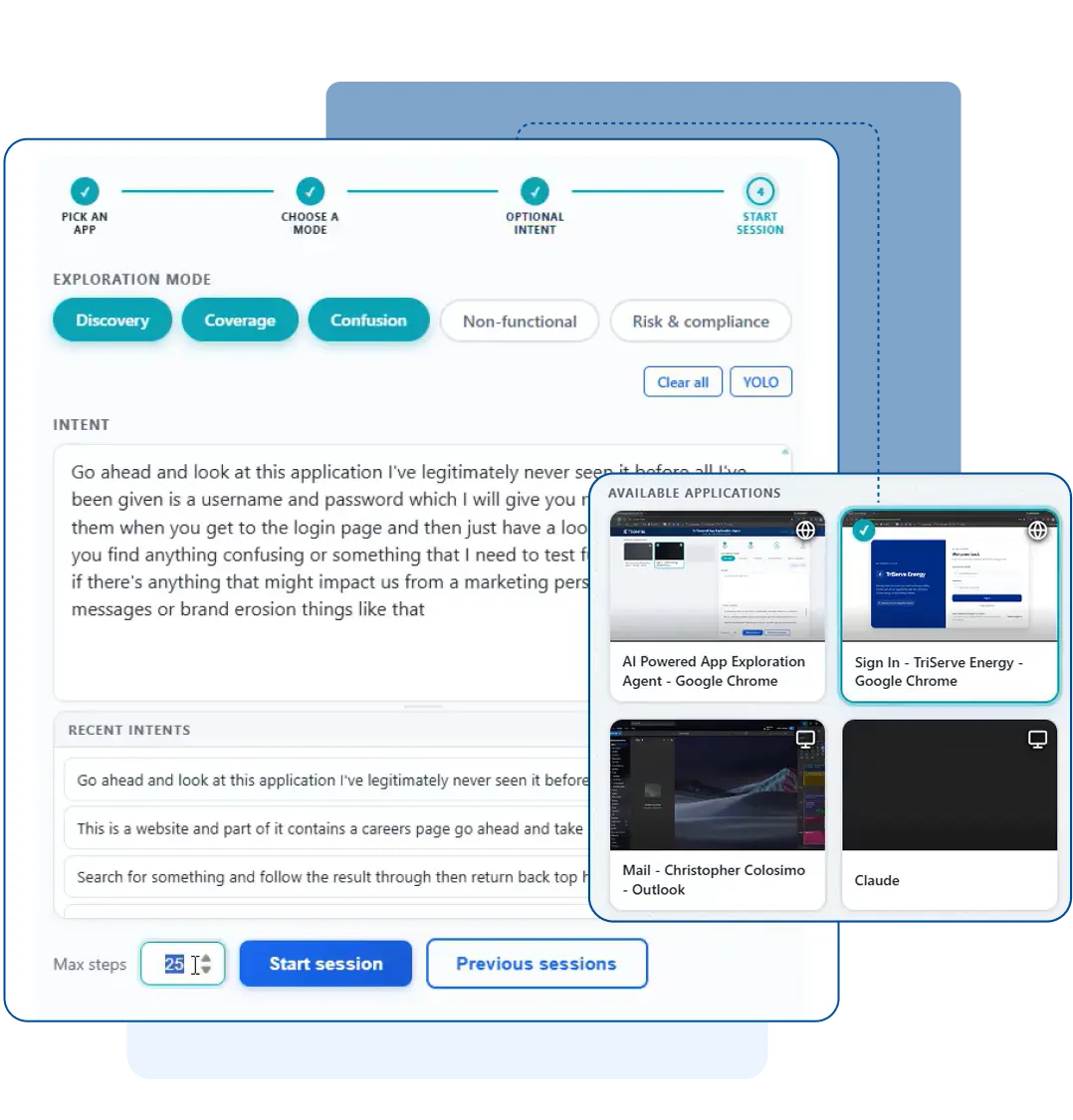
Tricentis is providing early access to multiple artificial intelligence (AI) capabilities that it is gearing up to roll out later this year via a Tricentis Transform initiative, including an autonomous AI agent, dubbed Aida, that explores web and Windows desktop applications to surface defects, weaknesses and other potential gaps without requiring DevSecOps teams to create scripts.
Additionally, Tricentis is developing a Release Risk Intelligence capability that surfaces release-scoped coverage gaps, prioritizes risks by severity, and launches AI tasks to resolve issues that are informed by context provided by the automated Tricentis testing platform.
Finally, Tricentis is also readying AgentScore, a tool that enables organizations to evaluate AI agents by observing how agents behave in real-world workflows, recommending what should be measured, and generating composite quality scores that include review, block, or ship recommendations.
David Colwell, vice president of AI and machine learning for Tricentis, said the overall goal of the Tricentis Transform initiative is to ultimately make AI application testing a more integrated element of building and deploying any application rather than being an entirely separate function. The end result should be higher quality applications that are inherently more secure, he added.
The launch of the Tricentis Transform initiative comes on the heels of the company’s acquisition of Tabnine, which developed a knowledge graph that AI agents can invoke to discover the relationships between various application components. Armed with insights that are uniquely provided by a testing platform, AI agents are provided with the context needed to automate tasks much more reliably, noted Colwell.
It’s still early days so far as embedding AI agents into DevOps workflows is concerned, but as more code is generated using AI tools, there is a corresponding increase in the amount of pressure on existing pipelines. The first place that pressure is manifesting itself is in the need to review and test code at machine speed. In the absence of that capability, more AI-generated code is being deployed in production environments with predictable results. The number of incidents in production environments that have been traced back to AI code has already begun to exponentially increase, noted Colwell.
Exactly how long it might take to re-engineer DevOps workflows in the age of AI remains to be seen, but it’s apparent that testing will become more integral. The difference is that much of that testing is likely to be conducted by AI agents that are reviewing and analyzing code created by other AI agents. The challenge, in the meantime, is a coverage gap that is widening as the volume of code being generated overwhelms the ability of DevOps teams to test it.
Hopefully, there will come a day when the distinction between creating and testing code becomes so blurry as to be all but meaningless. That doesn’t mean the need for specialists to test applications will completely disappear, but it does mean that any issues that do require their expertise will be worth the time and effort for them, rather than an AI agent, to personally resolve.

Frequently Asked Questions
What is Tricentis Transform?
Tricentis Transform is an initiative through which Tricentis is developing and rolling out AI capabilities aimed at making application testing more integrated with software development and delivery.
What is Aida?
Aida is an autonomous AI agent that explores web and Windows desktop applications to uncover defects, weaknesses and other potential testing gaps without requiring scripted tests.
What does Release Risk Intelligence do?
It identifies release-specific coverage gaps, prioritizes risks by severity and can launch AI tasks designed to help resolve issues using contextual information from the Tricentis testing platform.