TL;DR — Key Takeaways
- Apica added an AI agent, dubbed Venn, and an MCP server to version 3.0 of its Ascent telemetry data platform.
- Venn enables IT teams to build and manage telemetry data pipelines using natural language instead of scripts.
- The new MCP server allows third-party AI tools to invoke Ascent and its embedded AI capabilities within DevOps workflows.
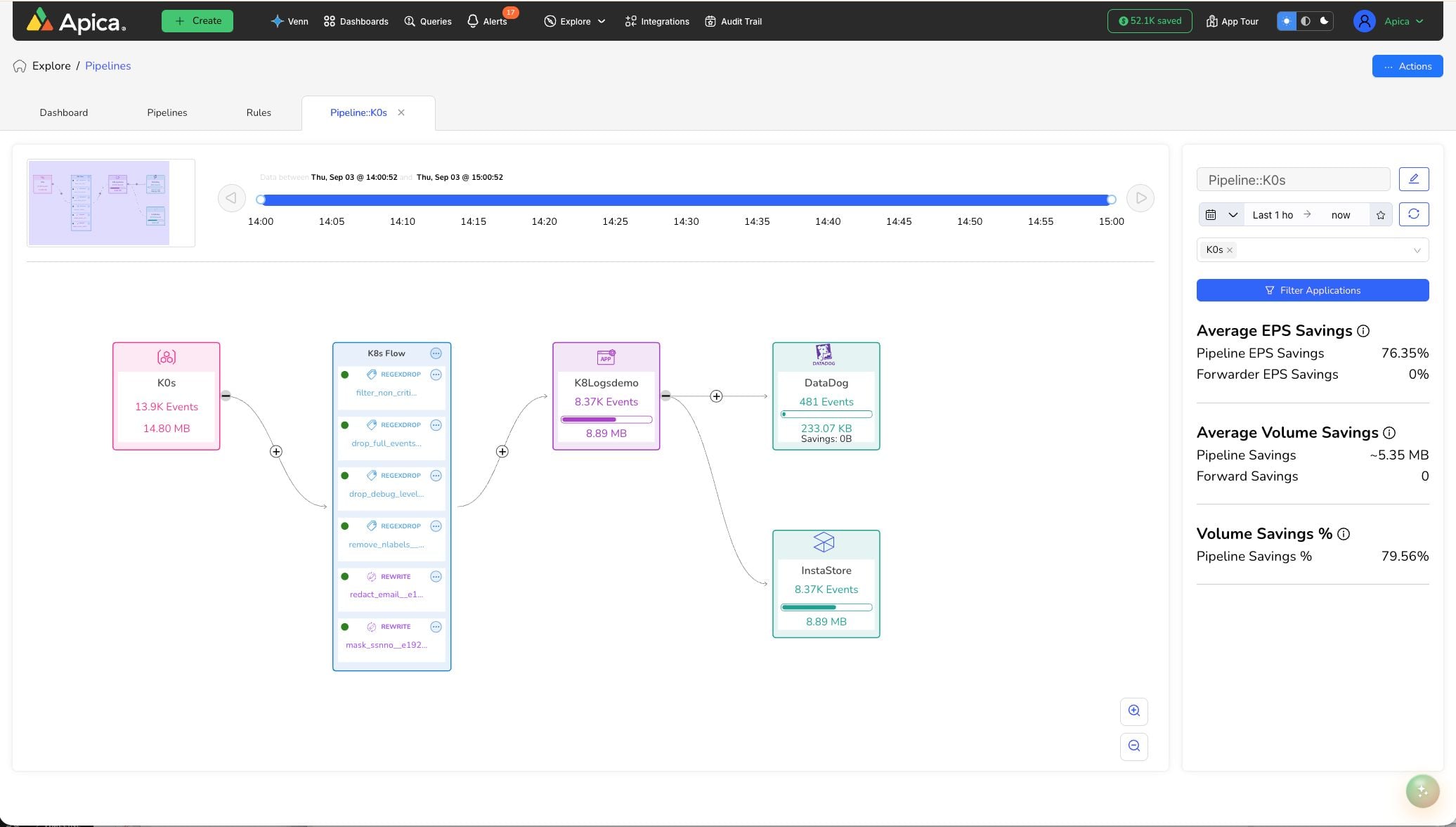
Apica today added an artificial intelligence (AI) agent and Model Context Protocol (MCP) server to version 3.0 of its Ascent platform for managing telemetry data pipelines.
Andi Mann, chief product and technology officer for Apica, said the AI agent, dubbed Venn, makes it possible for IT teams to use natural language rather than having to create scripts to build and manage data pipelines at higher levels of scale.
The MCP server, meanwhile, makes it possible for IT teams to use third-party AI tools to invoke the Ascent platform and its multiple embedded AI skills within the context of a DevOps workflow.
Finally, a flow-only mode capability has been added to the platform to enable telemetry data to flow 10x faster. That additional capacity will prove critical as more AI agents are added to IT environments, said Mann.
Just as importantly, however, any change that could delete or materially alter configuration requires the consent of an administrator before being applied to ensure no action is performed without approval, noted Mann.
The overall goal is to provide an intelligent foundation for managing telemetry data that, for example, makes it simpler to discover a noisy pipeline, he added.
Longer term, that intelligent foundation will be invoked via multiple communications channels, including Slack and Microsoft Teams, to further reduce the level of friction and bottlenecks that exist with DevOps workflows, said Mann.
It’s not clear at what rate DevOps teams are moving to find more efficient ways to manage telemetry data, but the volume of it is only going to increase in the AI era. In some cases, that may mean increasing the volume of data through existing pipelines, but before too long, the total number of pipelines that DevOps teams will be asked to manage will also increase. Additionally, that data is going to become more crucial than ever as DevOps teams seek to observe events that are increasingly occurring at machine speed.
In general, the Futurum Group is forecasting that total spending on DevOps tools and platforms will grow about 14% in 2027, and 72% plan to significantly increase investment (41%) or slightly increase spending (31%) over the next 12 months. The Futurum Group now projects global spending on software lifecycle engineering tools will roughly double to $226 billion by 2030, up from $111.1 billion in 2025. Spending on agent control planes and agentic development will compound at 48.7% and 45.1%, respectively, through 2030, according to the report.
Hopefully, those investments will soon lead to a day when rather than having to interrogate telemetry data, the systems that process and filter it will become intelligent enough to identify issues that they will then share with other tools and platforms capable of automatically resolving them with human supervision. The simple fact of the matter is that IT environments are already far too complex for humans to manage. The challenge and the opportunity now is to find ways to apply AI to achieve that goal while ensuring that, in the event something goes wrong, the proverbial cure doesn’t wind up being worse than the disease.

Frequently Asked Questions
What is Apica Venn?
Venn is an AI agent added to Apica Ascent 3.0 that enables IT teams to use natural language to build and manage telemetry data pipelines.
What does the MCP server in Apica Ascent do?
The MCP server enables third-party AI tools to interact with the Ascent platform and invoke its embedded AI capabilities within DevOps workflows.
What is Ascent’s flow-only mode?
Flow-only mode is a new capability designed to enable telemetry data to move through the platform up to 10x faster.