

Survey Finds Biggest DevOps Obstacles are Organizational
A survey of 600 IT professionals published this week by mabl, a provider of a test automation platform, finds the biggest barriers to adopting DevOps practices are more closely related to organizational issues rather than any technology. The survey identified non-technological issues as the main inhibitor to DevOps by a wide margin (82%). Only 11% […]

Best Practices for AWS Tagging With Yor
On the surface, AWS resource tags are simple, informational key:value metadata that you can assign to most AWS resources. They also have many hidden benefits, as outlined in this AWS Tagging Best Practices guide for improving cloud operations. There are six use cases author Brian Yost calls out in particular: AWS console organization and resource […]

The State of Continuous Delivery in 2021
One of the hallmarks of DevOps is to improve the delivery of software. Therefore, mature DevOps systems employ continuous delivery (CD), the process of releasing bite-sized software changes on a regular basis. Amid high demand for digital innovation, streamlining this release pipeline is becoming more and more crucial for enabling overall software fluidity. So, what […]

Leveraging the Cloud for Mainframe Access
Now more than ever, organizations around the world are looking to extend their existing mainframe investments as part of larger digital transformation initiatives. As core systems of record and reliability, mainframes continue to run many organizations’ most important applications and the idea of replacing these systems comes with greater risk than reward. While organizations are […]

Continuous Testing Practices Gap Assessment
Continuous testing is an essential part of DevOps. To get the maximum value from continuous testing, it is important to use recommended best practices, inclusive of people, processes and technologies. A gap assessment is a great way to efficiently evaluate an organization’s practices for DevOps and determine a strategy for improvement. Gap analysis provides valuable […]

No More Status Quo: Disruption and Reinvention through The Entrepreneur’s Weekly Nietzsche
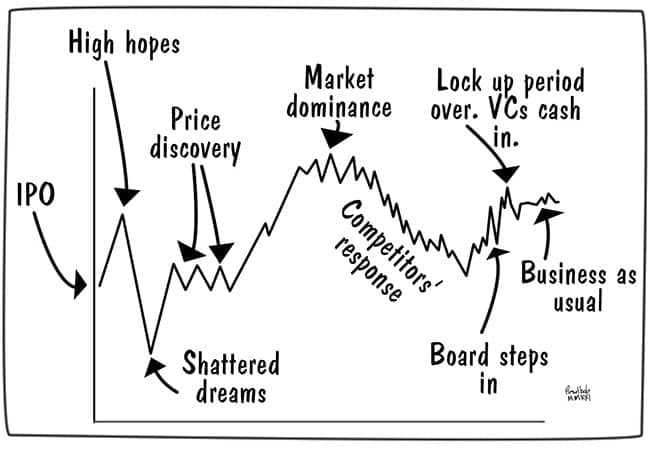
Everyday we’re reinventing ourselves. Whether we’re reinventing knowledge through learning, or technology through development, nothing stays stagnant and disruption makes sure of that. In a TechStrong TV segment, MediaOps Co-Founder and Editor-in-Chief Alan Shimel sits down with Brad Feld, current managing director at Foundry Group and author of “The Entrepreneur’s Weekly Nietzsche: A Book for […]

Managing Cloud Governance Costs Collaboratively
For those responsible for managing infrastructure, the concept of governance is common, especially as it relates to cloud services. For cloud services, it’s defined as a framework that guides how end users use these services by defining and creating policies to control costs, minimize security risks, improve efficiency and accelerate deployment. The term is often […]

The Forces Massing Against the Data Center
We’ve come a long way over the last few decades. A ton of stuff about IT has changed, even in the last five years. And it is true in IT that the only constant is change. We like to have control of our environment to provide the most stable platform for user satisfaction that we […]

Applitools Extends Visual AI Testing to Native Mobile Apps
At its online Future of Testing: Mobile event, Applitools today previewed the ability to apply visual artificial intelligence (AI) to applications that run natively on a mobile computing platform. Accessed via a cloud service that is currently available for free on a limited basis, the Ultrafast Test Cloud for Native Mobile offering will extend the […]

Fugue Aims to Simplify Securing Infrastructure-as-Code
Fugue today unveiled a 1.0 release for Regula, an open source policy engine for infrastructure-as-code (IaC) security that comes with prebuilt libraries for implementing hundreds of policies that validate configurations on Amazon Web Services (AWS), Microsoft Azure and Google Cloud services. Regula is based on the Open Policy Agent (OPA) software being advanced under the […]

JFrog Acquires Vdoo to Advance DevSecOps
JFrog today announced it has agreed to acquire Vdoo for $300 million in cash to gain a set of analytics tools that discover vulnerabilities in application binaries. Vdoo’s scanning tools, infused with machine learning algorithms, will be fully integrated with the JFrog Xray vulnerability detection tools along with the rest of the JFrog continuous integration/continuous […]
Best Practices for Cloud Incident Response
Cloud computing is now mainstream, with almost all organizations running at least some resources in the public cloud—whether software-as-a-service (SaaS), platform-as-a-service (PaaS) or infrastructure-as-a-service (IaaS). Security teams have been scrambling to adapt to cloud environments, and with the growing adoption of DevSecOps, they are working together with DevOps teams to secure cloud systems from the […]
Continuous Testing Practices – Part 3
In my prior blog, Continuous Testing – The Quest for Quality at Speed, I described five tenets and some of the practices for continuous testing to help with understanding what continuous testing is. In my consulting work, I find it necessary to use 15 categories of practices to assess an organizations’ continuous testing capabilities. Given […]

Open Source Languages and Tools for z/OS
Open Source Languages and Tools for z/OS Empower your developers to use their preferred open source languages. We offer many open source languages and tools—including Git, R and Python—that allow any developer to harness the power of the mainframe without having to spend months learning new skills. Git Git is a version control system […]
CircleCI CEO Sees Growing Need for Developer Experience Engineers
There is no shortage of titles to go with all the tasks that make up a DevOps workflow, but given the critical role developers now play within any organization, it might be time for organizations to start creating a developer experience engineer (DXE) function within DevOps teams that is specifically tasked with increasing developer productivity. […]
How Low-Code Makes DevOps Stronger
While its roots can be traced back to rapid-application development (RAD), low-code application development started to gain serious momentum about three years ago. Initially, some in the DevOps community dismissed the trend, even as myriad approaches—from no-code to low-code for professional developers—started to enter the market. At the time, enterprises of all sizes had embraced […]

Continuous Testing Practices – Part 2
In my prior blog, Continuous Testing – The Quest for Quality at Speed, I described five tenets and some of the practices for continuous testing to help explain what continuous testing is. In my consulting work, I find it necessary to use 15 categories of practices to assess an organizations’ continuous testing capabilities. Given the […]

Dynatrace Applies AI to Surface App Vulnerabilities
Dynatrace has enhanced the security module to its observability platform that leverages its Davis artificial intelligence (AI) engine to automatically identify the software libraries and open source packages that represent the greatest security risk. Ajay Gandhi, vice president of product marketing for Dynatrace, said the Davis Security Advisor, being added to the Dynatrace Application Security […]
What Chaos Engineering Is (and Isn’t)
The birth of chaos engineering happened somewhat accidentally in 2008 when Netflix moved from the data center to the cloud. The move didn’t go as planned. The thinking at the time was that the data center locked Netflix into an architecture of single points of failure, like large databases and vertically scaled components. Moving to […]
Continuous Testing Practices (Part 1)
In my prior blog, Continuous Testing – The Quest for Quality at Speed, I described five tenets and some of the practices for continuous testing (CT) to help those understand what continuous testing is. In my consulting work, I find it necessary to use 15 categories of practices to assess an organizations’ continuous testing capabilities. […]