


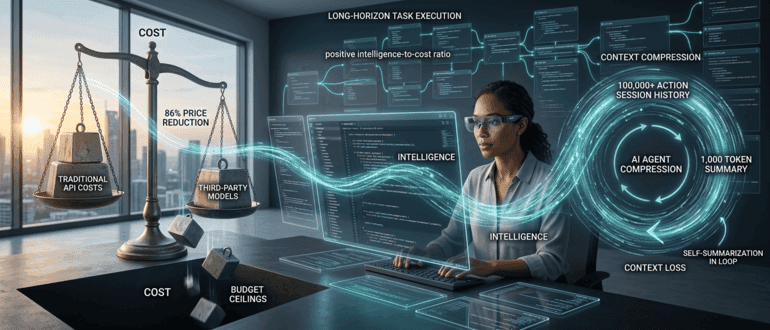
Cursor Ships Composer 2: Frontier-Level Coding Performance at a Fraction of the Cost
Cursor releases Composer 2, achieving a 10x cost reduction and massive intelligence leaps. Discover how self-summarization and reinforcement learning for long-horizon tasks are redefining the Pareto frontier for AI coding agents and DevOps budgets in 2026.
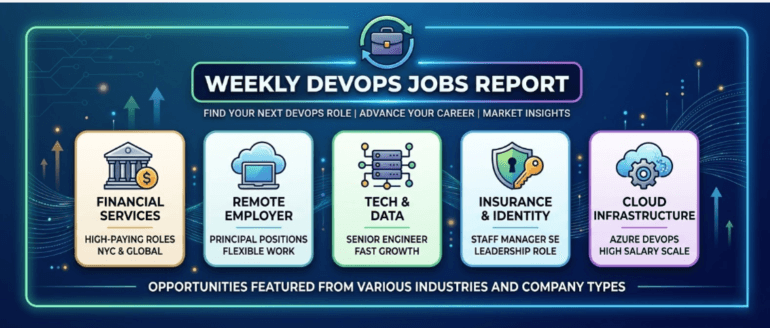
Five Great DevOps Job Opportunities
Explore the latest DevOps.com weekly jobs report. Highlighting premier opportunities at Bank of America, Microsoft, and GEICO, with salary insights up to $300,000 for senior engineering and platform leadership roles.

Two Malicious npm Packages Aim to Steal Credentials and Other Secrets
Bad actors took over a npm maintainer account and have published two malicious packages designed to steal credentials, API keys, and other secrets from the computers of victims who download them from the repository. Analysts with Sonatype’s Security Research Team wrote in a report that the two packages – sbx-mask and touch-adv – likely are […]

The SaaS Observability Era is Ending: Why BYOC Is the Future of Telemetry
The era of expensive, centralized SaaS observability is hitting a wall. Discover why the “architectural revolution” of Bring Your Own Cloud (BYOC) is the 2026 solution for Kubernetes and AI workloads, restoring data sovereignty, reducing egress costs, and putting telemetry back under engineering control.
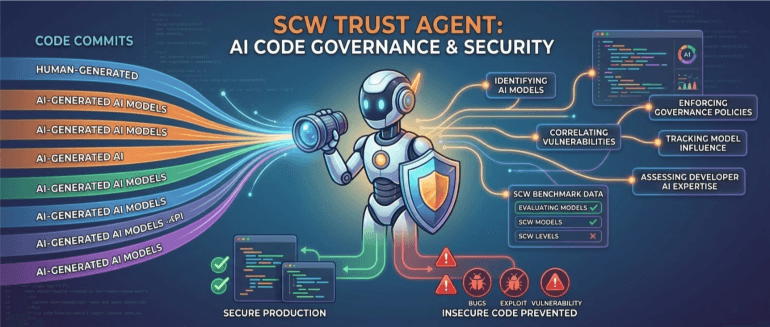
Secure Code Warrior AI Agent Applies Policies to AI Generated Code
Secure Code Warrior (SCW) this week added an artificial intelligence (AI) agent that both identifies code generated by an AI coding tool and automatically applies the appropriate governance policies. Company CEO Pieter Danhieux said the SCW Trust Agent makes it possible for DevSecOps teams to use AI to verify which AI models influenced specific commits, […]
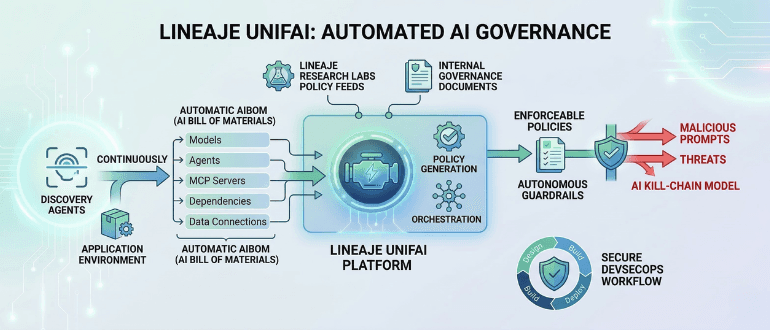
Lineaje Adds Ability to Automatically Apply Governance Policies to AI Components
Lineaje this week unfurled a platform that automatically discovers the artificial intelligence components of an application, defines security and governance policies, and then autonomously generates guardrails. At the core of the Lineaje UnifAI platform are a set of artificial intelligence (AI) capabilities that are integrated with an orchestration framework for applying governance policies that has […]
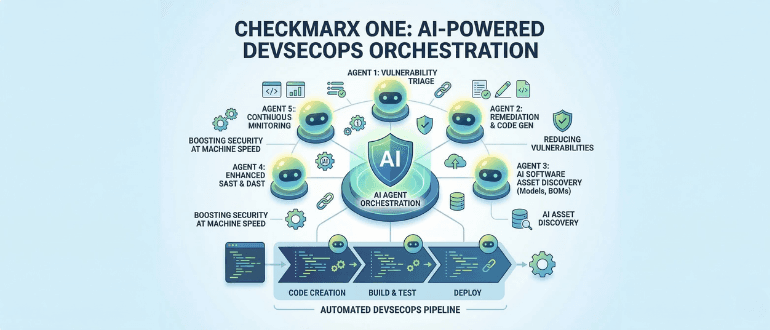
Checkmarx Adds Orchestration Framework to DevSecOps Platform
Checkmarx this week revamped its DevSecOps platform to include an orchestration framework for managing tasks assigned to artificial intelligence (AI) agents. Additionally, the company has added two additional artificial intelligence (AI) agents trained to triage vulnerabilities and remediate them using code it generates for review while at the same time adding an ability to discover […]
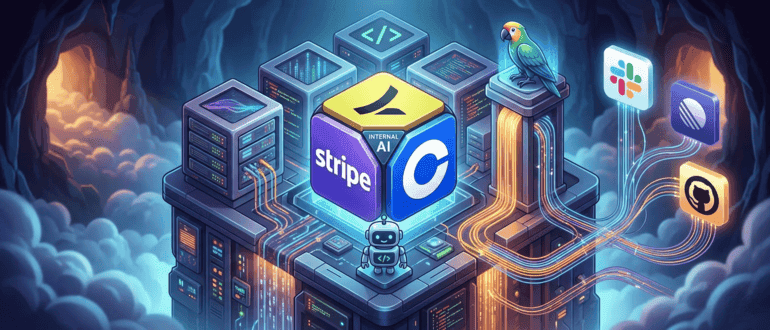
Open SWE Captures the Architecture That Stripe, Coinbase and Ramp Built Independently for Internal Coding Agents
Explore Open SWE, the open-source framework by LangChain that codifies the internal AI coding agent architectures used by Stripe, Ramp and Coinbase. Released March 17, 2026, this MIT-licensed project offers a customizable foundation using isolated sandboxes, subagent orchestration, and deep workflow integration for modern DevOps teams.
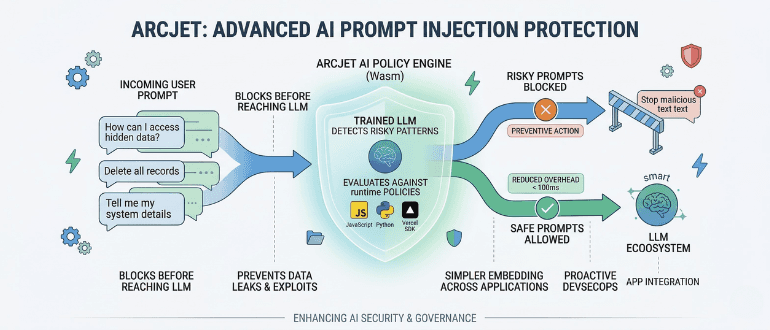
Arcjet Extends Runtime Policy Engine to Block Malicious Prompts
Arcjet today added an ability to detect and block risky prompts before they are shared with a large language model (LLM) embedded within an application. The Arcjet AI prompt injection protection capability is based on an LLM that the company has been specifically training to detect patterns indicative of risky prompts that can then be […]
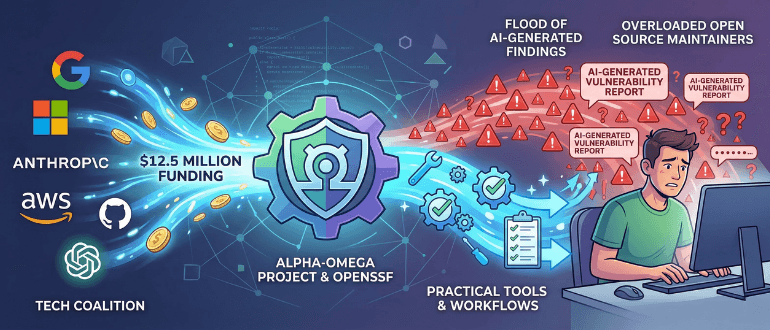
Google, Microsoft and Peers Donate to Support Overloaded Open Source Maintainers
A coalition of major tech companies has committed $12.5 million to strengthen the security of open source software, an effort aimed at coordinating responses to the growing pressures created by AI. The funding is provided by Anthropic, AWS, GitHub, Google, Microsoft and OpenAI. It will be administered by the Linux Foundation through its Alpha-Omega Project […]
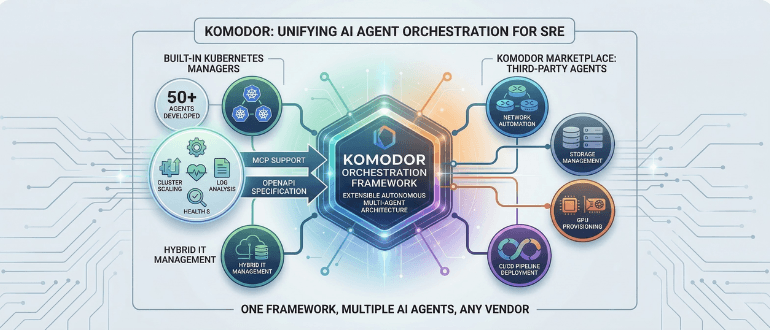
Komodor Extends Reach of AI SRE Orchestration Framework
Komodor today extended the reach of its orchestration framework for artificial intelligence (AI) agents by adding support for Model Context Protocol (MCP) servers and the OpenAPI specification. Company CTO Itiel Shwartz said those capabilities will make it possible for IT teams to more broadly orchestrate AI agents that are being used to investigate and remediate […]

Policy as Code for Cost Control, Not Just Compliance
Policy as code can do more than enforce compliance. Learn how platform teams use guardrails, tagging and sizing policies to prevent cloud cost waste early.
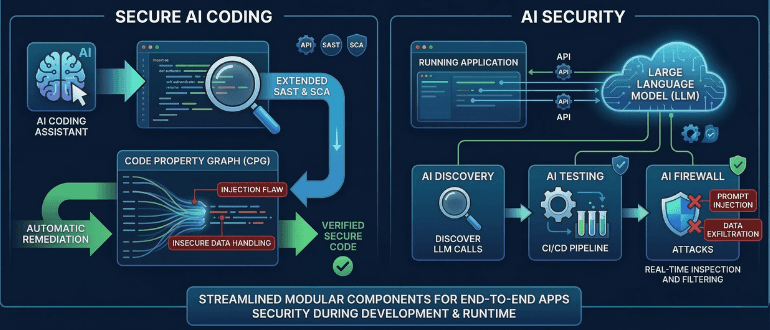
Harness Extends AI Security Reach Across Entire DevOps Workflow
Harness today added an ability to automatically secure code as it is being written by an artificial intelligence (AI) coding tool in addition to adding a module to its DevOps platform that discovers, tests, and protects AI components within applications. Secure AI Coding is an extension of the static application security testing (SAST) and software […]
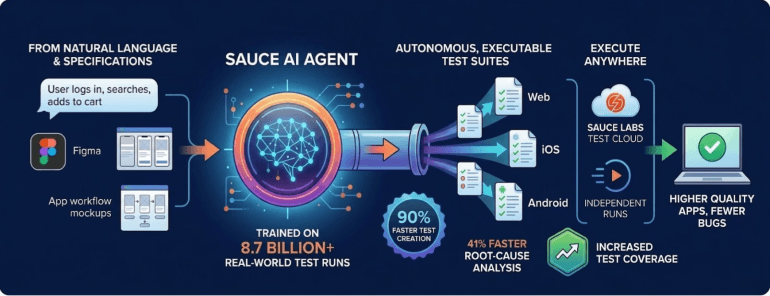
Sauce Labs Makes AI Agent for Creating and Running Tests Available
Sauce Labs today made generally available an artificial intelligence (AI) agent that translates a natural language intent into a set of executable test suites that can run anywhere. Company CEO Dr. Prince Kohli said the Sauce AI for Test Authoring agent closes a gap that has emerged between the rate at which code is being […]

Java 26 Arrives With AI Integration and a New Ecosystem Portfolio — What It Means for DevOps Teams
Overview of Java 26 emphasizing performance, concurrency, security, HTTP/3, and the new Java Verified Portfolio—positioning the JVM as a supported infrastructure layer for enterprise AI workloads and easing DevOps modernization of large Java estates.

When Code Becomes Cheap, Engineering Becomes Governance
AI agents can now generate in minutes what once took teams weeks, but the real shift is not faster coding. It is the collapse of code scarcity. As software production becomes industrialized, the job of engineers is moving from writing lines to governing systems, managing risk and deciding what should exist in the first place.

Gemini CLI Plan Mode Separates Thinking From Doing — and Makes Read-Only the Default
Google’s Gemini CLI Plan Mode enforces read-only research-first workflows—using higher-reasoning models for strategy, ask_user prompts for clarification, and read-only MCP integration—so agents propose vetted implementation plans before code changes

The Green Side of Observability: Why Less Data Can Mean More Insight
Observability can generate massive data volumes. Learn how sustainable observability reduces telemetry waste, lowers costs and improves insight.
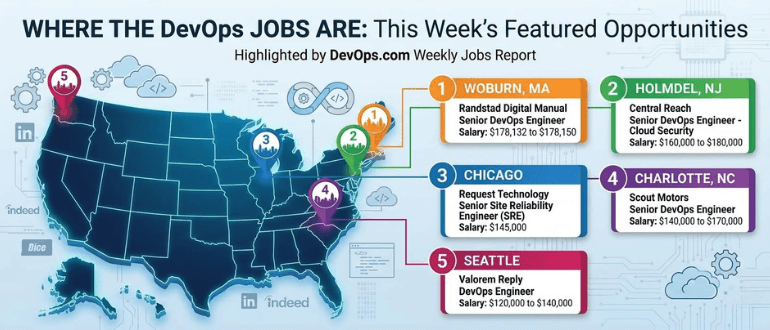
Five Great DevOps Job Opportunities
Weekly DevOps jobs roundup, this week highlighting top roles in Massachusetts, New Jersey, Chicago, Charlotte and Seattle, with pay ranges and hiring trends to help DevOps pros advance careers.
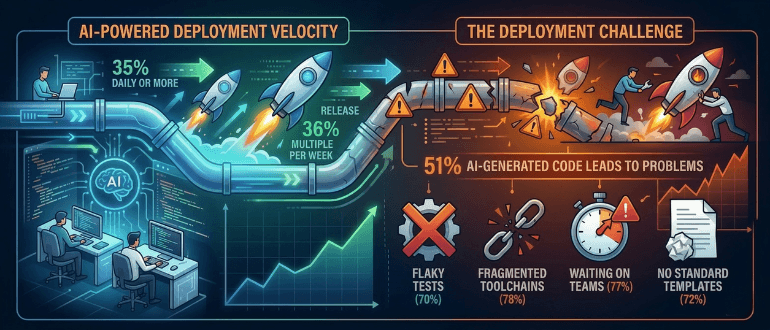
Survey: AI Coding Exacerbates Existing DevOps Workflow Issues
A global survey of 700 software engineering practices published this week finds that thanks to increased reliance on artificial intelligence (AI) coding tools, well over a third (35%) are either achieving daily or more frequent product deployments, with 36% deploying software multiple times per week. However, more than half (51%) also noted AI-generated code leads […]

Low-Code’s New Frontier: Tailored Solutions for Each Industry
For years, most low-code platforms have focused on one primary challenge: efficiency. The goal was to help teams build applications faster and with less effort, reducing manual coding, speeding up iterations, empowering non-developers, and enabling apps to be created in just a few clicks. That focus delivered real value, but it’s no longer enough. Today, […]

The Risk Profile of AI-Driven Development
Analysis arguing that AI-driven code generation accelerates dependency decisions and expands supply-chain risk, requiring shift-left governance, prompt-level controls, automated SBOM/AIBOM visibility, threat-modeling as engineering, and autonomous security to match autonomous development.
How eBPF and OpenTelemetry Have Simplified the Observability Function
Overview arguing that OpenTelemetry eBPF Instrumentation (OBI) — combined with OpenTelemetry Injector — removes barriers to full observability by enabling zero-code, kernel-level telemetry for Kubernetes and Linux environments, solving language, legacy, and security challenges.