

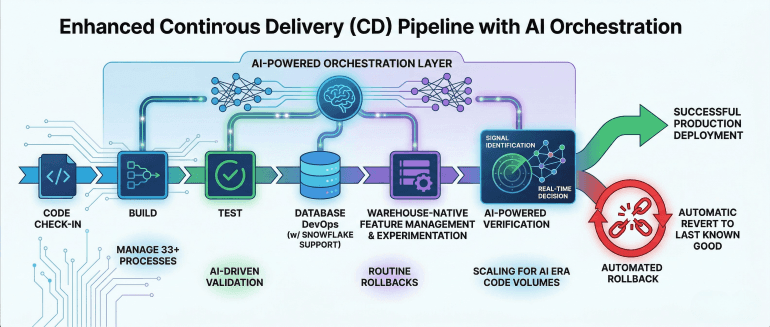

The Trust Tax Framework: Measuring Developer Confidence in CI/CD Systems
Is your re-run rate over 30%? Discover the “Trust Tax” killing your DevOps ROI. Learn to manage flaky tests through automatic quarantine, contextual reporting, and cultural shifts.

Why Governance Determines Whether Agentic AI Accelerates or Stalls Engineering
AI coding tools offer rapid productivity gains, but “governance debt” often slows delivery. Learn how to embed risk-based controls and auditability into agentic AI workflows to scale engineering capacity.

When Customer-Facing Systems Fail: How Incident Response and Observability Reduce MTTR
In a world of microservices and real-time interactions, MTTR is the ultimate metric for brand protection. Learn how observability and resilient architecture drive faster incident response.
GraphQL at Scale: Lessons From Building APIs That Thousands of Developers Actually Use
GraphQL adoption is set to double by 2027. Explore the operational shifts required for enterprise scale, including query complexity analysis, persisted queries, and Apollo-style federation.

Agentic Systems are Breaking Reliability Frameworks
Agentic AI systems introduce “silent failures” that bypass traditional SOC alerts. Learn why DevOps and Security teams must shift from deterministic assertions to distribution-based testing and runtime behavioral boundaries.
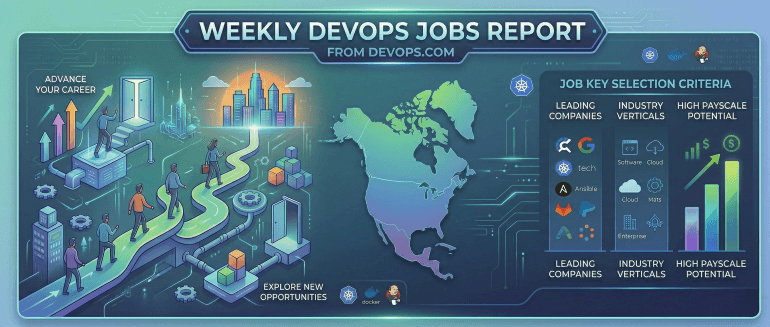
Five Great DevOps Job Opportunities
Explore this week’s top DevOps career opportunities featuring roles at SAP, Maximus, Inc., and Bellota Labs. Salaries range from $115k to $337k for senior and lead positions.

GitHub to Leverage User Code for AI Model Training, Allows Opt-Out
GitHub is preparing a significant change to how it trains the AI models behind its Copilot coding assistant. Beginning April 24, the Microsoft-owned platform will collect user interaction data by default to improve its AI systems, unless users actively disable the setting. The update applies to individuals using Copilot Free, Pro, and Pro+ tiers. Enterprise […]
Sophisticated Supply Chain Attack Targeting Trivy Expands to Checkmarx, LiteLLM
The supply chain attack that compromised Aqua Security’s Trivy open source security vulnerability scanner and its associated GitHub Actions earlier this month continues to expand, with software development tools from Checkmarx and LiteLLM being the latest victims of the sophisticated campaign. The threat group behind it, TeamPCP, is using the attacks to create persistence and […]

Why Investing in DevOps Platforms Pays off for Businesses
Explore why 80% of organizations are adopting Internal Developer Platforms (IDPs) by 2026. From reducing setup time by 40% to mitigating $9,000-per-minute downtime costs, discover the undeniable ROI of platform engineering, “golden paths,” and built-in DevSecOps.
Embedded DevOps: Bridging the Gap Between Firmware and Modern Delivery
Embedded software development has traditionally followed a different rhythm than mainstream software engineering. Hardware availability drives schedules. Validation cycles are longer. Releases are deliberate. Documentation is extensive. For good reason, embedded systems often operate in safety-critical or highly regulated environments. However, expectations around software delivery have shifted. Connected products, over-the-air updates, security mandates and shorter market windows […]

Are AI Agents the Future of DevOps Automation?
DevOps has changed fast in the last decade. Scripts became pipelines. Pipelines became platforms. Now, AI agents in DevOps automation are leading the next wave. Today’s cloud systems are complex. Teams manage containers, microservices and hybrid clouds. Manual work slows them down. Traditional automation also struggles with scale. That is why AI agents in DevOps automation are gaining attention. Many organizations […]

AI Didn’t Break Your DevOps Pipeline, Your Process was Already Rotten
AI isn’t breaking your DevOps pipeline; it’s exposing the flaws you’ve ignored for years. Learn how automated decision-making accelerates process decay, amplifies noisy signals, and reveals the ownership gaps that human intuition used to hide. It’s time for an operational reckoning.

From AI Code to Production: The Case for FeatureOps
As 80% of developers adopt AI coding tools, delivery stability is hitting a wall. Discover why “FeatureOps” and feature flagging are the critical runtime controls needed in 2026 to close the understanding gap and prevent catastrophic outages like those seen at Google and Cloudflare.
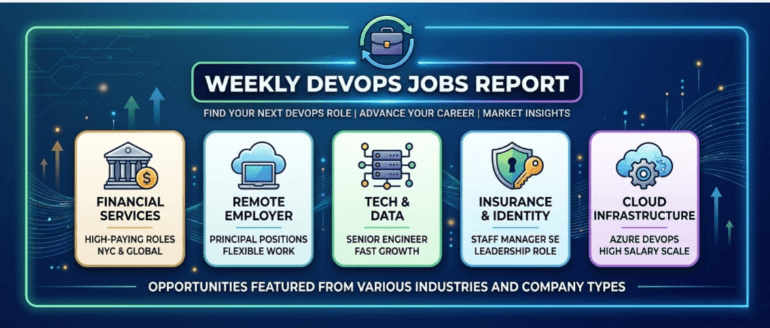
Five Great DevOps Job Opportunities
Explore the latest DevOps.com weekly jobs report. Highlighting premier opportunities at Bank of America, Microsoft, and GEICO, with salary insights up to $300,000 for senior engineering and platform leadership roles.

Two Malicious npm Packages Aim to Steal Credentials and Other Secrets
Bad actors took over a npm maintainer account and have published two malicious packages designed to steal credentials, API keys, and other secrets from the computers of victims who download them from the repository. Analysts with Sonatype’s Security Research Team wrote in a report that the two packages – sbx-mask and touch-adv – likely are […]
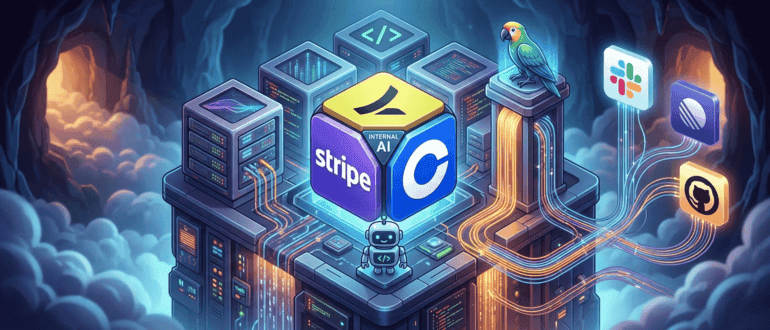
Open SWE Captures the Architecture That Stripe, Coinbase and Ramp Built Independently for Internal Coding Agents
Explore Open SWE, the open-source framework by LangChain that codifies the internal AI coding agent architectures used by Stripe, Ramp and Coinbase. Released March 17, 2026, this MIT-licensed project offers a customizable foundation using isolated sandboxes, subagent orchestration, and deep workflow integration for modern DevOps teams.

Policy as Code for Cost Control, Not Just Compliance
Policy as code can do more than enforce compliance. Learn how platform teams use guardrails, tagging and sizing policies to prevent cloud cost waste early.
When Code Becomes Cheap, Engineering Becomes Governance
AI agents can now generate in minutes what once took teams weeks, but the real shift is not faster coding. It is the collapse of code scarcity. As software production becomes industrialized, the job of engineers is moving from writing lines to governing systems, managing risk and deciding what should exist in the first place.

The Green Side of Observability: Why Less Data Can Mean More Insight
Observability can generate massive data volumes. Learn how sustainable observability reduces telemetry waste, lowers costs and improves insight.
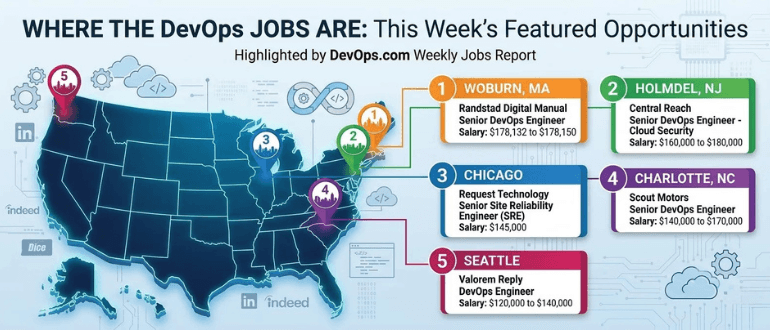
Five Great DevOps Job Opportunities
Weekly DevOps jobs roundup, this week highlighting top roles in Massachusetts, New Jersey, Chicago, Charlotte and Seattle, with pay ranges and hiring trends to help DevOps pros advance careers.

The Risk Profile of AI-Driven Development
Analysis arguing that AI-driven code generation accelerates dependency decisions and expands supply-chain risk, requiring shift-left governance, prompt-level controls, automated SBOM/AIBOM visibility, threat-modeling as engineering, and autonomous security to match autonomous development.
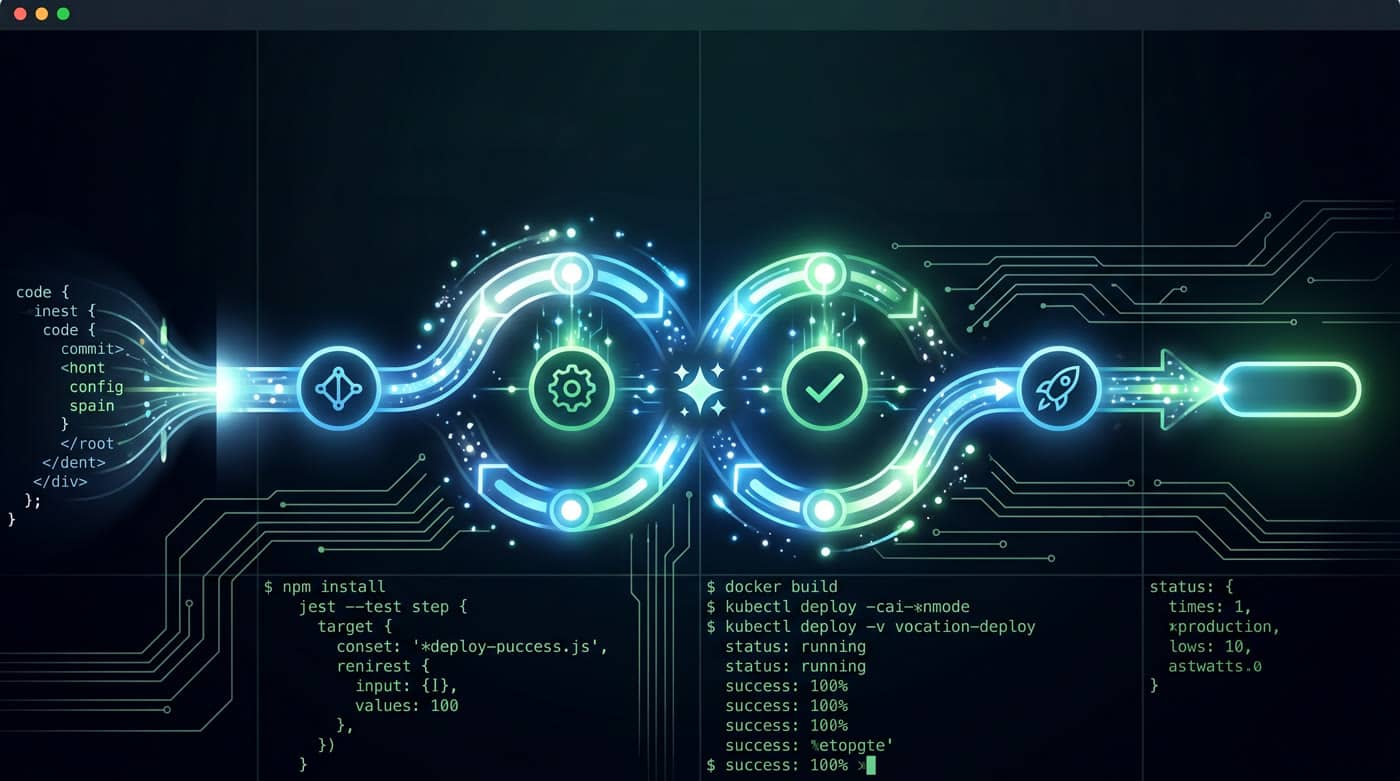
How eBPF and OpenTelemetry Have Simplified the Observability Function
Overview arguing that OpenTelemetry eBPF Instrumentation (OBI) — combined with OpenTelemetry Injector — removes barriers to full observability by enabling zero-code, kernel-level telemetry for Kubernetes and Linux environments, solving language, legacy, and security challenges.
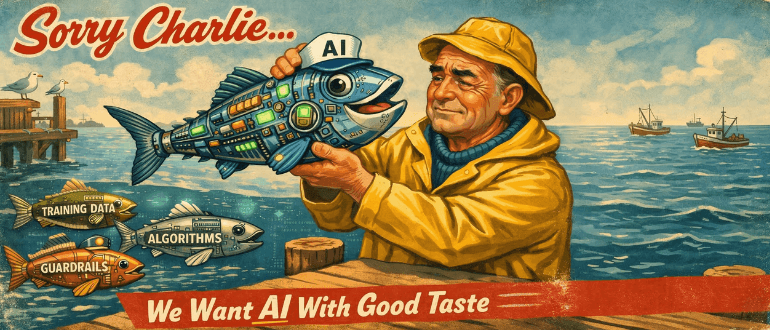
Sorry, Charlie, StarKist Wants AI With Good Taste
A surprising AI experiment showed that feeding a model sloppy code didn’t just produce bad programming, it produced bad behavior. The result points to something philosophers and DevOps engineers have long understood: Character, culture and incentives shape systems far more than rules alone.