

Me and My Kanban
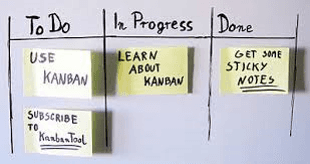
There has been a growing interest in the Kanban board, a tool that helps teams visualize their workflows, limit work in progress and get more “done”. Kanban Boards are mostly associated with Agile Scrum teams as a collaborative means of seeing the burndown of a sprint. In fact, Scrum and Kanban are considered to be […]
Panamax, Docker management for humans
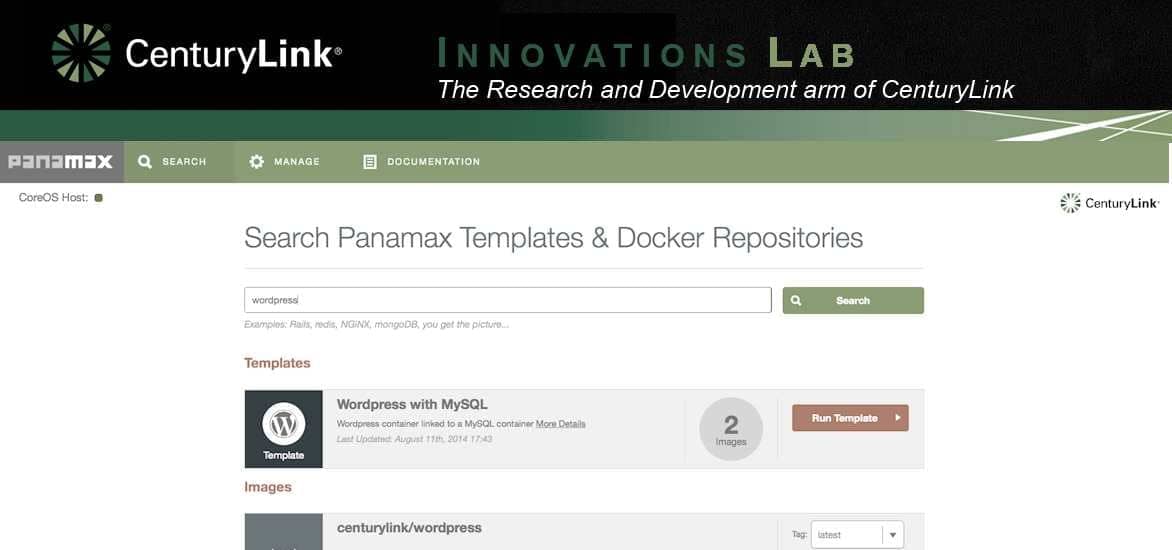
Panamax, a new open source tool from CenturyLink brings the promise of building complex Docker based environments like a child using Legos. The tool is a management interface for managing and building multiple Docker environments. You can search the official Docker repository as well as a number of others to find best of breed, Docker […]

DevOps with purpose: It’s about your applications
This is Part 1 of a series on DevOps with a purpose by Matthew Selheimer, Chief Technical Evangelist and SVP of Marketing at Houston-based ITinvolve. Unless you’ve been living under the proverbial rock these days you have no doubt heard about DevOps and the groundswell building around it. Today DevOps is being defined, promoted, touted and discussed […]
Bringing Collaboration, Orchestration and Lifecycle Management to Docker Containers
As you most likely know, Docker is a Linux container technology that stands to revolutionize or standardize the delivery mechanism of applications and services in the cloud. Docker, which just turned 1.0, has created an enormous amount of buzz, a vibrant community, and an extremely interesting ecosystem upon which developers and operations teams can draw […]

The Continuous Delivery Pipeline — What it is and Why it’s so Important in Developing Software
Continuous Delivery (CD) is a software strategy that enables organizations to deliver new features to users as fast and efficiently as possible. The core idea of CD is to create a repeatable, reliable and incrementally improving process for taking software from concept to customer. The goal of Continuous Delivery is to enable a constant flow […]

The WhiteBox PaaS
One of my favourite blog posts about PaaS is James Urquhart’s ‘Is your PaaS composable or contextual? (Hint: the answer matters)’. In the post, James distinguishes two different types of PaaS: Contextual and Composable. He additionally implied a third type of PaaS (though he categorized it as “Composable”): “Perhaps most importantly, however, there are open source “build” […]

5 Secrets of Enterprise DevOps
There is still much debate surrounding the merits of Enterprise DevOps, some say that DevOps is great for the highly scalable startups but not feasible for the enterprise, while others say that DevOps is mandatory for a company’s survival. When enterprises evaluate the potential impact of DevOps adoption, they should consider some key points: 1. […]
ElasticBox Jenkins Plugin – Easy Continuous Integration Setup
Introduction to Jenkins and ElasticBox ElasticBox has recently released a Jenkins plugin which makes it possible to configure a continuous integration or continuous deployment scenario without writing any code or scripts! How have we done this you ask? Simple, it was magic. In all seriousness, magic is the end result if you integrate ElasticBox and […]
Deploying a MongoDB Cluster with ElasticBox
Our founders, back in the day, were part of the .NET framework team at Microsoft. So it’s no surprise that their first version of ElasticBox was written on C#, .NET framework and SQL Server. Fast forward to 2012. As the ElasticBox vision crystallized, we wanted a robust, scalable architecture to match our vision. So we reevaluated all the existing technologies. Among other things, we […]
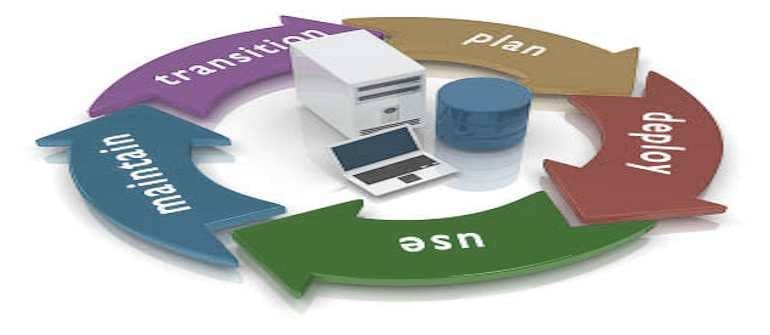
Flexible and Scalable Multi-tier Application Deployments
This is a guest post from Alberto Arias Maestro, CTO and co-founder of ElasticBox One of the biggest problems facing software engineers since the dawn of the multi-tier application is, well, how to make it multi-tier. It’s more than just having several supporting applications – it is about connecting the layers correctly and allowing them […]
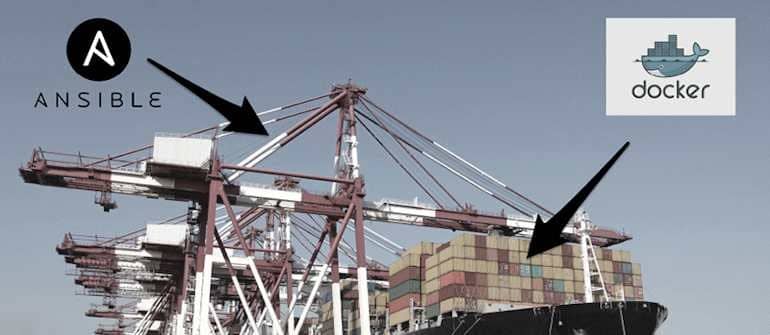
How Ansible makes automation easy
Continuing our series of videos from the recent Gluecon 2014 conference, here is our next one again courtesy of CloudSoft. In this video Peter Sankauskas talks about using Ansible to make automation easy especially with AWS. Hope you enjoy it. Alan Shimel
Using Docker & Ansible by John Minnihan @Gluecon 2014
Continuing our series of videos from the DevOps track at Gluecon this past year, our next video is “Why Docker + Ansible Make Chef and Puppet 100% Unnecessary by John Minnihan, ModernRepo” Again many thanks to CloudSoft for recording and making these videos available to us to post. Also the picture above is from the […]

Amplifying Docker with AMP and Brooklyn
Here is the second video in our series of DevOps talks from Gluecon 2014. Again thanks much to our friends at CloudSoft for providing the video services and providing them to us to post here. In this session CloudSoft CTO Alex Heneveld talks about how to amplify Docker using the open source Brooklyn Project (now […]
6 things you didn’t know about SaltStack
I recently had the pleasure of moderating the first day of the DevOps track at Gluecon 2014. As I wrote about in a previous post, the good folks at CloudSoft were kind enough to have the days sessions video taped (OK I don’t know if they actually use tape anymore, but you know what I […]

An open-source pipeline for trusted images
There are a lot of good reasons to use a trusted image (aka “foundation image”), including reliability, reduced time to launch, secure configuration. [We’ve discussed them previously] In this article we are going to describe a development and quality assurance process for making trusted (aka “foundation” or “golden”) images. First, this is the tool set […]

Let’s keep the countdown going: Reason #2 for StackStorm to join the fray
Stackstorm is a new company focused on automation, operations and DevOps. It’s co-founder and CEO Evan Powell has been keeping a running journal as the company made ready to emerge from stealth. This is the 2nd in the series of posts from Powell’s thoughts and experiences as a new DevOps company comes to market.f In […]

Why Vertical Collaboration Matters for DevOps
Vertical collaboration is defined by Rick Defour as a team of people working interdependently toward a common goal for which they are all mutually accountable. Now that everyone is clear on the importance of collaboration and the different types, it’s time to delve into the importance of one type of collaboration in particular: vertical. Vertical […]
Not all collaboration types are equal
Talking about collaboration in general terms is easy. I’ve done it and so has everyone else. It’s time now to dig deeper into the specifics of collaboration, meaning the different types – asynchronous vs. synchronous, vertical vs. horizontal – and how different companies fit into the magic collaboration quadrant. And yes, the quadrant is indeed […]

Mobile Apps and Big Data Megatrends Drive Application Performance Management
As the megatrends of Big Data, mobility and cloud continue to reshape the IT landscape many companies are responding by refocusing their solutions to provide better visibility and support for these technologies. Case in point is AppDynamics new Spring 2014 release announced yesterday (full disclosure, AppDynamics is a sponsor on DevOps.com but that sponsorship has […]
MongoDB Replication Pro-tips: Reporting Instances
Any shop that has a DevOps culture, and that has MongoDB backed applications, uses replica sets… not just for production applications, but for those still in the prototyping phase. Replication is critical for uptime, so your Ops team has been working with your Devs all through the development of your project, and you didn’t defer […]
Deployment and Monitoring Automation with glu
glu is a free/open source deployment and monitoring automation platform. glu is a project that was started at LinkedIn mid-2009 to address the exponentially growing needs of deploying the set of applications and services that make up the LinkedIn experience. Although some projects like Chef and Puppet existed at the time, they were mostly good […]