

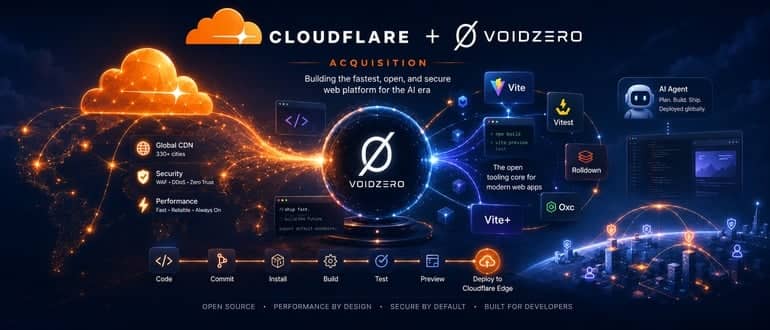

Why the Software Development Tools you Choose Directly Affect Your CI/CD Reliability
The software development tools you choose shape your CI/CD pipeline reliability in ways that only surface months later. Learn what to evaluate before adoption.

Agentic DevSecOps: AI Security Co-Pilots for Your CI/CD Pipeline
The emergence of AI has brought endless possibilities and innovative opportunities in today’s ever-changing, fast-paced technology landscape. AI is helping development teams produce software significantly faster than ever before. AI-enabled DevSecOps tools can automatically scan code, infrastructure and other configurations for security issues throughout development, accelerating the overall process. The introduction of agentic AI into the software […]

Risk-Based Review for Infrastructure as Code Pull Requests
Not every infrastructure pull request deserves the same review path. A tag change in a development account and a network-policy change in production should not create identical reviewer load. When every change is treated as high risk, reviewers stop trusting the signal. In IaC review, I have seen reviewers spend too much attention on low-risk changes […]
The Death of the Four Golden Signals: Designing Telemetry for Non-Deterministic Infrastructure
In complex software systems, our traditional definition of operational health has always been comfortably binary. For over a decade, site reliability engineering (SRE) teams have relied on the industry-standard ‘Four Golden Signals’ — latency, traffic, errors and saturation — as the ultimate truth of platform stability. If our API-response times are hovering at sub-100 ms, […]
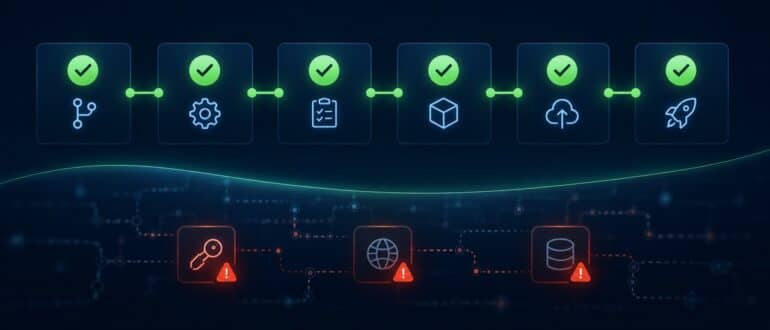
The Silent Risk of AI-Written DevOps Pipelines
These days, when a developer needs a CI/CD pipeline, they don’t always dive into GitHub Actions docs or spin up Jenkins from scratch. Instead, they pull up an AI assistant and type out something like: “Create a deployment pipeline for a containerized application.” Seconds later, the AI spits out a complete workflow. It looks polished. […]
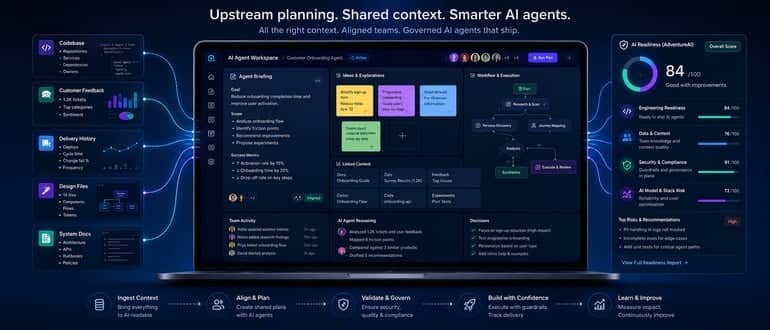
Allstacks Extends Reach of Software Engineering Intelligence Platform to AI Agents
Allstacks this week added a shared workspace capability to its software engineering intelligence platform that makes it simpler for product and software engineering teams to create specifications for artificial intelligence (AI) agents that organizations plan to develop and deploy. Product Studio provides teams with a place to plan, draft, and refine product requirements using the […]
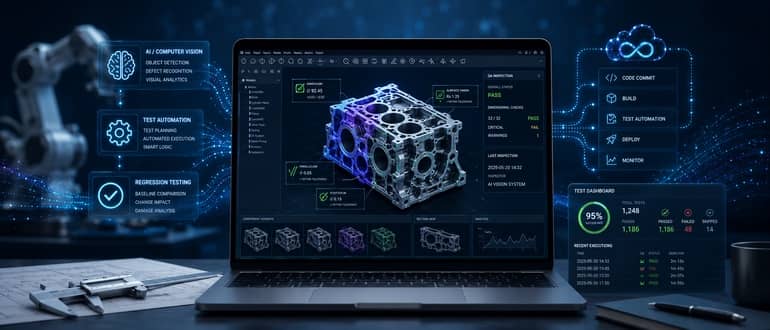
SmartBear Adds Computer Vision Capability to Testing Platform
SmartBear this week extended its ability to apply artificial intelligence to application testing with the addition of a computer vision capability that can be used to detect objects in applications. Prashant Mohan, vice president of product at SmartBear, said the company’s TestComplete platform now combines computer vision and optical character recognition to help automate the […]

Agentic Observability is Not a Chatbot Over Telemetry
Agentic observability isn’t about removing engineers from the loop. It is about making the loop faster, better informed, and easier to operate at the scale modern systems require.
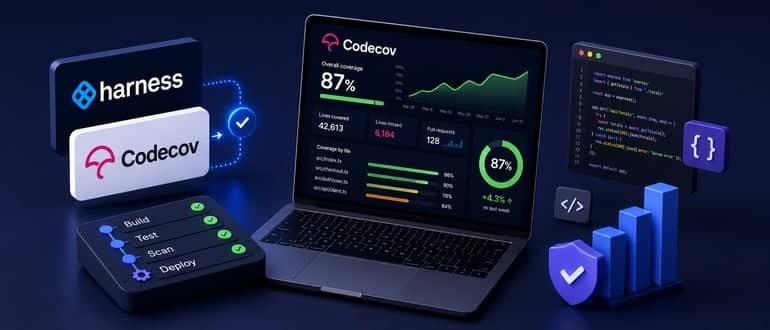
Harness Acquires Codecov to Identify Untested Code
Harness this week acquired Codecov, a provider of a platform that analyzes the percentage of a codebase that has been tested, from Sentry. Brad Rydzewski, a senior vice president and general manager for Harness, said Codecov makes it simpler for DevOps teams to track testing coverage at a time when the volume of code being […]

Why DIY Test Automation Succeeds Its Way Into a Problem
Ask any engineering team if they can build their own test automation framework, and the answer is almost always “yes.” With modern AI tools involved, that answer arrives faster and with more confidence than ever before. In 30 days, a capable team can spin up scripts, automate flows, generate test cases, and show a demo […]
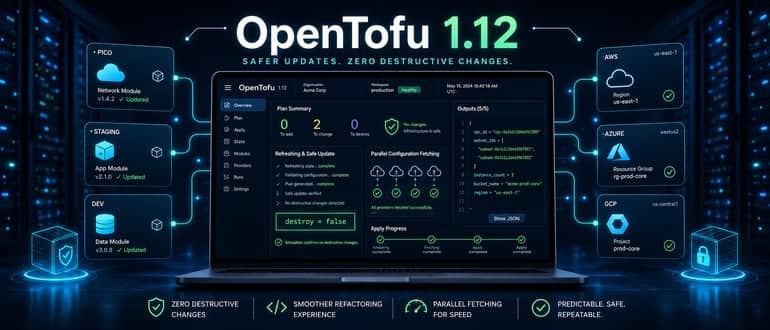
Latest OpenTofu Release Simplifies Configuration Updates
The latest update to the OpenTofu infrastructure-as-code (IaC) tool is making it simpler to update and refactor configurations without having to rework the entire codebase. Version 1.12.0 of OpenTofu has added a destroy = false lifecycle option that enables DevOps engineers to drop an object from state without issuing a destroy application programming interface (API) […]

GitHub Copilot Gets Its Own App — and Agents Are the Reason Why
GitHub debuts the Copilot app at Microsoft Build 2026 — an agent-native desktop experience for managing parallel AI agents, canvases, sandboxes, and code review.
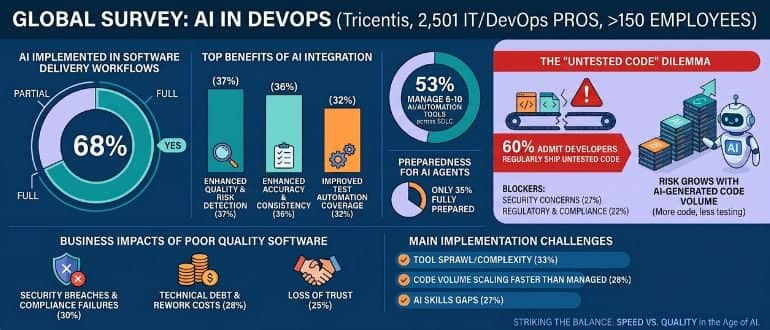
Survey Surfaces Pervasive Adoption of AI Across SDLC
Tricentis survey reveals 68% of orgs use AI in software delivery, but 60% admit to shipping untested code, leading to massive financial and security risks.

Microsoft Brings AI Agents Directly Into the Windows Terminal
Microsoft’s Intelligent Terminal 0.1 brings native AI agent integration to the Windows Terminal. Here’s what DevOps engineers need to know.
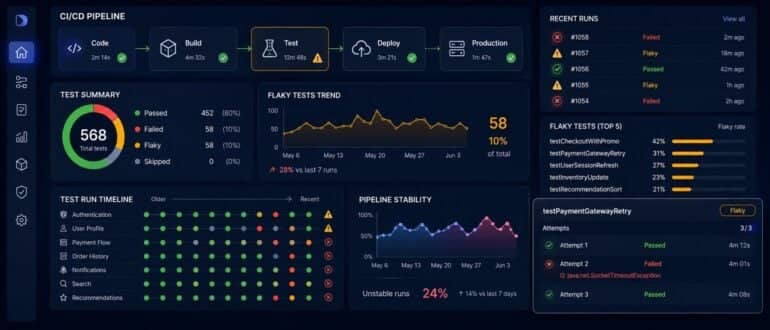
Regression Testing Tools in the Age of AI-Assisted Development: What Has Changed
For most of the past decade, the conversation around regression testing tools was fairly stable. The tools got faster, the integrations got smoother, and the underlying approach stayed largely the same: write tests, run them in CI, fix failures. The fundamental model did not change much because the problem did not change much. AI-assisted development […]

Shai-Hulud Clone ‘Miasma’ Compromises 32 Red Hat npm Packages
The threat group behind the notorious Mini Shai-Hulud worm last month put the complete source code for the malware into a GitHub repository, essentially open sourcing the threat so that other bad actors can create their own variants. GitHub reportedly took down the repository shortly after it appeared, but the damage was already done, with […]
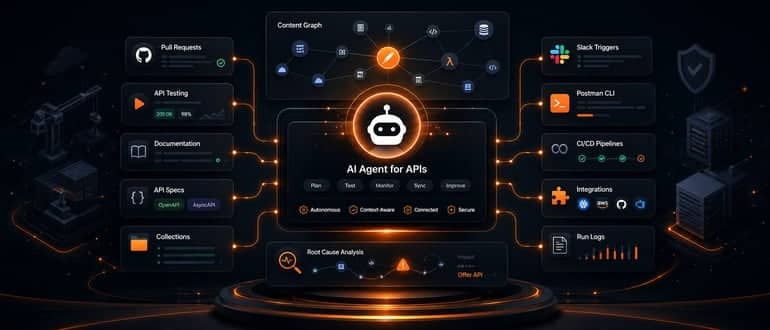
Postman Adds AI Agent to Automate API Development and Governance
Postman added an artificial intelligence (AI) agent to its portfolio of tools and platforms for building and governing application programming interfaces (APIs) that can autonomously perform tasks ranging from development and documentation to exploration and setting up integrations with continuous integration/continuous deployment (CI/CD) environments. Company CEO Abhinav Asthana said the AI Engineer significantly reduces the […]

Can Chainguard Save Open-Source Software From Mythos? Can Anyone?
IBM and Red Hat aren’t the only ones that mean to lock down open-source code against AI hacking tools. Last week, IBM and Red Hat launched Project Lightwell to protect open-source projects with $5 billion and 20 thousand engineers. Not to be outdone, with tongue in cheek, Chainguard’s CEO Dan Lorenc announced a $50 million, […]

Overcoming IP Churn in Ephemeral DevOps Environments Using Userspace Overlays
Modern DevOps practices have completely transformed how we handle compute and orchestration. Tools like Kubernetes enable engineering teams to spin up ephemeral containers in seconds and scale workloads dynamically to meet global demand. Yet the underlying network infrastructure has remained stubbornly rigid. Traditional cloud networking relies heavily on static IP addresses, rigid firewall rules, and […]

Ten Great DevOps Job Opportunities
DevOps.com is now providing a weekly DevOps jobs report through which opportunities for DevOps professionals will be highlighted as part of an effort to better serve our audience. Our goal in these challenging economic times is to make it just that much easier for DevOps professionals to advance their careers. Of course, the pool of […]

xAI Opens Grok Build 0.1 to Developers via API
xAI’s Grok Build 0.1 is now available in public beta via the xAI API — a fast, purpose-built coding model for agentic workflows, debugging, and MCP support.

Claude Code’s Dynamic Workflows Take on the Tasks That Were Too Big to Automate
Anthropic’s Claude Code dynamic workflows run parallel subagents to tackle codebase-wide audits, large migrations, and complex engineering tasks end-to-end.
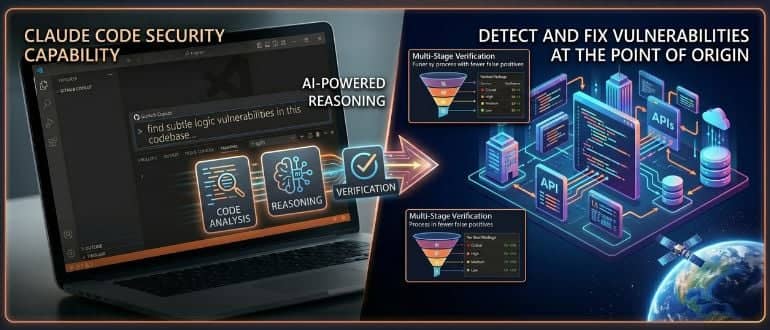
Claude Code Security Catches Vulnerabilities While You Write Code
Claude Code Security uses AI reasoning to catch complex vulnerabilities in code — including logic flaws that traditional static analysis tools consistently miss.