



Legit Security AI Tool Uses Threat Feed to Identify Risks to Software Supply Chain
Legit Security this week added a threat feed that DevSecOps teams can use to instantly determine if a newly discovered vulnerability impacts their software supply chain. Built using the Legit VibeGuard tool, the threat feed added to the company’s application security posture management (ASPM) platform also enables DevSecOps teams to take advantage of “vibecoding” techniques […]

DevOps: The Never-Ending Story
A reflective take from Alan on why DevOps endures, adapts, and remains a human-centered practice in an era of platforms and AI.

Stop Worshipping ‘Global Availability’: A Practical SLI/SLO Bucketing Playbook
Global availability hides real failures. Learn why bucketed SLIs give a truer picture of reliability—and how SRE teams can align alerts with real business impact.
AWS Sage: Your AI Assistant’s Gateway to the Cloud
AWS Sage is an open-source MCP server that gives AI assistants unified, intelligent access to AWS with cross-service discovery, dependency mapping, impact analysis, and automated incident investigation.
Autoptic Unfurls AI Change Resilience Agents to Analyze Telemetry Data
Autoptic launches AI-powered change resilience agents that analyze DevOps telemetry to detect root causes, prevent incidents, and boost confidence before production changes.
Testlio Adds AI Tool to Generate Dashboards on App Testing Service
Testlio enhances its testing platform with AI-generated dashboards that correlate over 100 signals, helping DevOps and business leaders spot quality, risk, and AI-related issues faster.
Harness Adds AI Agent to Help Investigate Incidents
Harness today added an artificial intelligence (AI) agent to its portfolio that has been specifically trained to help DevOps teams investigate events that occurred prior to an incident. Tina Huang, vice president of product and engineering for AI SRE at Harness, said the Harness Human-Aware Change Agent leverages large language models (LLMs) to analyze comments […]
Resilient Middleware at Scale: Using YAML and Ansible to Harden Apache, WebLogic and Tomcat
Transform your middleware into a resilient powerhouse with automation, consistent configuration, and progressive delivery. Discover how to reduce downtime and increase stability across Apache, Tomcat, WLS, and more.
DevOps Didn’t Fail — We Just Finally Gave it the Tools it Deserved
Charity Majors delivers a wake-up jab to DevOps, sparking debate on its evolution and success. Is it a failure or just getting interesting? Alan dives into the discussion.

Five Great DevOps Job Opportunities
Discover top DevOps job opportunities this week from JP Morgan Chase, SpaceX, BBR Partners, Fox Corp, and Veeva Systems, designed to help professionals advance their careers.
Meet the 2025 DevOps Dozen Award Winners
When we first launched DevOps.com, the goal was never just to report on tools or trends. It was to elevate the people, ideas, and communities shaping how software is built and delivered. The DevOps Dozen Awards exist for that exact reason. Each year, these awards recognize individuals, teams, technologies, and community efforts that move DevOps […]
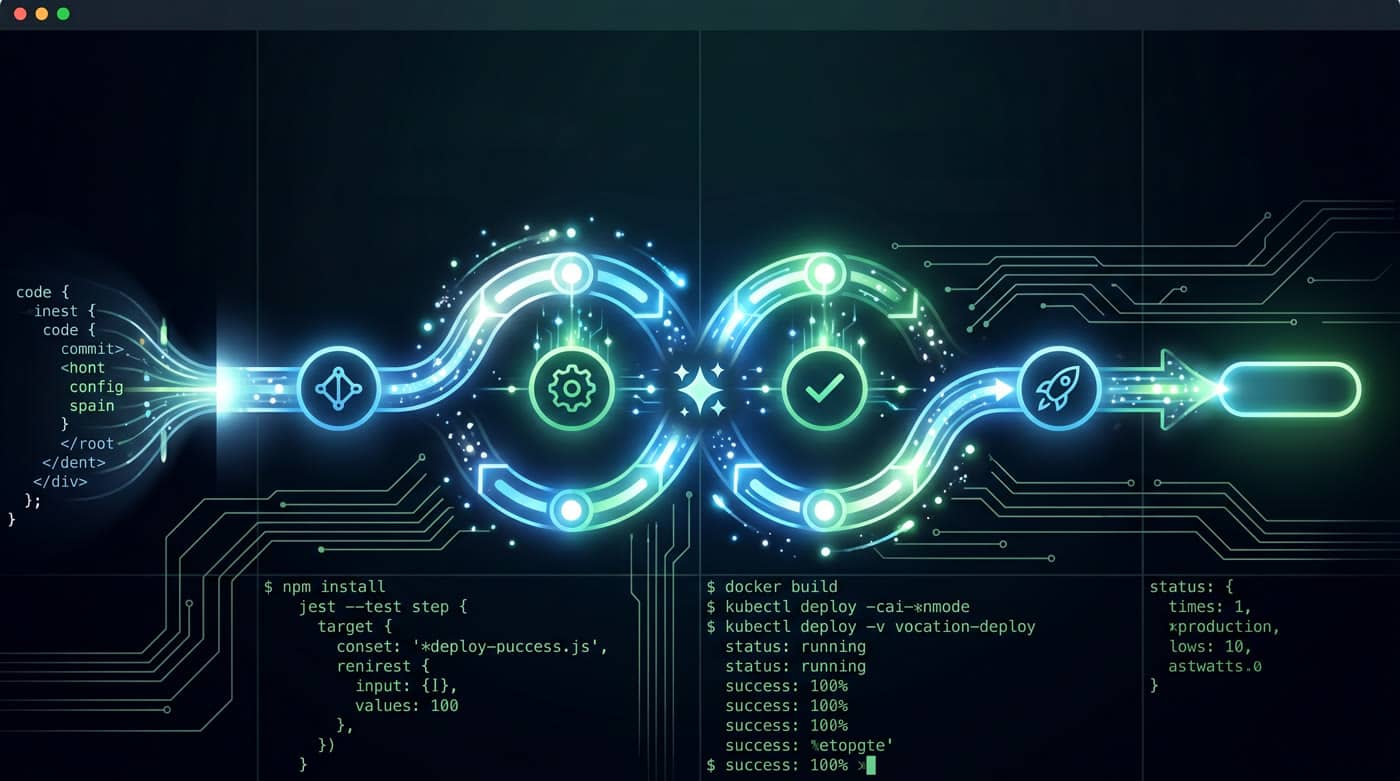
Establishing DevOps for Mainframe Applications
Mainframes don’t have to block DevOps. Learn how extending CI/CD, Git, and security scanning to mainframe applications modernizes delivery without replacing mission-critical systems.

FinOps Meets DevOps: Engineering Cost Ownership in 2026
In 2026, cloud cost overruns stop being finance’s problem and become an engineering responsibility. Here’s how treating cost as code finally makes FinOps work.
GitLab Delivers on AI Agents Promise to Automate DevOps Workflows
GitLab today made generally available an agentic artificial intelligence (AI) platform that automates software engineering tasks ranging from planning to application security. Coinciding with the release of version 18.8 of the core GitLab platform, the GitLab Duo Agent Platform initially provides access to seven AI agents that DevOps teams can assign a range of tasks […]
Building a GenAI-RAG Runbooks-Based ChatOps Assistant in AWS Bedrock With MS Teams Integration for Incident Management
Learn how AWS Bedrock, retrieval-augmented generation (RAG), and ChatOps in Microsoft Teams transform incident response by turning fragmented runbooks into a GenAI-powered assistant that reduces MTTR and improves SRE efficiency.

Yes, We Know AI Isn’t a Person
Let’s get the obvious out of the way right up front. AI isn’t a person. Thank you, Captain Obvious. We’re all on the same page. And yet, when we announced that AI is Techstrong’s “Person of the Year” for our Predict 2026 virtual event on January 15, a few folks felt compelled to remind us […]
Your AI Agents Have a Blind Spot: What DevOps Teams Need to Know About Cross-LLM Security
Explore the challenges of AI agents in DevOps pipelines, highlighting the importance of model-aware detection to improve security and reduce vulnerabilities.
(Almost) Seven Signs That Your JavaScript Project is Legacy
Learn how to identify legacy JavaScript projects by examining outdated practices, architectural choices, and testing strategies that can hinder development.
Security Controls That Slow Teams Are Usually Poorly Designed
Discover strategies to enhance security controls in DevOps, emphasizing the shift from gates to guardrails and the importance of designing around real workflows.

DevSecOps In Digital Banking: Balancing Fast Releases With Regulatory Compliance
In the digital banking sector, fast releases of new features and security patches have become the norm. Unfortunately, many institutions lack the organization or the processes necessary to make the speed of necessary releases coincide with the need to follow strict regulatory guidelines. A failure to accurately test and ensure compliance can lead to critical […]
Lessons from 2025: The Year “Agent Mitigation” Became a Thing
Explore the emergence of agent mitigation as a formal discipline in response to 2025’s AI failures, highlighting best practices for secure and reliable AI agent deployment.
Part 3: The Zero-Touch Infrastructure: Architecting Systems That Fix Themselves
Part 3: Discover how autonomous SRE transforms incident management and system reliability, enabling self-healing systems that reduce reliance on human intervention.
Part 2: From Reactive to Predictive: Training LLMs on Your Incident History
Part 2: Discover how to harness incident history and AI to predict and prevent operational issues before they escalate, improving efficiency in Site Reliability Engineering.