

The End of Alert Fatigue: How AI-Powered Observability is Transforming SRE Teams in 2026
Alert fatigue among Site Reliability Engineering (SRE) teams has reached a breaking point, with responders drowning in thousands of weekly notifications where only 3% genuinely warrant attention. This massive volume of noise—driven by fragmented monitoring tools and rigid, threshold-based alerting—stifles innovation, spikes on-call burnout, and compromises system reliability. Fortunately, AI-powered observability and AIOps platforms are transforming incident management. By unifying telemetry across metrics, logs, and traces, intelligent systems can correlate signals, execute automated root cause analysis, and trigger self-healing remediation. This shift reduces alert volumes by up to 95% and slashes mean time to resolution (MTTR) by 40–58%, allowing engineers to pivot from reactive firefighting to proactive reliability engineering.

5 Ways Agentic AI is Redefining DevOps Architecture for Self-Healing CI/CD Systems
The era of the flaky test as a simple annoyance is over. As enterprises shift from deterministic applications to agentic AI, flakiness has evolved into a structural bottleneck for traditional CI/CD pipelines reliant on rigid, binary assertions. Because AI agents produce “Y-like” rather than exact results, DevOps architecture must fundamentally change. This article explores the transition from simple pipeline automation to true autonomy—detailing how multi-agent networks utilize predictive failure detection, self-healing test repair, autonomous incident remediation, and adaptive security scanning to create pipelines that actively problem-solve and adapt to code changes in real time.
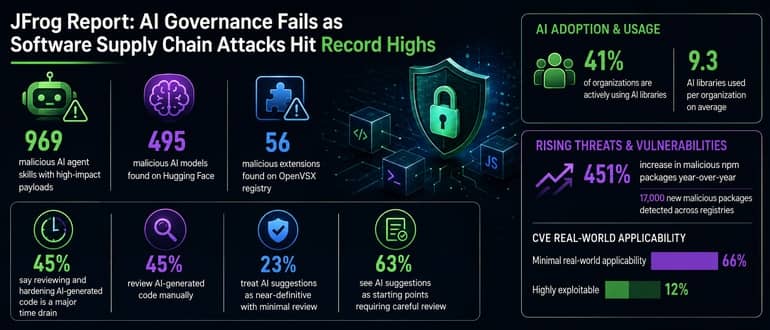
JFrog Report Surfaces Need for Rapid DevSecOps Change in AI Era
A report published by JFrog finds that cybercriminals are now increasingly targeting the artificial intelligence (AI) tools and platforms used by application development teams. Based on an analysis of 18.2 billion artifacts managed via the JFrog Platform, security researchers discovered 969 AI agent skills carrying high-impact payloads in addition to 495 malicious AI models on […]

On-Call: The Silent Force Shaping Engineering Culture
There is a silent force shaping engineering culture inside every technology organization. It affects productivity, team morale, psychological safety, and long-term retention. And yet, it is rarely discussed in executive meetings or reflected in meaningful KPIs. That force is on-call. On-call is one of the most direct touchpoints engineers have with the reality of the […]
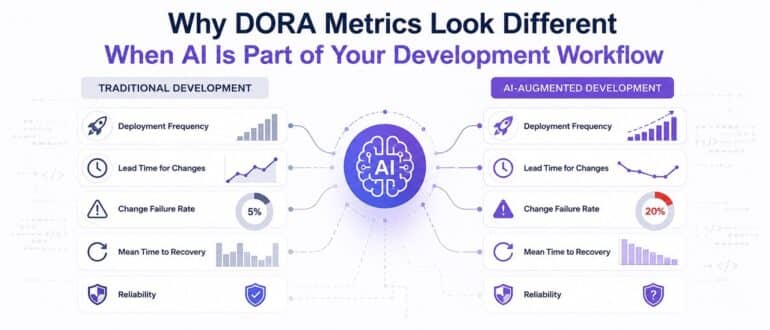
Why DORA Metrics Look Different When AI Is Part of Your Development Workflow
DORA metrics have been a reliable compass for engineering teams for over a decade. Deployment frequency, lead time for changes, change failure rate, mean time to recovery, and reliability give teams a shared language for talking about delivery performance. The research behind them is solid, the benchmarks are well-established, and most engineering leaders know what […]
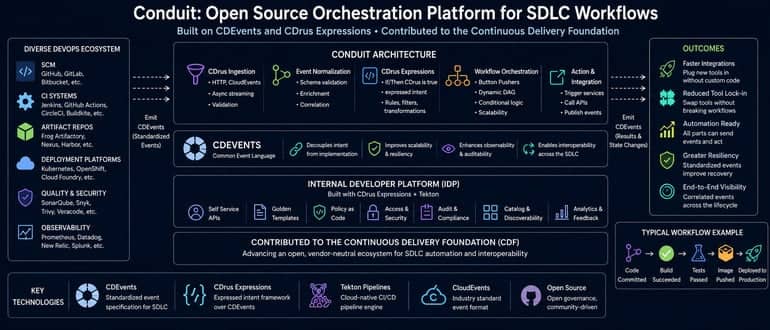
Sol Duara Readies Open Source Workflow Orchestration Platform for CD Foundation
Sol Duara, a provider of open source platforms for managing the software development lifecycle (SDLC), has announced its intent to contribute an open source orchestration platform for automating software development workflows to the Continuous Delivery (CD) Foundation. At the core of the Conduit platform from Sol Duara is CDrus Expressions, a framework that turns CDEvents […]
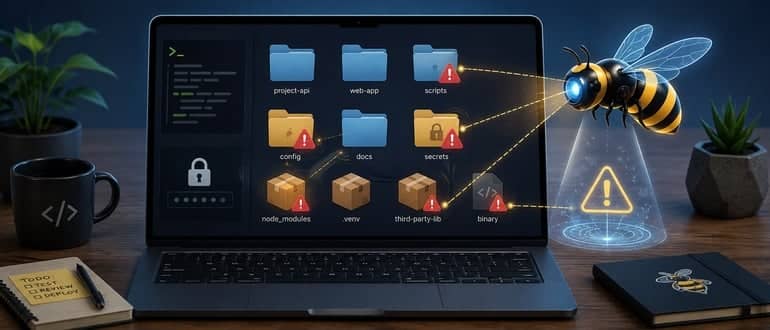
Perplexity Bumblebee Shakes Loose Hidden Threats on Dev Desktops
The fight to maintain security has moved to the engineer’s messy desktop. Last week, AI search provider Perplexity open-sourced an internal tool, Bumblebee, for checking developer machines, either Linux or macOS, for vulnerable software. Continuous integration pipelines have baked security checks into them, with Software Bills of Materials (SBOMs) ensuring that the correct version of […]
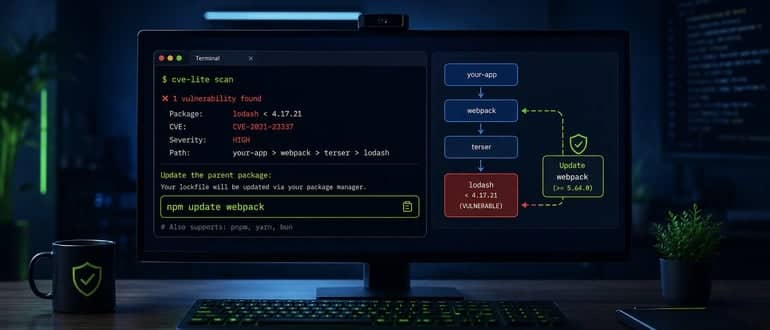
OWASP Adopts CVE Lite CLI to Boost Dependency Scanning
Checking for dependency vulnerabilities in freshly developed software is usually done near the end of the build process. Remediation at that point can be tricky. Now, JavaScript and TypeScript developers can check for vulnerabilities themselves as they – or their agents – write their source code, using an open source project called CVE Lite CLI. […]

Ten Great DevOps Job Opportunities
DevOps.com is now providing a weekly DevOps jobs report through which opportunities for DevOps professionals will be highlighted as part of an effort to better serve our audience. Our goal in these challenging economic times is to make it just that much easier for DevOps professionals to advance their careers. Of course, the pool of […]

Co-Developing an AI Native Observability Platform
Modern distributed hybrid enterprise environments are moving away from siloed monitoring toward AIOps platforms like Selector AI, which combine multi-domain data ingestion, domain-specific network language models, and co-development to enable autonomous, agentic network operations.
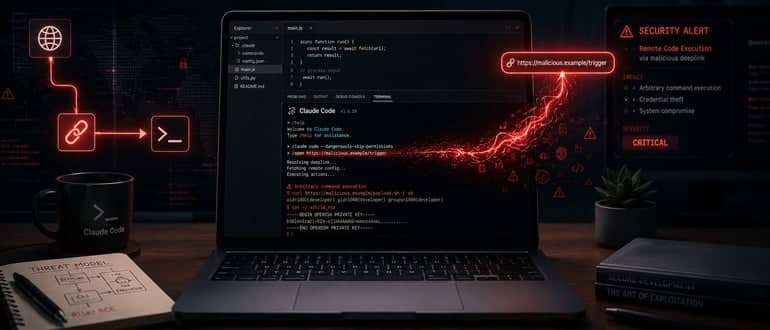
Attackers Can Exploit a Claude Code RCE Flaw to Take Command of System
A dangerous vulnerability found in Anthropic’s popular Claude Code developer model could have allowed bad actors to grab control of a victim’s system by luring them into clicking on a crafted malicious deeplink. Once in, the attacker could exploit the remote code execution (RCE) security flaw to execute arbitrary commands – such as shell commands […]
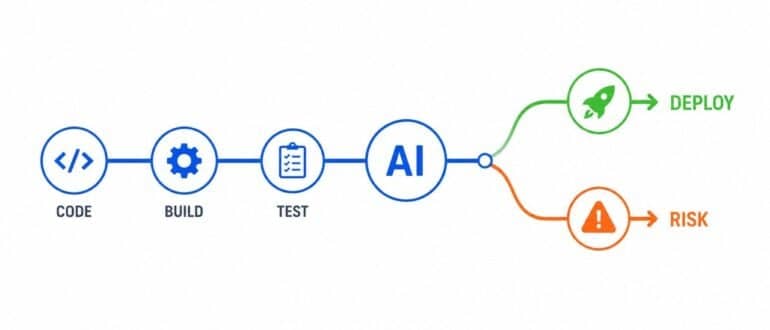
AI Agents in CI/CD Pipelines: Speed vs Control in Modern DevOps
The moment you push your code, deployment fires off on its own. The pipeline kicks in, the tests sail through, and within a few minutes your app is live in production. There is no manual sign-off and no one scanning through the final changes. Everything is running on the decisions of an AI agent plugged […]

Designing an AI-Powered DevSecOps Guardrail Pipeline Using GitHub Actions
By embedding AI-powered guardrails directly into CI/CD pipelines, organizations can detect vulnerabilities earlier, enforce security policies automatically and accelerate secure software delivery.

Modernizing DevOps Security With Intelligent KYC Enforcement Layers
This is where smart KYC enforcement layers fit in — not a compliance box, but an engineering control that is directly part of DevOps processes.
Eight Ways AI Will Reshape DevOps in 2026 and Beyond
In 2026 and beyond, AI will not just change how software is developed, but change the very fundamentals of how people work.
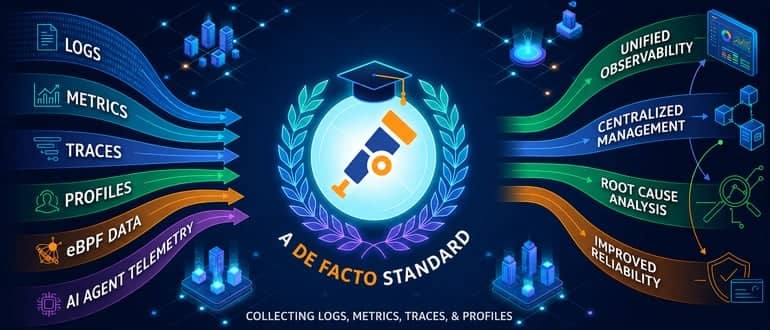
OpenTelemetry Achieves CNCF Graduated Project Status
The Cloud Native Computing Foundation (CNCF) today announced that the open source OpenTelemetry (OTel) project has officially graduated a little more than seven years after its initial adoption. Announced at the Observability North America Summit, OpenTelemetry was first donated to the CNCF in 2019 following the merger of separate OpenTracing and OpenCensus projects that sought […]
Low-Code/No-Code in Microsoft 365: How Power Platform is Redefining Enterprise DevOps
Low-code and no-code platforms like Microsoft Power Platform are reshaping enterprise DevOps. When combined with cloud architecture, DevOps discipline, and AI-driven assistance, they enable organizations to deliver solutions faster without sacrificing control.
CI/CD Supply Chain Security: Hardening Artifacts, Dependencies, and Delivery Pipelines
Modern CI/CD pipelines have become one of the most attractive attack surfaces in enterprise environments. As organizations push for faster releases, broader automation, and greater reuse of third-party components, the software supply chain has quietly expanded beyond the direct control of any single team. Source code is only one small piece of what ultimately runs in […]
The Evolving Role of Observability in DevOps
DevOps practices have fundamentally changed how software is delivered, operated, and improved. At their heart, DevOps methodologies seek to unify development and operations, enabling teams to ship changes more quickly while maintaining system reliability. The discipline has grown beyond simple CI/CD automation to encompass culture, observability, and intelligent workflows. As organizations scale, they face new […]
How to Create an AI Acceptable Use Policy
When teams know which tools are acceptable and which data are off-limits, AI becomes a disciplined advantage rather than a quiet source of risk.

Microsoft Open-Sources RAMPART and Clarity to Bring Agent Safety Into the Dev Workflow
Microsoft open-sources RAMPART and Clarity to help dev teams embed AI agent safety testing directly into CI pipelines and design workflows.

The “Day 2” AI Problem: Why Standard API Gateways Fail at GenAI Scale
Injecting GenAI into applications is deceptively easy. Need a new chatbot backed by an LLM? Grab an OpenAI API key and you can throw together an MVP in an afternoon. This is the pattern teams have used to push AI features into apps for the last few years. The problem, as with previous tech hype […]
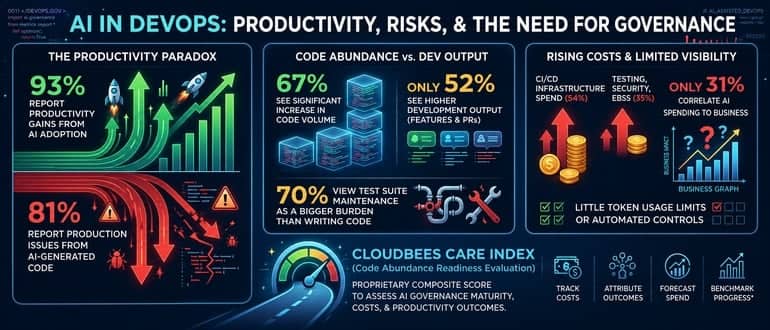
CloudBees Survey Surfaces Increase in Production Issues Attributable to AI
A survey of 213 IT leaders, conducted by CloudBees, finds that while 93% report they are seeing productivity gains that are driven by increased adoption of artificial intelligence (AI) tools, a full 81% also report they have seen an increase in production issues attributable to AI-generated code. Shared this week at an Agentic DevOps World […]