
PagerDuty today added a suite of artificial intelligence (AI) agents to its IT management platform that includes one designed to function as a site reliability engineer (SRE).
Part of the Fall ‘25 release of the PagerDuty platform, the suite of A agents includes the PagerDuty Insights Agent which surfaces answers to queries and recommendations to prevent issues from arising, and a PagerDuty SRE Agent, available in early access, that is capable of generating runbooks that it automatically updates as changes to the IT environment are made.
There is also a PagerDuty Scribe Agent that instantly transcribes Zoom calls and chat conversations in addition to generating structured summaries and status updates that can be shared via Slack or Microsoft Team,s and a PagerDuty Shift Agent that detects and automatically resolves on-call scheduling conflicts.
Finally, PagerDuty is also now making a Model Context Protocol (MCP) server that will make the data it collects accessible to third-party AI applications and agents, generally available in addition to providing tighter integration with the Backstage internal developer platform (IDP) service provided by Spotify.
David Williams, senior vice president of product for PagerDuty, said these agents collectively will enable IT teams to dramatically reduce the current time and effort required to resolve IT incidents. The overall goal is to reduce the amount of context switching that IT teams currently experience when navigating multiple tools, he added.
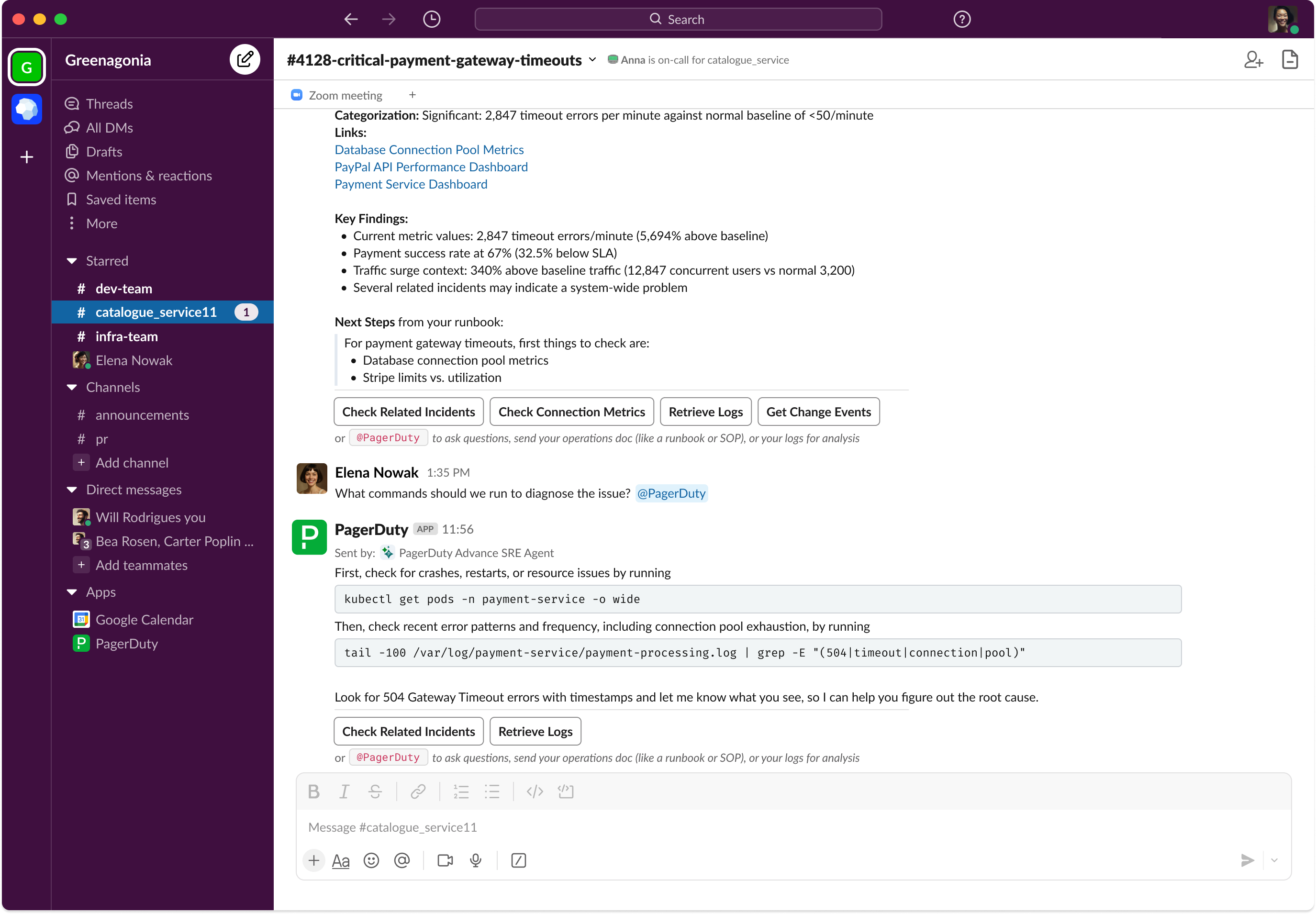
It’s not clear to what degree IT teams might eventually trust AI agents to autonomously complete a task, but there are plenty of manual processes that could be automated without having any potential impact on IT operations. In fact, as much of that toil becomes automated the overall amount of stress that many IT administrators and DevOps engineers currently experience should be sharply reduced.
It’s not likely AI agents will replace the need for IT professionals any time soon, but they should make it simpler to manage complex IT environments at scale. Right now, many organizations have to limit the number of applications they build and deploy because it is too costly to hire additional personnel.
Many existing members of those IT staffs, meanwhile, are experiencing high levels of burnout because many of the tasks they need to perform have simply become too monotonous for them to ever enjoy doing.
At this juncture, it’s not so much a question of if AI will be applied to DevOps workflows as it is to the degree. Savvy DevOps teams are already identifying tasks that might be better handled by an AI agent, which in turn should free them up to take on more challenging projects.
Regardless of motivation, the one thing that is clear is that AI agents will soon change the way DevOps teams are structured and organized in ways that will, hopefully, lead to more software being built and deployed than anyone might have ever imagined a few short years ago.