

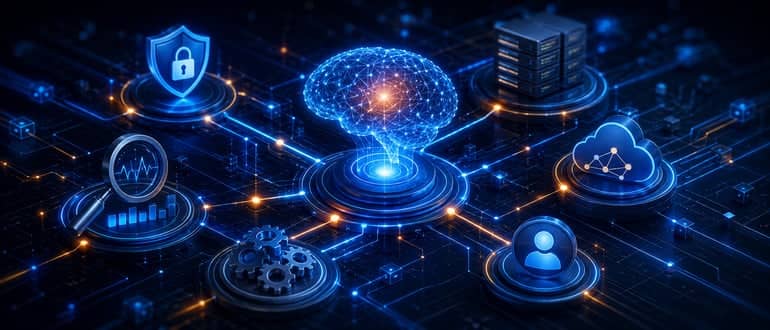

The Agent Proposes, the Pipeline Disposes: Controls for AI-Authored Change
When agents write code and open pull requests faster than humans can read them, ‘the diff looked fine’ stops being a control. The durable controls live outside the agent’s reasoning loop.
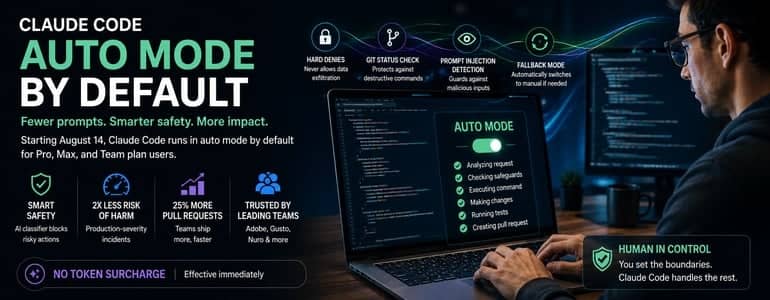
Anthropic Makes Claude Code’s Auto Mode the Default, Betting Automation Beats Manual Review
Anthropic is making Claude Code’s auto mode the default for Pro, Max and Team users, replacing constant permission prompts with classifier-based guardrails designed to catch risky actions without slowing developers down.
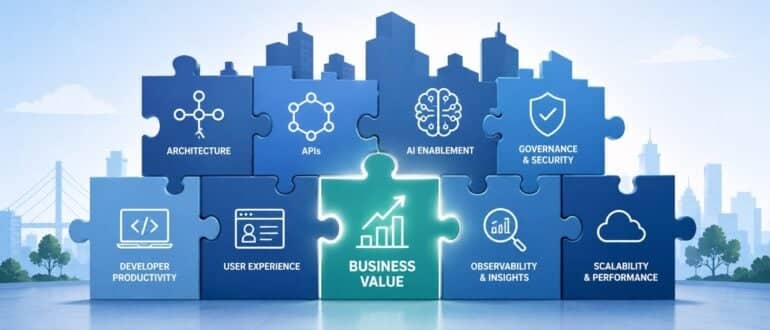
The Innovation Puzzle 2.0: Connecting Vision and Value
The tech landscape constantly evolves, making it tempting to chase every new trend. Ironically, in today’s business world, the word “innovation” has become almost synonymous with technology adoption. Yet after years of leading digital transformations, I’ve learned that sustainable innovation isn’t about having the latest technology—it’s about solving business problems and delivering measurable impact. In […]
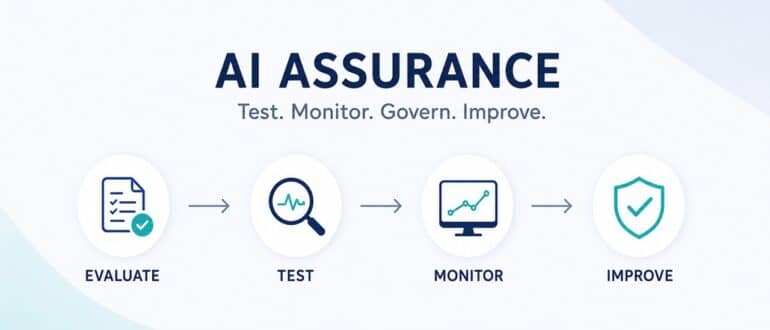
From AI Hype to AI Assurance: How Engineering Teams Can Safely Ship AI-Enabled Software
AI has moved very quickly from experimentation to production. A few years ago, many organizations were still asking whether AI could improve their products or internal workflows. Today, the question is different: how can teams ship AI-enabled software safely, reliably, and responsibly? That shift matters because AI is no longer just a research project or […]
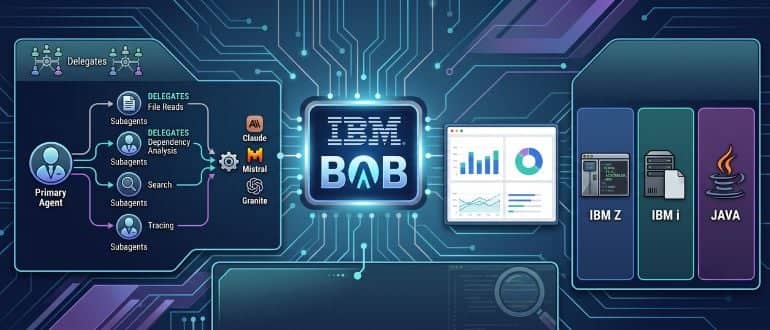
IBM Bob Gets Multi-Agent Muscle and a Cost Dashboard for Enterprise Coding
IBM Bob adds multi-agent coordination, cost analytics, and modernization workflows for IBM Z, IBM i, and Java as AI governance takes center stage.
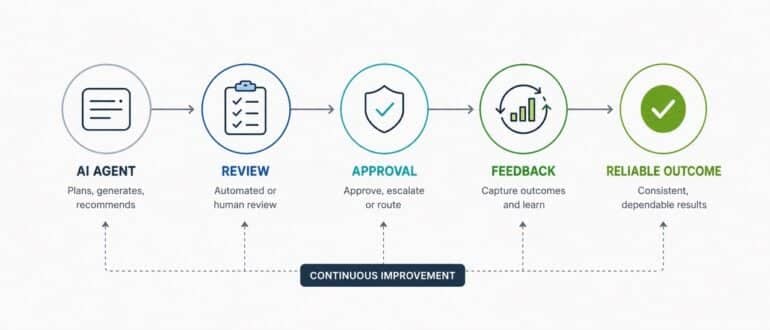
Reliability Comes From the System, Not the Agent
One of the most common questions executives ask right now sounds straightforward: is the agent reliable enough yet? It feels like the right place to start, but the framing quietly points people in the wrong direction because it assumes something about reliability that has rarely been true in complex systems. When people ask whether an […]

Anthropic Adds Enterprise Gateway to Simplify Claude Code Access on AWS and Google Cloud
Anthropic’s new Claude apps gateway brings SSO, central policy, and spend caps to Claude Code on Amazon Bedrock and Google Cloud.

OpenAI Codex – A New Frontier in Application Modernization
For enterprises, modernizing their legacy applications landscape is a strategic imperative to enable agility, be cost-efficient, and bring innovation. Yet, despite hefty investments, many modernization initiatives fade away. Studies show that 79% of organizations have had at least one modernization project fail, often at great expense. Traditional modernization efforts are fraught with challenges. The core […]
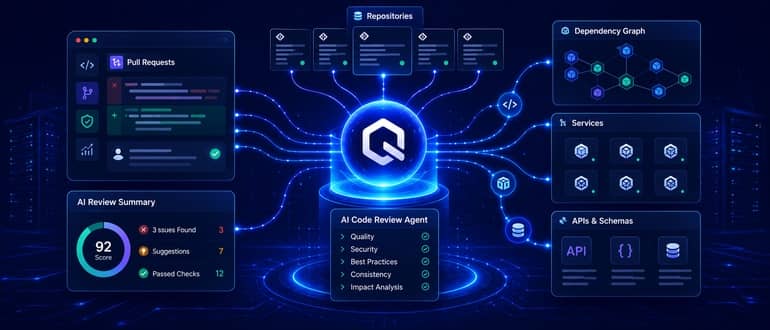
Qodo Extends Reach and Scope of AI Code Review Platform
Qodo this week extended its platform for managing code quality and governance to enable an artificial intelligence (AI) agent to review code spanning multiple repositories. Additionally, version 2.8 of the Qodo platform adds a custom rules miner that discovers coding patterns from existing codebase behavior and pull request (PR) history that are then used to […]
Still Using API Keys for Your AI Agent? Here’s When it’s Time to Upgrade
API keys got you here. They won’t get you where you’re going. OAuth isn’t a future upgrade. It’s the foundation your agents should have been built on from the start.

Agentic DevSecOps: AI Security Co-Pilots for Your CI/CD Pipeline
The emergence of AI has brought endless possibilities and innovative opportunities in today’s ever-changing, fast-paced technology landscape. AI is helping development teams produce software significantly faster than ever before. AI-enabled DevSecOps tools can automatically scan code, infrastructure and other configurations for security issues throughout development, accelerating the overall process. The introduction of agentic AI into the software […]

The Death of the Four Golden Signals: Designing Telemetry for Non-Deterministic Infrastructure
In complex software systems, our traditional definition of operational health has always been comfortably binary. For over a decade, site reliability engineering (SRE) teams have relied on the industry-standard ‘Four Golden Signals’ — latency, traffic, errors and saturation — as the ultimate truth of platform stability. If our API-response times are hovering at sub-100 ms, […]

When Should a DevOps Agent Act Without Human Approval?
Deploying AI agents in DevOps requires a granular approach to autonomy based on reversibility, blast radius, signal quality, and time sensitivity to build organizational trust.
The Next AI Breakthrough Isn’t Generative, It’s Agentic
Generative AI first captured the world’s attention by producing content at an unprecedented speed. From lines of code and documentation to frameworks and designs, content creation is now readily available at the click of a button. But the initial excitement around generative AI’s capabilities has given way to a new enterprise reality. As organizations move […]

Agentic Systems are Breaking Reliability Frameworks
Agentic AI systems introduce “silent failures” that bypass traditional SOC alerts. Learn why DevOps and Security teams must shift from deterministic assertions to distribution-based testing and runtime behavioral boundaries.
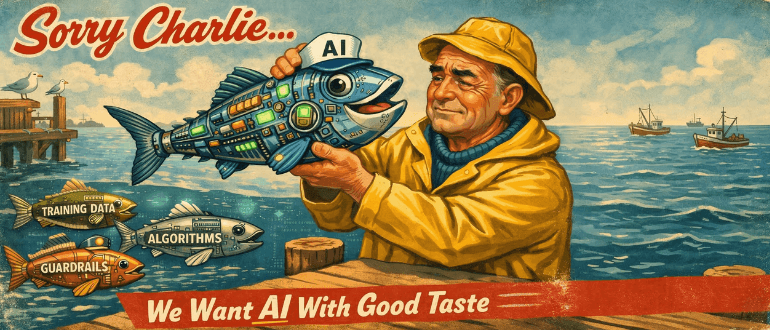
Sorry, Charlie, StarKist Wants AI With Good Taste
A surprising AI experiment showed that feeding a model sloppy code didn’t just produce bad programming, it produced bad behavior. The result points to something philosophers and DevOps engineers have long understood: Character, culture and incentives shape systems far more than rules alone.

Why AI Makes Requirements a Runtime Artifact
In traditional software, requirements are static design-time artifacts. In AI-enabled systems, they must be continuously observed and enforced in production. Learn how AI collapses the boundary between design-time and runtime, shifting requirements toward behavioral constraints, continuous verification, and shared ownership across engineering and operations
Google Adds Hooks to Gemini CLI for Customized AI Workflows
Enhance Gemini CLI with new hooks to customize AI assistant workflows without code changes. Improve control and optimize AI for development teams.
Dynatrace Delivers on Promise to Observe AI Coding Tools from Google
Dynatrace announced new integrations with Google Cloud Gemini Enterprise and Gemini CLI, using agentic AI, A2A protocol, and MCP servers to enhance observability, root-cause analysis, and DevOps governance across AI-driven workflows.

Why Your AI Agent Strategy is Failing (and How to Fix It): The Microservices Playbook for AI Agents
Despite billions in AI investment and countless vendor promises, most enterprises are still treating AI agents like glorified copilots rather than autonomous systems. After working with numerous enterprise customers implementing AI agents across various industries, a pattern has emerged: The companies finding real success aren’t the ones building the biggest, most ambitious agents — they’re the ones treating agents as microservices. As of […]

The Future of DevOps Still Has a Pulse
Over the last few years, we have watched our industry get swept up in the promise of AI agents. The pitch is compelling: tell a system “Deploy this workflow and roll back if things don’t go as expected,” and watch it handle everything else. No more YAML troubleshooting and pipeline debugging. We’ve all been there, […]
How to Escape the Talent Valley
Across the tech industry a disconcerting trend is emerging, job losses at the hand of a seemingly more efficient and cost-effective employee, artificial intelligence (AI). Software developers in particular have felt the full force of automation’s iron fist, with layoffs widespread. Since May, Microsoft alone has let go of approximately 15,000 employees, with software engineers […]

The MLSecOps Era: Why DevOps Teams Must Care about Prompt Security
AI-driven software delivery introduces new risks, especially prompt manipulation within CI/CD workflows. This article details the emerging fields of PromptOps and MLSecOps and offers practical strategies for securing prompts, models, and pipelines.