


New Relic AWS Integrations Go Deep on Root Cause Observability Analysis
New Relic expands its observability platform with deep AWS integrations to speed incident resolution and support AI-driven DevOps workflows.
VS Code Pushes Hard on AI Agents While Quietly Killing Free Code Completion
Microsoft’s VS Code update brings Agent HQ, TypeScript 7 preview, and kills free IntelliCode. What developers need to know about the latest changes.
IBM HashiCorp Ends External Language Support for Terraform
IBM and HashiCorp end external language support for Terraform, pushing teams toward HCL. What this means for DevOps infrastructure management strategies.

How Low-Code Is Reshaping DevOps Automation and Governance
Jon Scolamiero breaks down how low-code platforms are becoming an increasingly important part of the modern DevOps ecosystem. As organizations grapple with rapid shifts brought on by AI, vibe-coding practices, and an explosion of tooling, Scolamiero argues that low-code isn’t a shortcut—it’s a way to bring structure, automation, and transparency back into software delivery. He […]
re:Invent Proves It: DevOps Isn’t Dead, Cloud Native Isn’t Fading, and Platform Engineering Isn’t a Fad
What a difference two or three days make. When I first landed in Las Vegas for re:Invent and saw the keynote previews, it looked like AWS was putting all its chips on one square: Agentic AI. Every sign, every teaser, every whisper pointed in the same direction. And yes, after the keynotes, that impression held […]

AWS Adds Specialized AI Agents to Kiro Coding Tool to Automate DevOps Tasks
Amazon Web Services (AWS) today at its re:Invent 2025 conference extended its Kiro artificial intelligence (AI) tool to provide access to a set of agents that have been trained to trigger specific actions as they observe the way code is being created. Adnan Ijaz, director of project management for Kiro at AWS, said these specialized […]

AWS Transform Modernizes Any Codebase, App, API or Runtime
Platforms, paradigms, processes and processing itself all evolve. Because the information technology industry crosses from one chasm to another on an apparently endless loop of perpetual change, applications and wider systems need to be almost continually modernized. Amazon Web Services wants to enable that process with AWS Transform, a service that now ships with new […]

Stack Overflow Makes Available AI Assistant for Verifying Code
Stack Overflow today made generally available an artificial intelligence (AI) tool that makes it possible to use natural language to search its repositories for code. Company CTO and chief product officer Jody Bailey said AI Assist provides developers with a conversational search and discovery tool that enables them to more easily find relevant online content […]

Five Great DevOps Job Opportunities
Post-holiday job search? Check out our weekly jobs report for inspiration, including roles at Alta IT Services and Belay Technologies.

The Cloud Scout Model Delivers Reliability As An Embedded Capability
Organizations today face a structural problem that is slowing down their move to cloud-native maturity. They’ve adopted modern DevOps tools, yes. They’re running Kubernetes. They’re using sophisticated observability platforms. But the people-and-process piece often remains stuck in the traditional enterprise IT paradigm. The rift is simple: developers are tasked with delivering features, and operational staff […]

From What Now to What’s Next: How AI Is Closing the Gap Between Detection and Resolution
Modern DevOps teams face outages driven by complex dependencies and AI-enabled systems; success now depends on moving from reactive monitoring to prescriptive, AI-assisted incident resolution that shortens MTTI and MTTR.
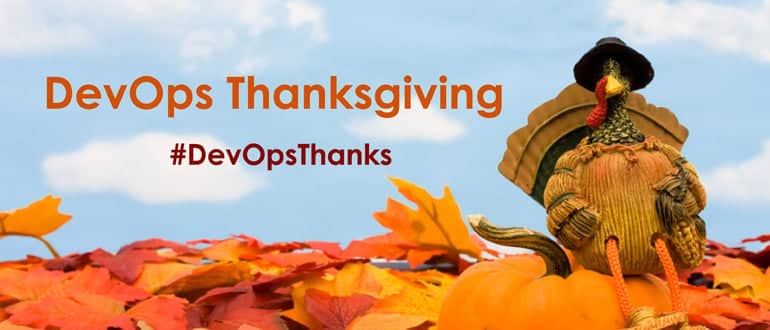
What I’m Thankful for in DevOps This Year: Living Through Interesting Times
Alan reflects on a chaotic yet inspiring year in DevOps, highlighting the rise of AI in engineering, the maturation of DevSecOps, the evolution of hybrid work culture, the surge of platform engineering and IDPs, and the continued strength and inclusivity of the DevOps community — while acknowledging the talent crunch, tool sprawl and security theater that still challenge the industry.

The Future of Infrastructure Automation in the Age of Autonomous Agents
For more than a decade, the evolution of infrastructure automation has followed a clear trajectory. Organizations have invested in workflows, pipelines, controllers, and compliance engines because the market demanded stronger guarantees around reliability and scale. Outages turned into measurable losses. Small misconfigurations cascaded into systemic failures. Even highly skilled teams struggled to keep pace with […]

The Coding Assistant Bottleneck: Applying the 3-Ways
AI coding assistants are the talk of the town, and for good reason. Tools that can turn a comment into a function or autocomplete entire classes are genuinely changing the developer experience. We’re writing more code, faster than ever before. It feels like a massive productivity win. But is it? While we’ve supercharged the early […]
Humans in the Loop: Governing AI Agents Across the SDLC
AI agents are moving from novelty to necessity in software delivery—and with that shift, the developer’s role is changing. Emilio Salvador, vice president of strategy and developer relations for GitLab, explores what happens when every engineer works alongside a small “team” of agents: some personal, some shared across squads, and others assigned to specific lifecycle […]

How to Build Engineering Teams That Drive Outcomes, not Outputs
Outcome-based engineering teams focus on delivering real customer and business impact, aligning goals, adapting quickly, and collaborating across roles to drive results.

Modular & Shift-Left Observability for Modern DevOps Pipelines
Shift-left observability makes monitoring a modular, built-in part of DevOps—improving reliability, cost efficiency, and visibility across modern cloud-native systems.
Tessl Details Plan to Build Platform for Managing AI Agents Embedded in DevOps Workflows
Tessl today outlined a plan to extend a registry it created for specifications that govern the behavior of artificial intelligence (AI) agents being used to build software to create a platform for creating, distributing and observing those specifications. Speaking at a DevCon Fall 2025 conference hosted by the company, Tessl CEO Guy Podjarny said that […]
I Saw DevOps’ Future—and Its Name is AI Native Dev
I was down in Brooklyn this week attending AI Native DevCon, and let me tell you—there’s no hidden metaphor or clever subtext in that name. What GuyPo and the gang have built here is exactly what it says on the tin: a community and a movement laser-focused on using AI natively in software development. Not […]
Five Great DevOps Job Opportunities
DevOps.com is now providing a weekly DevOps jobs report through which opportunities for DevOps professionals will be highlighted as part of an effort to better serve our audience. Our goal in these challenging economic times is to make it just that much easier for DevOps professionals to advance their careers. Of course, the pool of […]

Chronosphere Adds AI Remediation Guidance to Observability Platform
Chronosphere this week previewed artificial intelligence (AI) capabilities that are embedded into its observability platform that, in addition to helping identify the root cause of an issue, also provides remediation suggestions. Additionally, the company made available a Model Context Protocol (MCP) Server through which AI coding tools and agents will be able to query observability […]

Why Traditional SLOs Are Failing at Hyperscale: Building Context-Aware Reliability Contracts
Discover how context-aware reliability contracts (CARC) redefine SLOs for hyperscale systems—optimizing uptime, reducing infrastructure spend by 33%, and aligning reliability with business value across user tiers, regions, and workloads.
The Future of Observability: Predictive Root Cause Analysis Using AI
In the past few years, systems have become more complex than ever. Microservices, Kubernetes, cloud environments and distributed application programming interfaces (APIs) have changed how we build and manage software. However, this complexity has also made it harder to find the root cause when things go wrong. That’s where observability and artificial intelligence (AI) come together to change the game — helping us move from reactive monitoring to predictive root cause analysis (RCA). […]