


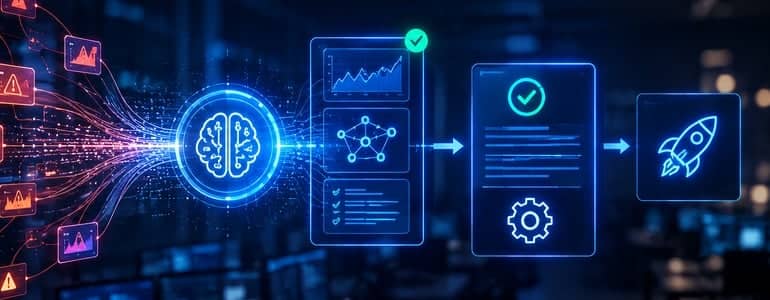
Reducing MTTR: A Practical Guide to Correlating Incidents with AIOps
AI-driven incident correlation helps SRE and DevOps teams reduce alert noise, identify root causes faster and improve MTTR by connecting related metrics, logs and traces.

AI Raises the Stakes for Observability Engineering
Honeycomb’s Liz Fong-Jones joins Alan Shimel to explain why observability engineering has become the real bottleneck in AI-assisted development — and how agent-assisted workflows are reshaping the loop.

The Verification Gap Behind Every AI-Generated Release
Sauce Labs CEO Prince Kohli joins Mike Vizard to unpack why AI code generation is racing ahead of testing — and why 80 percent of organizations have already traced a production incident back to AI-generated code.
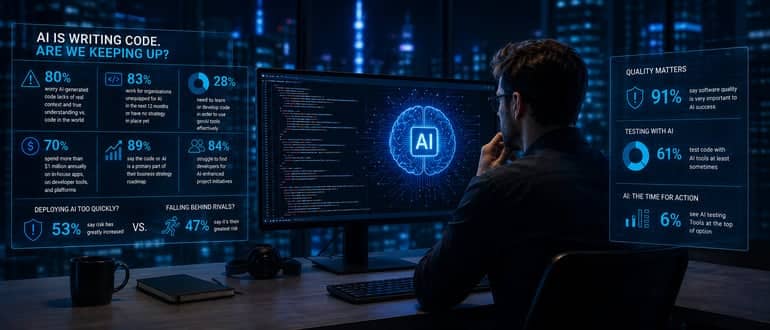
Survey Surfaces Rising Tide of Production Issues Traced Back to AI Code
A survey of 400 business and engineering executives finds 80% have traced a production incident, outage, or customer-impacting defect to code generated by artificial intelligence (AI) tools in the past 12 months. Conducted by Wakefield Research on behalf of Sauce Labs, a provider of an application testing platform, the survey finds 83% of respondents work […]
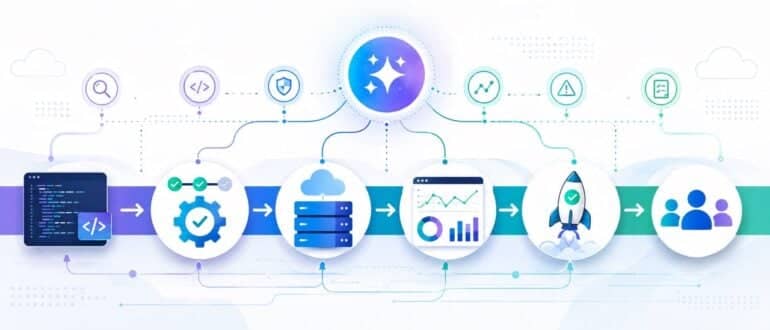
The Rise of AI-Native DevOps: How AI Is Reshaping Software Delivery in 2026
For years, DevOps had a pretty straightforward mission: help teams ship reliable software faster by getting development and operations folks working together. Tools like automation, continuous integration, continuous delivery, infrastructure as code, and better observability have all been key pieces of the puzzle. But now, things are shifting again. This time, artificial intelligence is changing […]
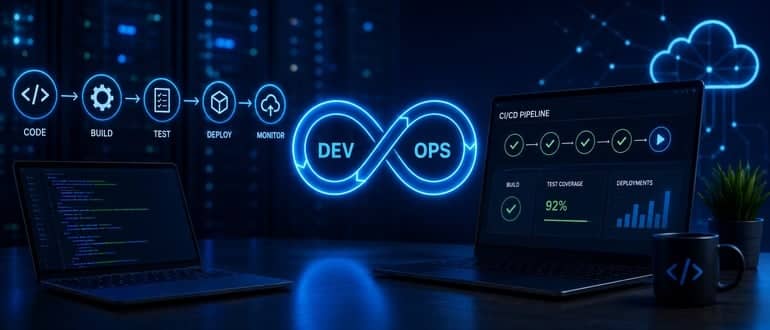
Ten Great DevOps Job Opportunities
DevOps.com is now providing a weekly DevOps jobs report through which opportunities for DevOps professionals will be highlighted as part of an effort to better serve our audience. Our goal in these challenging economic times is to make it just that much easier for DevOps professionals to advance their careers. Of course, the pool of […]
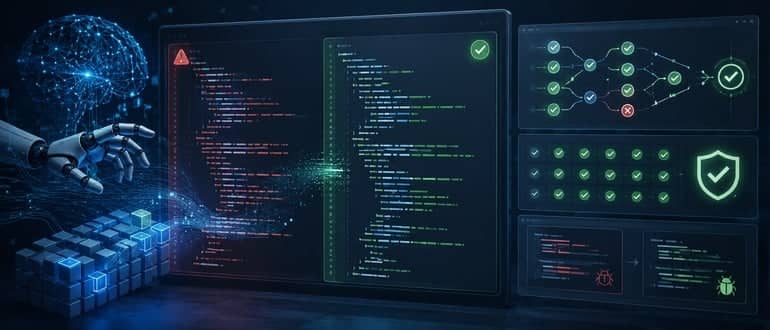
Microsoft’s New Testing Agent Tackles the Trust Gap in AI-Generated Code
AI coding assistants write code fast. Whether that code can be trusted is a separate question, and it’s becoming a more urgent one. Surveys this year put average developer trust in AI-generated output at just above the midpoint of a five-point scale, and more than half of developers admit they ship AI code without testing […]
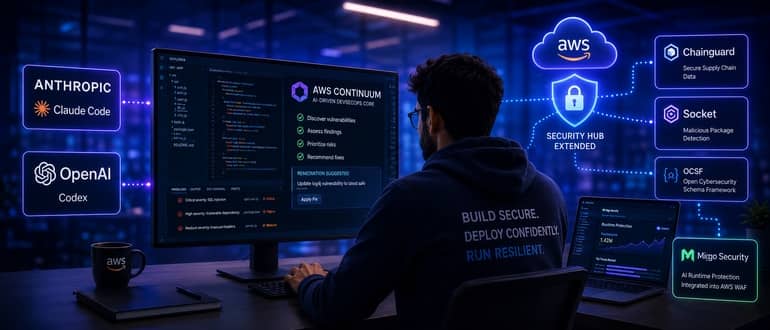
AWS Extends DevSecOps Reach to AI Coding Tools from Anthropic and OpenAI
Amazon Web Services (AWS) this week at the Black Hat USA conference revealed it is working with both Anthropic and OpenAI to integrate their respective coding tools with a service it has developed that makes available artificial intelligence (AI) agents to help application developers write more secure code. Launched earlier this year, the AWS Continuum […]
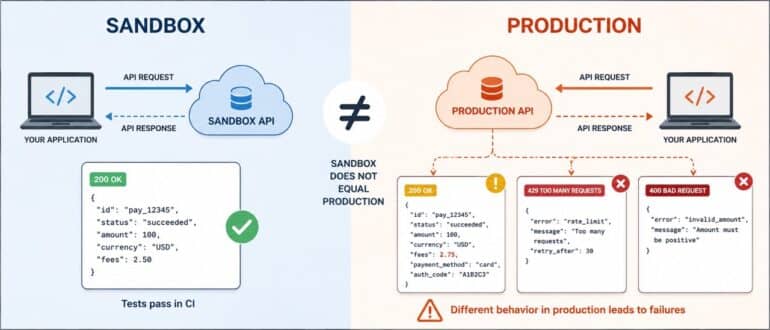
Sandbox Testing for API-Heavy Systems: What Changes When You Don’t Own the Dependency
Sandbox testing works well when your team controls both sides of the integration. You define the service, you define the mock, you know exactly what the sandbox should return. That setup holds up fine for internal microservices and first-party APIs. It starts to break down when you don’t own the dependency. Payment processors, identity providers, […]
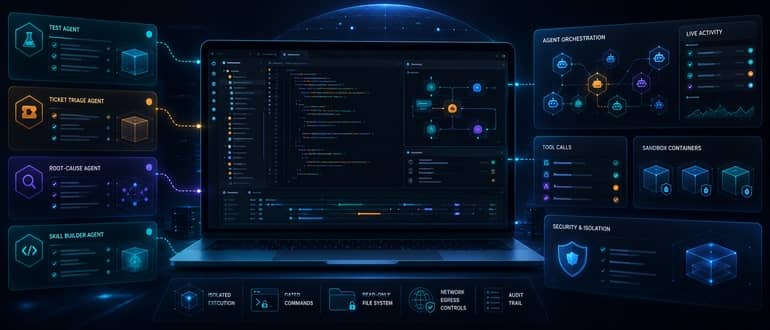
AWS Adds Agentic Workspace to Kiro AI Coding Tool
Amazon Web Services (AWS) this week added an open source workspace for its Kiro artificial intelligence (AI) coding tool that enables application developers to asynchronously assign tasks to an AI agent that is capable of autonomously performing tasks, such as testing code as it is created, in a way that maintains context across multiple sessions. […]
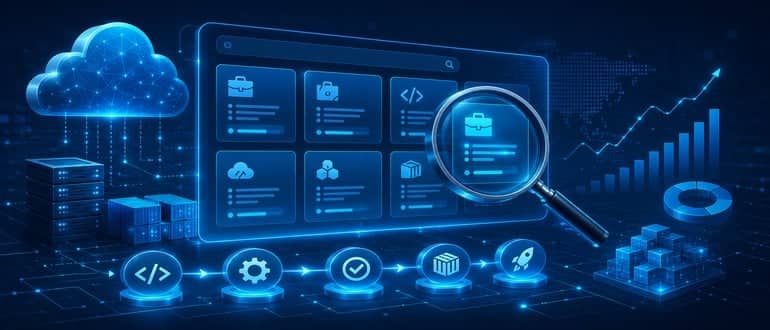
Ten Great DevOps Job Opportunities
DevOps.com is now providing a weekly DevOps jobs report through which opportunities for DevOps professionals will be highlighted as part of an effort to better serve our audience. Our goal in these challenging economic times is to make it just that much easier for DevOps professionals to advance their careers. Of course, the pool of […]
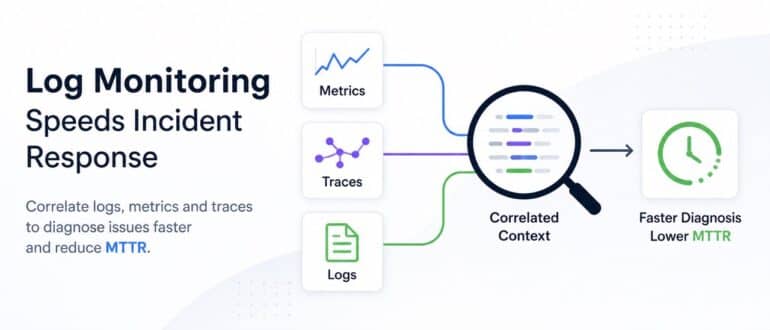
Why Log Monitoring Is the Missing Link in Most Incident Response Workflows
Modern engineering teams have invested heavily in observability. Dashboards are populated, alerts are configured, on-call rotations are set. Yet when production incidents occur, the average time to resolution hasn’t dropped nearly as fast as the tooling has improved. The reason, in many cases, comes down to one overlooked gap: logs aren’t being used the way […]
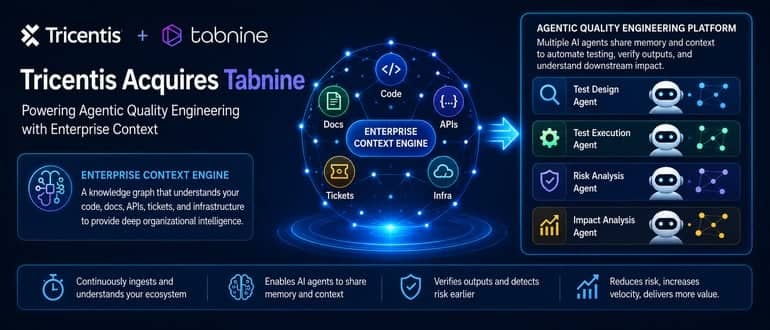
Tricentis Acquires Tabnine to Gain Knowledge Graph for AI Testing Agents
Tricentis today revealed it is acquiring Tabnine to gain access to a knowledge graph that will be used to provide context to AI agents that have been trained to automate a range of testing tasks. Once the acquisition is complete, Tricentis plans to integrate the knowledge graph developed by Tabnine, dubbed the Enterprise Context Engine, […]
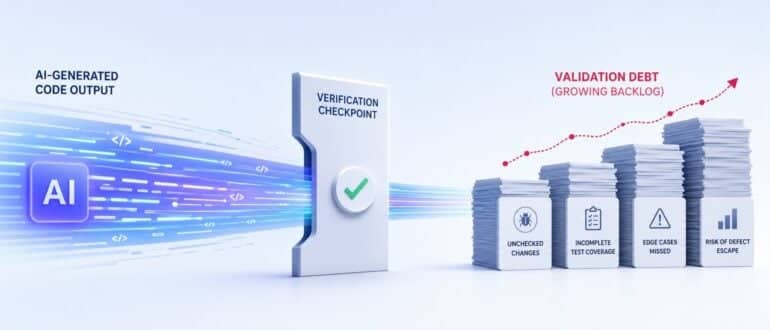
Validation Debt That Your Dashboards Are Not Showing
The gap between how fast AI writes code and how reliably teams verify it is quietly becoming a balance-sheet risk. Enterprise leaders are learning to measure it before it forces repayment. Every engineering organization that adopted AI coding assistants over the past two years has quietly taken on a liability that never appears on the […]
OpenAI Open Sources Codex Security CLI for the Merge Path
OpenAI has released its Codex Security command-line interface and software development kit as open source software under the Apache 2.0 license, providing a new way to bring its AI security scanner into development workflows. The CLI can scan repositories, review staged and unstaged changes before a commit, compare findings across scans and export results for […]

AI Code Generation Raises New Quality Risks
Mladen Lazic, CTO of Scopic, joins Mike Vizard to explain why AI-generated code is outpacing review capacity — and why independent QA agents that never see the source code are becoming essential.

Why Agentic Coding Needs Governance at Scale
CloudBees CEO Moritz Plassnig joins Alan Shimel to explain why agentic coding is exposing every unfinished piece of the DevOps transformation — and why AI-scale delivery needs AI-scale governance.
DevOps Is Drowning in Updates—and Engineering Is Paying the Price
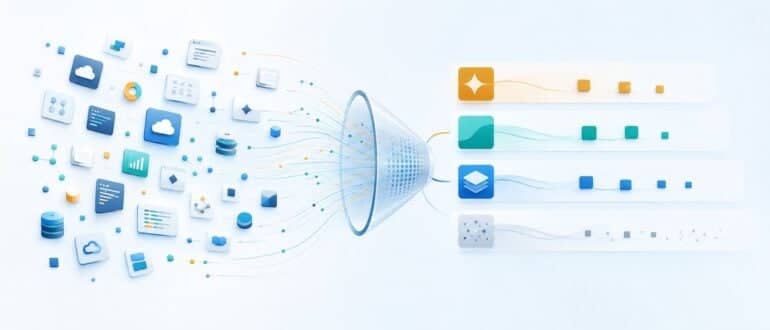
DevOps used to be a manageable rhythm: several core tools, a handful of respected blogs, and a few incident write-ups that made everyone slightly uncomfortable in a useful way. Now it feels like a firehose aimed directly at the on-call rotation. DevOps teams now have more information than they can reasonably track. Critical updates are […]

The Anatomy of a $900,000 Validation Bill
A 50-developer team shipping at an agentic pace will spend roughly $900,000 this year on AI and developer tooling costs. Most of the engineering leaders I’ve talked to saw the compute costs coming. What they didn’t anticipate was where the rest of the bill was hiding. The culprit is a timing problem. Frontier models price […]
Adoption and Fragmentation of AI in CI/CD—and Operational Readiness
In today’s enterprise software delivery environment, AI has moved from a distant possibility to an active area of experimentation across the CI/CD pipeline. The conversation around AI in software delivery often runs ahead of the underlying reality, and most organizations are still working through what it takes to operationalize AI inside delivery architectures that were […]
Investments in DevOps Tools and Platforms Start to Accelerate in AI Era
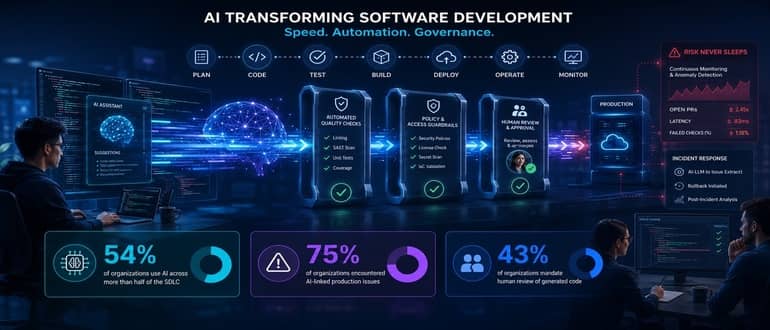
A global survey of 839 IT decision-makers conducted by the Futurum Group finds 54% now work for organizations that use AI across more than half of their software development lifecycle (SDLC), with 40% reporting AI already generates the majority of production code merged in the last 90 days. Within the next three years, a total […]
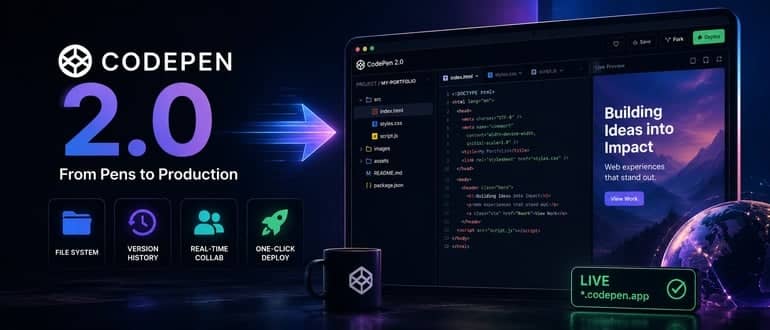
CodePen 2.0 Turns a Design Playground Into a Real Deployment Tool
CodePen 2.0 transforms the front-end playground into a file-based development platform with collaboration, version history and one-click deployment.
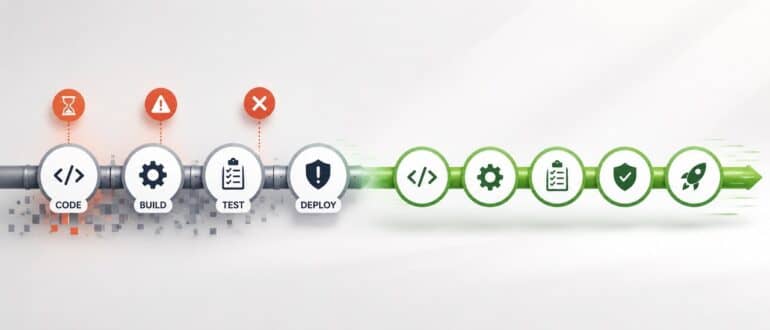
These are 10 CI/CD Pipeline Mistakes That Slow Down Engineering Teams
Continuous software delivery in the digital age has come to depend on CI/CD pipelines. They enable engineering teams to rapidly develop, test, and deploy code while keeping it highly usable and consistent across environments. CI/CD pipelines, however, can themselves become a source of friction as systems start at a small scale and become more complex. […]