



Sumo Logic Extends Observability Reach
Sumo Logic, at its online Illuminate conference today, announced the availability of a bevy of extensions to its observability and security information event management (SIEM) cloud services that span everything from hybrid cloud computing to cloud-native platforms such as Kubernetes. The company also announced the general availability of a free Software Development Optimization (SDO) service, […]

New Relic Makes Revamped APM Platform More Affordable
New Relic has revamped its application performance management (APM) platform as part of an effort to make observability more accessible and affordable. Bill Staples, chief product officer for New Relic, said New Relic One has been updated to provide a new user interface designed to make it easier to navigate and explore an observability platform […]

Fastly Facilitates Observability at the Edge
Fastly this week announced it is adding the ability to collect tracing, customizable logging data and both real-time and historical metrics from a serverless computing framework designed to be deployed on edge computing platforms. Company CTO Tyler McMullen said the goal is to make it easier for IT to bring observability within the context of […]

Grafana Labs Update Aims to Simplify Observability
Grafana Labs today released an update to the open source Grafana project that adds a viewer that simplifies tracking the path of a single request through a distributed system. Version 7.0 also adds a plug-in for Amazon CloudWatch Logs along with support for Apache Arrow, a unified data and plugin framework that promises to make […]

Report: More Appreciate the Value of Observability
Observability may be a core tenet of any best DevOps practice, but the number of organizations that actually engage in it is still not nearly as high as it should. A survey of 400 software engineers published this week by Honeycomb, a provider of an observability platform, finds nearly half said they are not currently […]

New Relic Moves to Democratize Distributed Tracing
New Relic has launched a service that leverages cloud resources to make analytics based on distributed tracing more accessible to DevOps teams. Andrew Tunall, general manager for New Relic serverless and emerging cloud services, said the New Relic Edge with Infinite Tracing service democratizes access to distributed tracing analytics by providing access via a software-as-a-service […]

Uncover the Secrets in Your Apps Through Observability
When it comes to your applications, the question to ask yourself is: “How helpful is monitoring if you aren’t proactively capturing the data you need to understand what is causing the errors you find?” The answer: Not very. That is why it is important for us to go beyond monitoring and work on expanding our […]

Threading the Needle on Kubernetes Complexity with AI-Powered Observability
If you run down the laundry list of major industries–transportation, retail, healthcare, automotive, financial services–you’ll see that the major players in each have essentially become software companies. What they do and how they serve their customers rests entirely on their software working perfectly. Underpinning this is a massive digital transformation that has shifted organizations away […]

Observability-Driven Development: From Software Development to DevOps and Beyond
In today’s world of cloud platforms and applications, typically delivered as SaaS (Software as a Service), it is critical for organizations to ensure efficient collaboration between software development and operations teams. The software development team codes the software application or platform, while the DevOps team streamlines and automates the entire production lifecycle, from development and […]
Cloud Native Tracing and Observability: Why You Care
Is observability the new monitoring? Or is observability, and tracing, fundamentally different? Like any IT industry trend, it can be difficult to discern as many jump on the trend bandwagon, appropriately or not. The Splunk .conf 2019 event presented Splunk with the opportunity to bring clarity to the terms and the reasoning behind the acquisitions […]
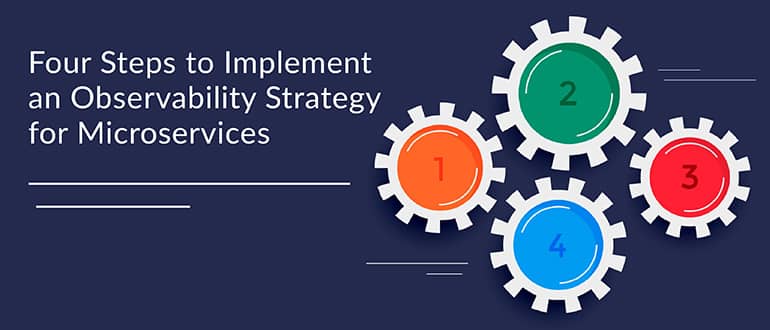
Four Steps to Implement an Observability Strategy for Microservices
You’ve finally decided. You’re making the move to microservices and re-architecting your entire infrastructure. Some services will still be on-premises (those databases and their legacy apps are never moving), but a cloud-based microservices architecture will allow your teams to build and bring new products to market faster. But how do you handle the complexity that […]

How Monitoring and Observability Feed Each Other to Create a Holistic Approach to Visibility
Monitoring versus observability is a hotly debated topic. It’s been argued they’re two distinct things—the former just a high-level overview of a problem after the fact, while the latter enables you to be proactive. Observability has also been dismissed as jargon, much how DevOps sounds to the seasoned operator. The thing is, the whole debate […]
Keeping NoOps From Going Rogue
“We’re NoOps—everything is in the cloud and we have no infrastructure to manage.” Before running that victory lap and shifting everyone to the dev side, consider several NoOps risks carefully. I’m really thinking about teams using all-SaaS stacks, especially in martech, edtech and other areas. However, the rise in microservices and serverless means more teams […]
Log Management: What DevOps Teams Need to Know
One of the most important shifts of this decade is the rise of interconnected data across distributed systems. This explosive growth not only sparked the need to rethink cloud and global IT strategies, but it also disrupted traditional development, DevOps and ITOps practices. These changes are pushing requirements for higher-velocity development of features and products—together […]
The Hybrid Cloud and Why DevOps Teams Need Unified Stack Observability
The modern data center is constantly evolving to keep up with the demands of always-on, anywhere computing. Long gone are the days of monolithic, on-premises data centers. Today, the computing modus operandi is that of the hybrid cloud, which, according to Statista, will be worth close to $50 billion in 2018—just about double what it […]

A Vendor Guy Goes To Monitorama
I attended my very first Monitorama this year, in Amsterdam, and I have thoughts! First of all, it’s deeply weird speaking at Monitorama when you work for a vendor in the monitoring and observability space, but you’re not there as a sponsor. This would be pretty odd at the best of times, but the crowd at […]

Knowing What Your Microservices Are Doing
Microservicin’ ain’t easy, but it’s necessary. Breaking your monolith down into microservices is a must in a cloud-native world, but it doesn’t automatically make everything easier. Some things actually become more difficult. An obvious area where it adds complexity is communications between services; visibility into service to service communications can be hard to achieve, but […]

AIOps: Managing the Second Law of IT Ops
Or, why IT systems keep breaking The tension between the two halves of DevOps is long-standing, going back long before the term was even invented. What underlies the split between Development and Operations is a fundamental difference, like an actual physical law. Let’s explore that analogy together. IT Ops is fundamentally a constant fight against […]