


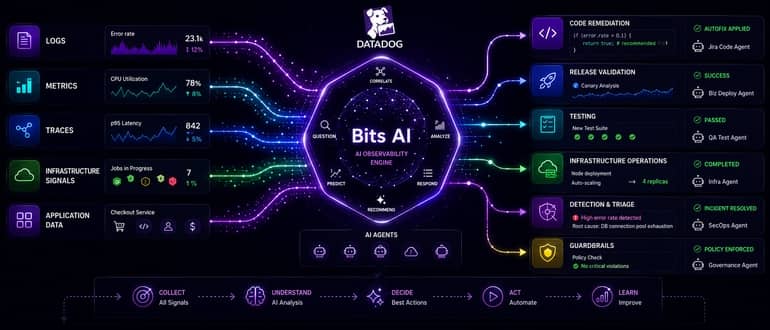
Datadog Leverages AI to Extend Observability Reach Deeper into DevOps Workflows
Datadog this week significantly extended the reach of its Bits artificial intelligence (AI) framework to enable DevOps teams to automatically discover and resolve issues based on the telemetry data collected by its observability platform. Announced at the company’s DASH 2026 conference, Datadog is now embedding an AI coding tool, dubbed Bits Code, across its entire […]

Agentic Observability is Not a Chatbot Over Telemetry
Agentic observability isn’t about removing engineers from the loop. It is about making the loop faster, better informed, and easier to operate at the scale modern systems require.

Why Logs, Metrics and Traces Still Don’t Give You Real Observability
If your team can answer the question “Did the system do the right thing?” and not just “Did the system stay up?”, you’re getting close to real observability.
Why Your AI Agent is a Black Box and How to fix it With OpenTelemetry
You built the agent. It works in testing. Then it hits production and starts giving wrong answers, timing out or burning through your token budget, and you have no idea why. This is when developers discover that print statements and log files weren’t designed for this. LLM applications fail in ways that traditional tooling can’t see. A hallucination doesn’t throw […]

More Signal, Less Clarity: The Observability Paradox No One Wants to Talk About
Record observability spending is driving up MTTR. Discover why tool sprawl and excessive dashboard data cause cognitive overload for on-call engineers, and how to fix it.
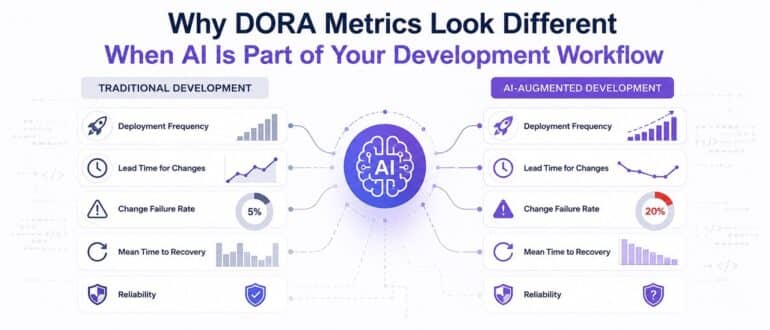
Why DORA Metrics Look Different When AI Is Part of Your Development Workflow
DORA metrics have been a reliable compass for engineering teams for over a decade. Deployment frequency, lead time for changes, change failure rate, mean time to recovery, and reliability give teams a shared language for talking about delivery performance. The research behind them is solid, the benchmarks are well-established, and most engineering leaders know what […]
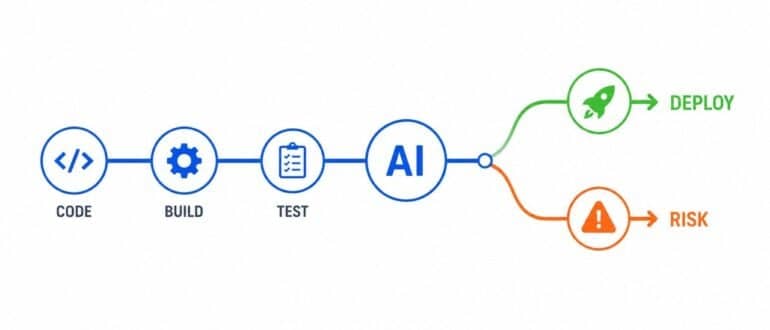
AI Agents in CI/CD Pipelines: Speed vs Control in Modern DevOps
The moment you push your code, deployment fires off on its own. The pipeline kicks in, the tests sail through, and within a few minutes your app is live in production. There is no manual sign-off and no one scanning through the final changes. Everything is running on the decisions of an AI agent plugged […]

The “Day 2” AI Problem: Why Standard API Gateways Fail at GenAI Scale
Injecting GenAI into applications is deceptively easy. Need a new chatbot backed by an LLM? Grab an OpenAI API key and you can throw together an MVP in an afternoon. This is the pattern teams have used to push AI features into apps for the last few years. The problem, as with previous tech hype […]
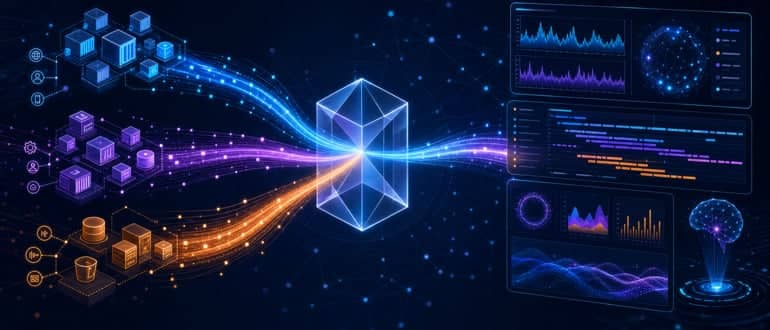
OpenTelemetry Graduation Sets Stage for AI Observability
OpenTelemetry just hit graduated status at the CNCF, and the timing matters more than the milestone itself. After years of consolidating what used to be OpenTracing and OpenCensus, the project has quietly become the default way modern applications emit traces, metrics and logs — right as the industry is staring down a new wave of […]
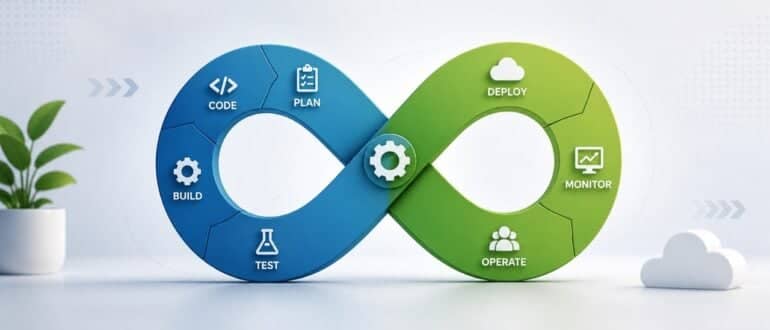
Why DevOps Is Critical for Modern Business Resilience
Today’s business world operates in a state of constant change. What the customer wants to buy changes quickly, new competitors appear overnight, and cyber threats are changing faster than ever. In this world, the concept of “resilience,” the ability to adapt, to overcome, and to continue to create value for the enterprise despite the changes, […]

Observability-Driven Continuous Testing in Cloud-Native DevOps
Observability transforms continuous testing from quality gates into reliability signals. Cloud-native teams ship faster because they know their systems better — traces reveal bottlenecks, synthetics catch regressions and security telemetry prevents breaches.
Migration Observability: Measure Meaning, Not Movement
Traditional operational observability focuses on latency, errors, throughput and saturation. Migration observability needs a different category: Semantic drift.
The Five Biggest Mistakes Organizations Make When Implementing SRE
From cargo-culting Google’s playbook to rushing AI-powered observability into production before the fundamentals are in place, here’s where SRE transformations quietly go wrong, and how to course-correct.

The Trust Problem With AI Agents in Production Pipelines
AI agents boost DevOps pipelines, but confident failures create risk. Here’s how to design for calibrated trust and human oversight.
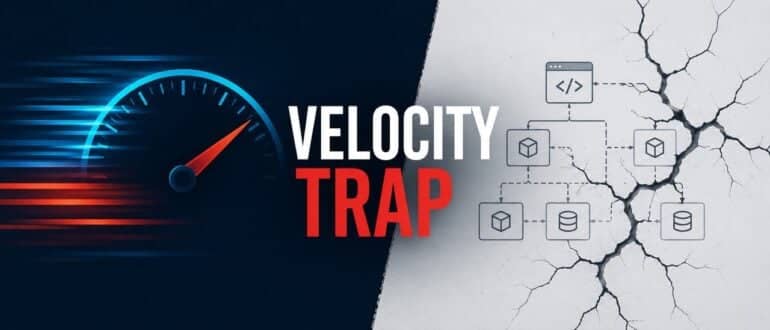
The Velocity Trap: Why Shipping Faster Is Making Systems Worse
There is a particular flavour of engineering dysfunction that looks, from the outside, like peak performance. Deployments are frequent. Sprint velocity is high. The feature backlog is shrinking. Leadership is pleased. And underneath all of it, the system is quietly rotting. Technical debt compounds with every rushed deployment. Observability gaps widen because nobody has time […]
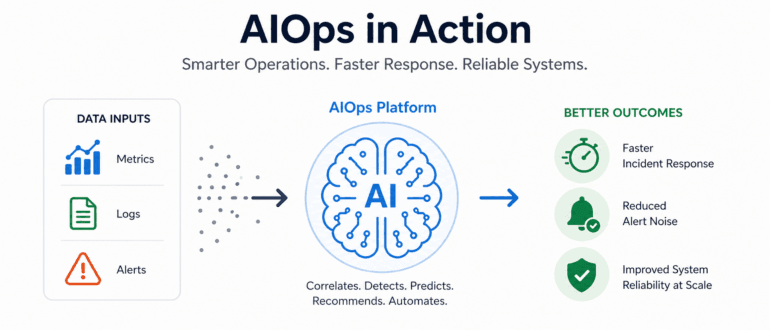
AIOps Isn’t Optional Anymore: What Modern DevOps Teams Must Adapt To
AIOps is becoming essential for DevOps teams, enabling faster incident response, less alert noise and improved reliability at scale.

How to Manage Operations in DevOps Using Modern Technology
How modern DevOps teams manage operations using automation, observability, AIOps and self-service to reduce toil and improve reliability.
AI Agents in DevOps: Hype vs. Reality in Production Pipelines
The demos look super cool! An AI agent detects a failing deployment, rolls it back, opens a GitHub issue, and notifies Slack — all before the on-call engineer has finished reading the alert. If you’ve been following the DevOps tooling space over the last 18 months, you’ve probably seen some version of this pitch. But […]
Survey Surfaces Rising Tide of Investments in Observability
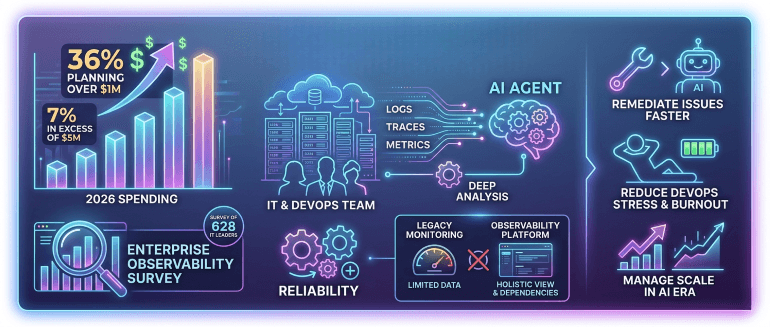
A survey of 628 enterprise IT leaders conducted by the Futurum Group finds well over a third (36%) plan on spending more than $1 million on observability in 2026, with 7% planning to spend in excess of $5 million. Mitch Ashley, vice president and practice lead for software lifecycle engineering at the Futurum Group, said […]
Apica Extends Scope and Reach of Platform for Managing Telemetry Data
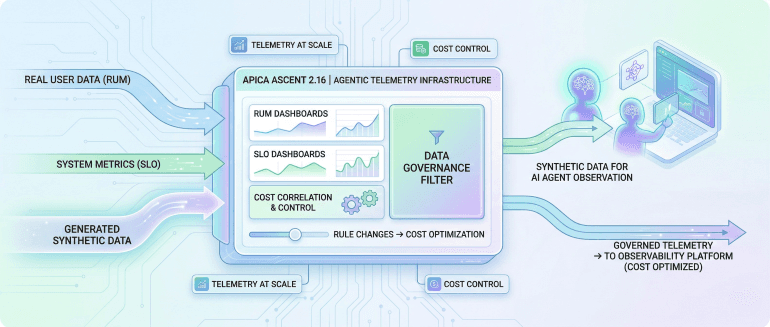
Apica today updated its Ascent platform to add support for synthetic data that is increasingly being used by artificial intelligence (AI) agents to observe application environments. Version 2.16 of the platform adds support for a set of real user monitoring (RUM) and service level objective (SLO) dashboards, an ability to correlate changes made to any […]
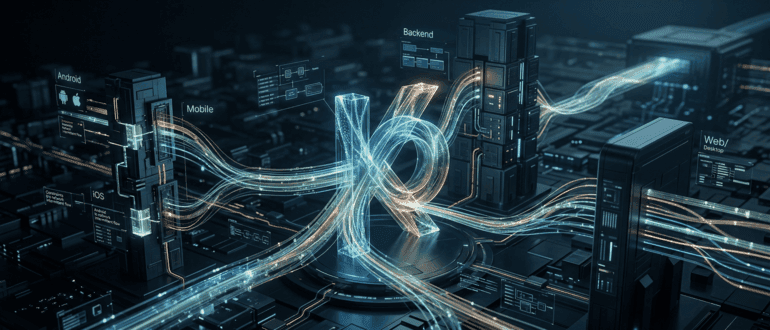
OpenTelemetry Gets Kotlin Multiplatform API & SDK
OpenTelemetry expands its observability reach with a native Kotlin Multiplatform API and SDK. Contributed by Embrace, this update enables vendor-neutral telemetry across JVM, iOS, and web, offering idiomatic Kotlin support and optimized performance for mobile and client-side applications.
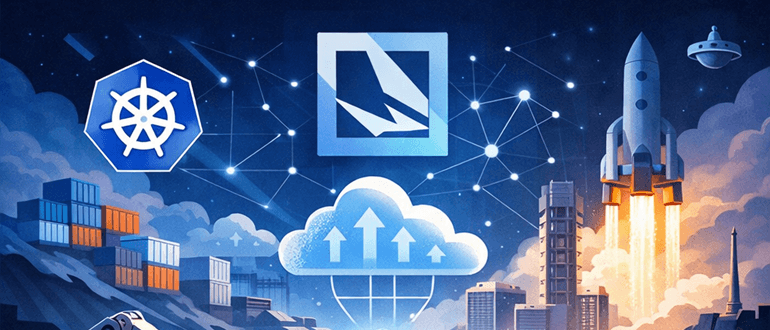
Tekton Kubernetes-Native CI/CD Project Reaches CNCF Incubation
The CNCF TOC has voted to accept Tekton as an incubating project. As a Kubernetes-native framework for CI/CD, Tekton enables developers to build, test, and deploy across clouds by treating pipelines as standard K8s resources. Originally part of Knative, it now offers a modular ecosystem including Triggers and Chains for supply chain security, integrating deeply with Argo CD and Sigstore.
The Green Side of Observability: Why Less Data Can Mean More Insight
Observability can generate massive data volumes. Learn how sustainable observability reduces telemetry waste, lowers costs and improves insight.