

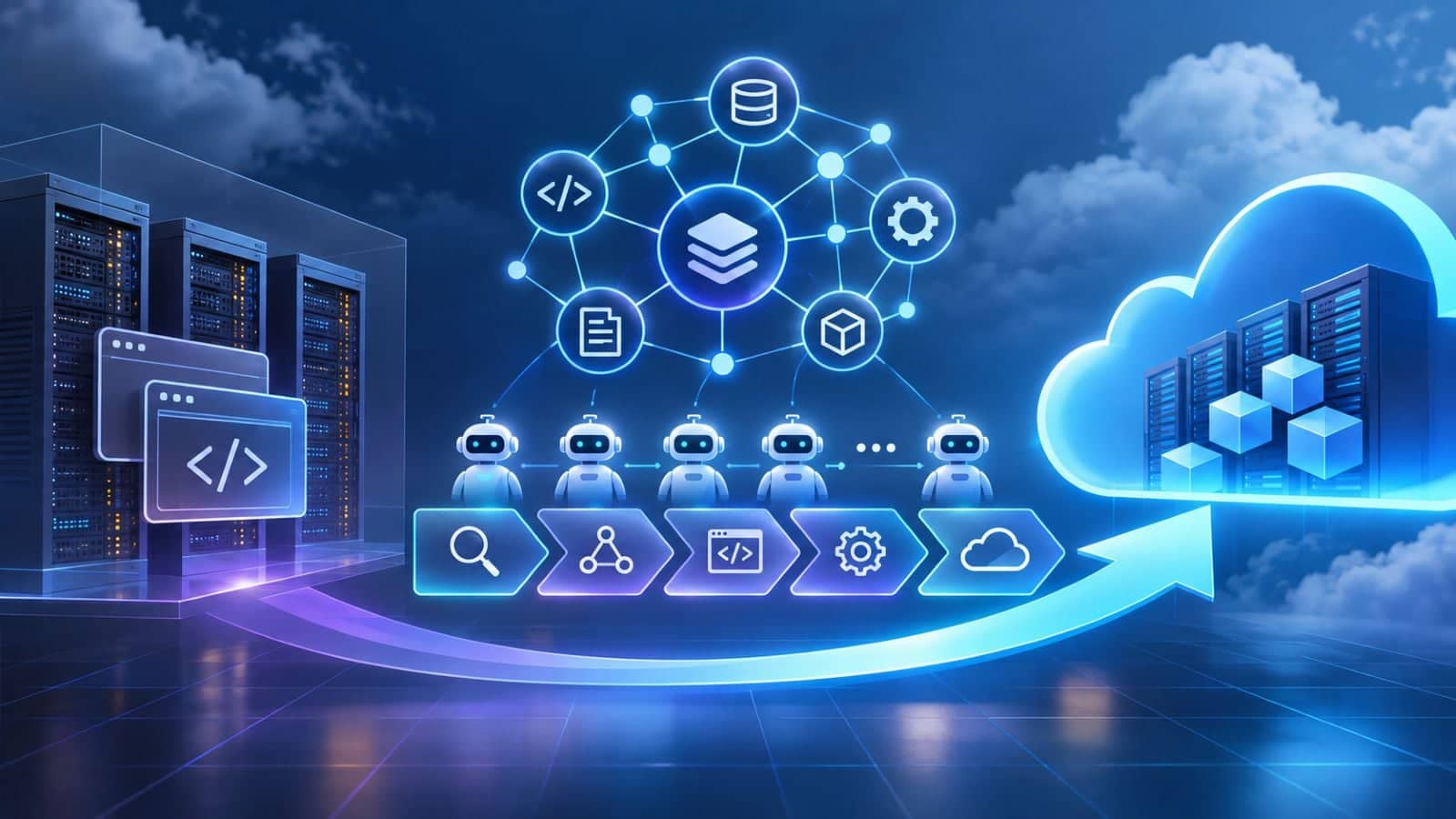
Blitzy, a provider of an artificial intelligence model that establishes the relationship between all the software artifacts in an IT environment, today announced it has allied with the Microsoft Frontier Company to help DevOps teams refactor existing applications in a way that makes it simpler to move them to the Microsoft Azure cloud service.
As part of that effort, Blitzy also revealed it has integrated its platform with GitHub Copilot and the Microsoft Foundry platform for building and deploying AI applications.
The Blitzy platform makes it possible to reverse engineer entire application ecosystems using a graph that is created by its world model. Guided by specifications that software engineers approve, it then dynamically provisions thousands of specialized agents to complete a project.
Murphy Vandervelde, chief of staff at Blitzy, said the alliance with the Microsoft Frontier Company extends those capabilities deeper into Azure environments. The overall goal is to make it simpler to migrate applications from on-premises IT environments to the Azure cloud, he added.
Historically, such projects would have required organizations to hire a systems integrator that would have required months to refactor an application. Those projects can now be completed in weeks using a world model that provides the context needed to accelerate those migrations, said Vandervelde.
It’s not clear at what rate organizations are looking to migrate applications into the cloud or vice versa. In some cases, organizations may also be looking to migrate applications from one cloud service to another. Regardless of the goal, an AI world model provides the context that AI coding agents need to facilitate those migrations.
Last month, Blitzy added a chat interface to a platform that enables DevOps teams to employ AI agents by expressing their intent in natural language. Via that interface, a software engineer can describe a desired outcome that is then automatically converted into a prompt that assigns a task to an AI agent. Additionally, DevOps teams via that interface can ask AI agents to explain how and why certain tasks were performed. That capability also makes it easier to onboard a codebase into the world model, investigate the impact of proposed changes, and refine requirements.
Each DevOps team will need to determine to what degree they will need to develop the expertise needed to refactor applications themselves versus relying on a systems integrator that should now be able to complete such a project at a much lower cost than what they might have previously charged. The challenge, of course, is negotiating that price when there is not much transparency into how that project might be completed in the AI era.
The one thing that is certain is that DevOps teams are now less locked into a specific application architecture. As such, there is less reason than ever to continue to run legacy applications on outdated IT platforms that with each passing day become more expensive to manage and maintain. The issue, of course, is to make sure that the organization is not just jumping from the frying pan into another proverbial fire.

Frequently Asked Questions
1. What is the goal of Blitzy’s Microsoft collaboration?
2. How does Blitzy support application refactoring?
3. What does Blitzy’s chat interface do?

Mike Vizard is a veteran IT journalist with more than 25 years of experience covering the technology industry, having previously served as Editor-in-Chief of both CRN and InfoWorld and as editorial director for Ziff-Davis Enterprise, where he oversaw titles including eWEEK, CIO Insight and Baseline. Over his career he has also edited or contributed to a wide range of enterprise technology publications, including IT Business Edge, Channel Insider, ComputerWorld, TMCNet and Digital Review, and he later led editorial for CTOEdge.com. His reporting and analysis span software development, cloud computing, cybersecurity, IT channel strategy and, more recently, artificial intelligence and DevOps practices. A recognized voice in enterprise IT journalism, Vizard is known for tracking emerging technology trends as they move from early adoption into mainstream enterprise use. He now serves as Chief Content Officer for Techstrong Group, where he oversees editorial strategy across the full network — DevOps.com, Security Boulevard, Cloud Native Now, Digital CxO, Techstrong.ai, TechStrong.IT, Techstrong Semi and PlatformEngineering.com — in addition to writing and hosting content for Techstrong TV and the Techstrong Gang podcast.