


LayerX: Anthropic’s Claude Code Can Easily Be Easily Weaponized
LayerX researchers were able to convince the popular AI coding tool to bypass its guardrails and execute malicious instructions.
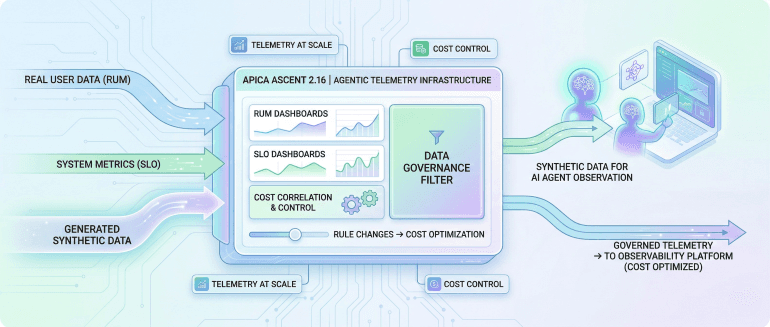
Apica Extends Scope and Reach of Platform for Managing Telemetry Data
Apica today updated its Ascent platform to add support for synthetic data that is increasingly being used by artificial intelligence (AI) agents to observe application environments. Version 2.16 of the platform adds support for a set of real user monitoring (RUM) and service level objective (SLO) dashboards, an ability to correlate changes made to any […]

VibeCode Meets DevOps: Accelerating Low-Code Innovation
AI-assisted low-code tools like VibeCode speed app development, but DevOps teams must ensure security, quality and CI/CD integration.
If it Isn’t Code, it’s Just Advice
In the world of AI coding, success hinges on code-native solutions that integrate and verify changes directly in the codebase. Many AI tools fail by relying on external dashboards, lacking the reproducibility and testability that code provides. To truly harness AI, solutions must automate and validate changes within the existing code ecosystem, ensuring reliability and efficiency.

Is Your AI Agent Secure? The DevOps Case for Adversarial QA Testing
Adversarial QA testing helps validate AI agents under real-world conditions, exposing risks like prompt injection and logic failures.

AI Won’t Replace Developers—But it is Changing How They Work
AI is reshaping software development by accelerating coding, testing and reviews while reinforcing the need for human judgment and oversight.
How AI is Shaping Modern DevOps and DevSecOps
AI is reshaping DevOps and DevSecOps by improving CI/CD workflows, DORA metrics and security without adding unnecessary complexity.
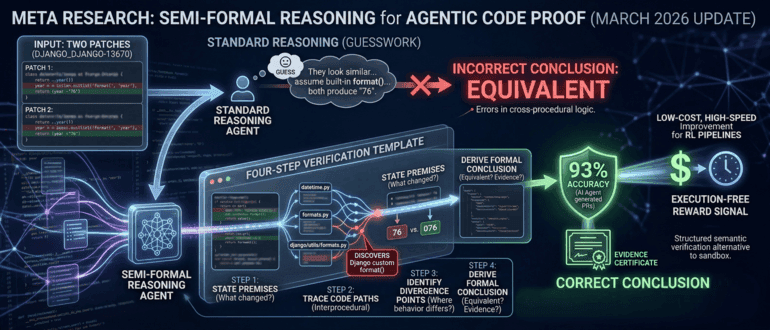
Meta Researchers Show AI Agents Can Verify Code Without Running It — and Hit 93% Accuracy
Meta’s semi-formal reasoning enables AI agents to verify code without executing it, achieving 93% accuracy. Implications for code review and RL training costs.
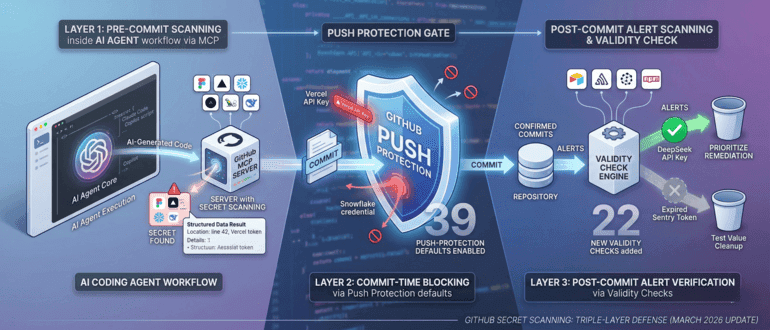
GitHub Adds 37 New Secret Detectors in March, Extends Scanning to AI Coding Agents
GitHub’s March 2026 updates introduce secret scanning for AI agents via MCP, 37 new detectors, and expanded push protection. Learn how to secure AI-generated code.
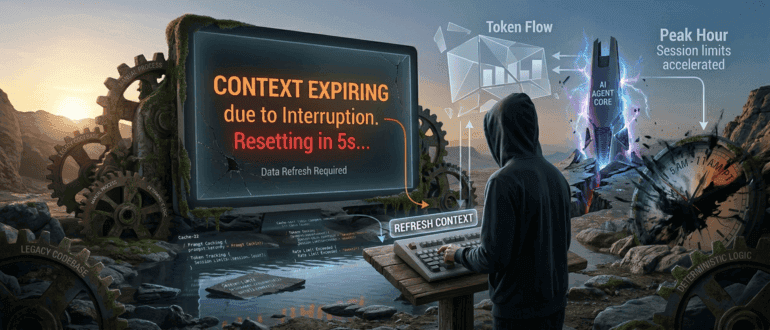
Developers Using Anthropic Claude Code Hit by Token Drain Crisis
Anthropic’s Claude Code users report Max tier quotas exhausting in under 20 minutes. Explore the “Cache-22” of prompt caching, session limits, and why AI coding “opacity” is stalling developer workflows.
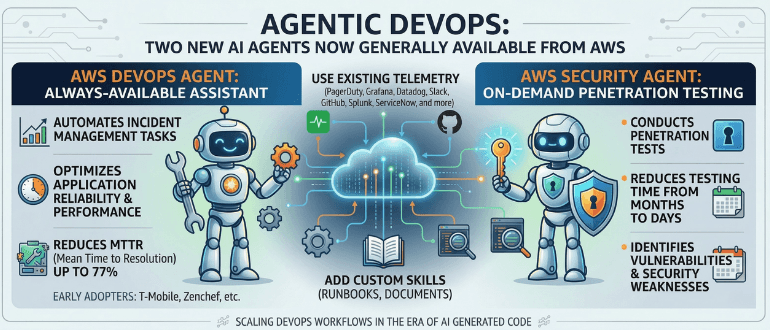
AWS Makes Pair of AI Agents to Automate DevOps Tasks Available
Amazon Web Services (AWS) today made a pair of artificial intelligence (AI) agents to manage DevOps workflows and conduct penetration tests generally available. Neha Goswami, director of Agentic DevOps at AWS, said AWS DevOps Agent provides software engineering teams with an always-available assistant that can automatically optimize application reliability and performance in addition to automating […]
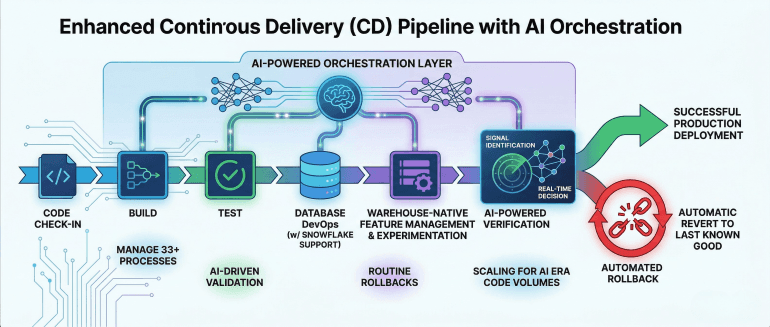
Harness Extends CD Platform to Address AI Coding Challenges
Harness expands its CD platform to tackle the “AI code explosion” with automated rollbacks, snowflake support, and warehouse-native feature management.

Why Governance Determines Whether Agentic AI Accelerates or Stalls Engineering
AI coding tools offer rapid productivity gains, but “governance debt” often slows delivery. Learn how to embed risk-based controls and auditability into agentic AI workflows to scale engineering capacity.
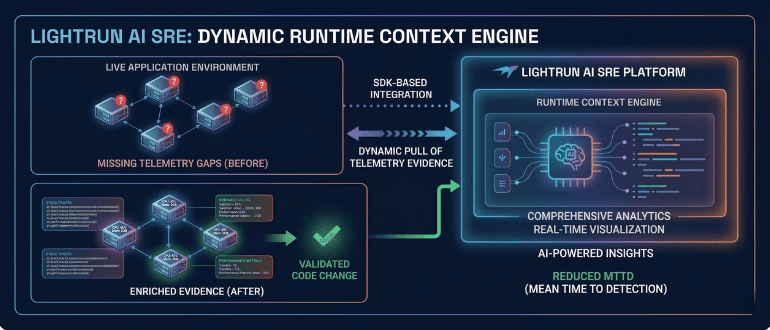
Lightrun Adds Ability to Dynamically Pull Telemetry Data from Live Apps
Lightrun has added an ability to dynamically pull missing telemetry evidence from live application environments without having to deploy additional instrumentation to its namesake site reliability engineering (SRE) platform that is based on artificial intelligence (AI). Company CEO Ilan Peleg said the Lightrun AI SRE platform includes a sandbox deployed via a software development kit […]
Agentic Systems are Breaking Reliability Frameworks
Agentic AI systems introduce “silent failures” that bypass traditional SOC alerts. Learn why DevOps and Security teams must shift from deterministic assertions to distribution-based testing and runtime behavioral boundaries.
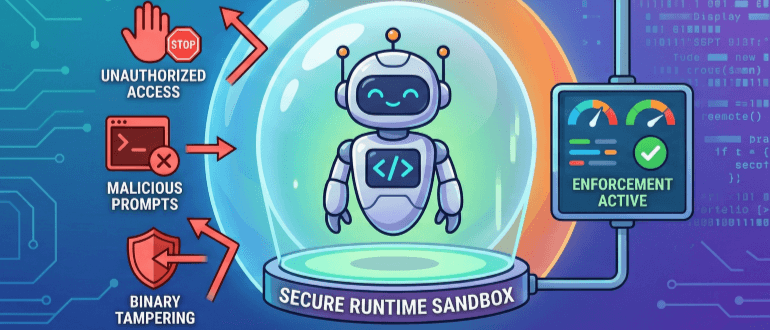
Sysdig Adds Runtime to Secure AI Coding Agents
Sysdig this week at the RSA Conference (RSAC) revealed it has created a runtime that makes it possible to securely deploy artificial intelligence (AI) coding tools. Jonas Rosland, director of the open source program for Sysdig, said the runtime makes it possible to monitor the activity of AI coding agents in real time, including potential […]

Security as Code is Becoming the New Baseline: Continuous Compliance in DevOps
There was a time when compliance meant a quarterly ritual. Someone from security would walk over with a spreadsheet, ask a few questions, tick a few boxes and disappear until the next audit cycle. The infrastructure team would scramble to prove that yes, encryption was enabled, and no, that S3 bucket was not public anymore. Everyone felt relieved, […]

Sophisticated Supply Chain Attack Targeting Trivy Expands to Checkmarx, LiteLLM
The supply chain attack that compromised Aqua Security’s Trivy open source security vulnerability scanner and its associated GitHub Actions earlier this month continues to expand, with software development tools from Checkmarx and LiteLLM being the latest victims of the sophisticated campaign. The threat group behind it, TeamPCP, is using the attacks to create persistence and […]

The AIRE Gap: Why Organizations Are Buying AI SRE Tools They Aren’t Ready to Use
AI Reliability Engineering (AIRE) is here, but is your organization ready? Discover why 80% of AI projects fail due to “Runbook Debt” and why traditional SLOs are meaningless for non-deterministic AI agents. Learn the 5 maturity levels of AIRE readiness for 2026.
Embedded DevOps: Bridging the Gap Between Firmware and Modern Delivery
Embedded software development has traditionally followed a different rhythm than mainstream software engineering. Hardware availability drives schedules. Validation cycles are longer. Releases are deliberate. Documentation is extensive. For good reason, embedded systems often operate in safety-critical or highly regulated environments. However, expectations around software delivery have shifted. Connected products, over-the-air updates, security mandates and shorter market windows […]
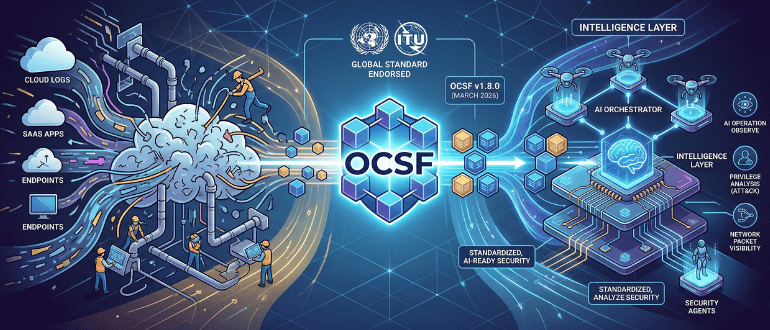
Future Proofing the Foundation for AI-Ready Security Operations
Last December, the International Telecommunication Union (ITU), the United Nations’ (UN) body for information and communication technologies, supported Open Cybersecurity Schema Framework (OCSF) for ratification as an international standard by June 2026. Standardization is now a global necessity as governments worldwide integrate ITU standards into their national cybersecurity policies. First, What is OCSF? The OCSF provides a standardized approach […]

Are AI Agents the Future of DevOps Automation?
DevOps has changed fast in the last decade. Scripts became pipelines. Pipelines became platforms. Now, AI agents in DevOps automation are leading the next wave. Today’s cloud systems are complex. Teams manage containers, microservices and hybrid clouds. Manual work slows them down. Traditional automation also struggles with scale. That is why AI agents in DevOps automation are gaining attention. Many organizations […]

AI Didn’t Break Your DevOps Pipeline, Your Process was Already Rotten
AI isn’t breaking your DevOps pipeline; it’s exposing the flaws you’ve ignored for years. Learn how automated decision-making accelerates process decay, amplifies noisy signals, and reveals the ownership gaps that human intuition used to hide. It’s time for an operational reckoning.