

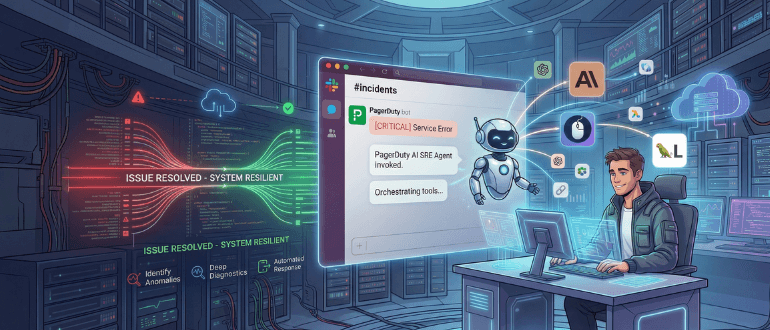

Anthropic Extends Claude Code Into Messaging Apps, Challenging OpenClaw’s Lead
Anthropic has debuted a new capability for its Claude Code platform, called Channels, that enables a number of key improvements. Notably, it allows users to communicate with the coding assistant through messaging platforms like Telegram and Discord. More important, Channels is continuously available, so it is closer to an active collaborator. Clearly, Anthropic’s release of […]

From AI Code to Production: The Case for FeatureOps
As 80% of developers adopt AI coding tools, delivery stability is hitting a wall. Discover why “FeatureOps” and feature flagging are the critical runtime controls needed in 2026 to close the understanding gap and prevent catastrophic outages like those seen at Google and Cloudflare.

The SaaS Observability Era is Ending: Why BYOC Is the Future of Telemetry
The era of expensive, centralized SaaS observability is hitting a wall. Discover why the “architectural revolution” of Bring Your Own Cloud (BYOC) is the 2026 solution for Kubernetes and AI workloads, restoring data sovereignty, reducing egress costs, and putting telemetry back under engineering control.
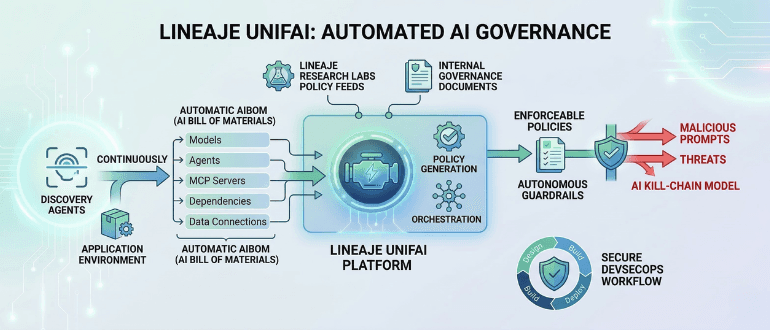
Lineaje Adds Ability to Automatically Apply Governance Policies to AI Components
Lineaje this week unfurled a platform that automatically discovers the artificial intelligence components of an application, defines security and governance policies, and then autonomously generates guardrails. At the core of the Lineaje UnifAI platform are a set of artificial intelligence (AI) capabilities that are integrated with an orchestration framework for applying governance policies that has […]
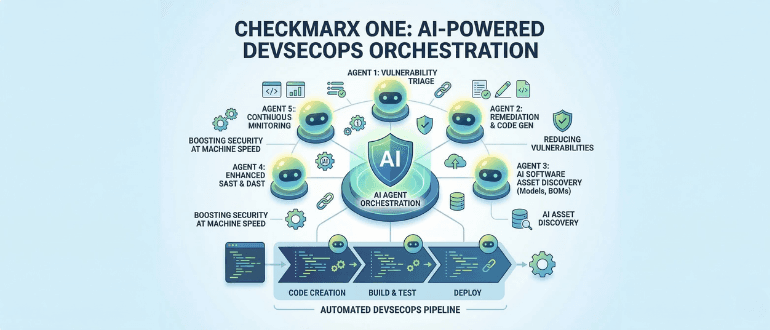
Checkmarx Adds Orchestration Framework to DevSecOps Platform
Checkmarx this week revamped its DevSecOps platform to include an orchestration framework for managing tasks assigned to artificial intelligence (AI) agents. Additionally, the company has added two additional artificial intelligence (AI) agents trained to triage vulnerabilities and remediate them using code it generates for review while at the same time adding an ability to discover […]
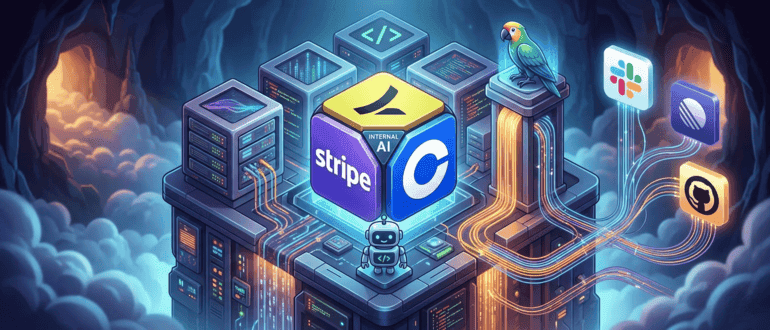
Open SWE Captures the Architecture That Stripe, Coinbase and Ramp Built Independently for Internal Coding Agents
Explore Open SWE, the open-source framework by LangChain that codifies the internal AI coding agent architectures used by Stripe, Ramp and Coinbase. Released March 17, 2026, this MIT-licensed project offers a customizable foundation using isolated sandboxes, subagent orchestration, and deep workflow integration for modern DevOps teams.
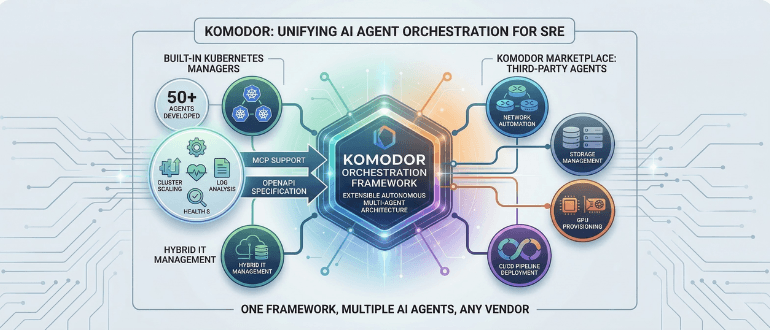
Komodor Extends Reach of AI SRE Orchestration Framework
Komodor today extended the reach of its orchestration framework for artificial intelligence (AI) agents by adding support for Model Context Protocol (MCP) servers and the OpenAPI specification. Company CTO Itiel Shwartz said those capabilities will make it possible for IT teams to more broadly orchestrate AI agents that are being used to investigate and remediate […]
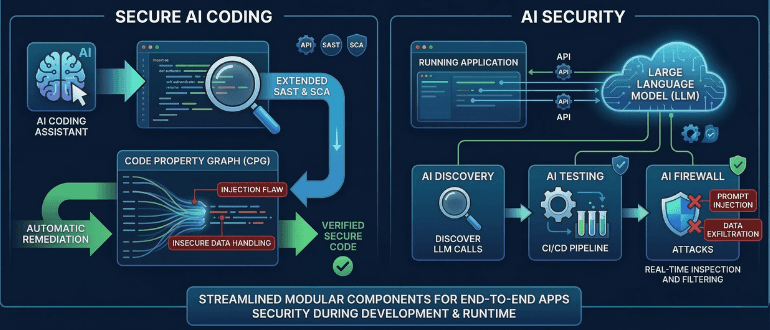
Harness Extends AI Security Reach Across Entire DevOps Workflow
Harness today added an ability to automatically secure code as it is being written by an artificial intelligence (AI) coding tool in addition to adding a module to its DevOps platform that discovers, tests, and protects AI components within applications. Secure AI Coding is an extension of the static application security testing (SAST) and software […]
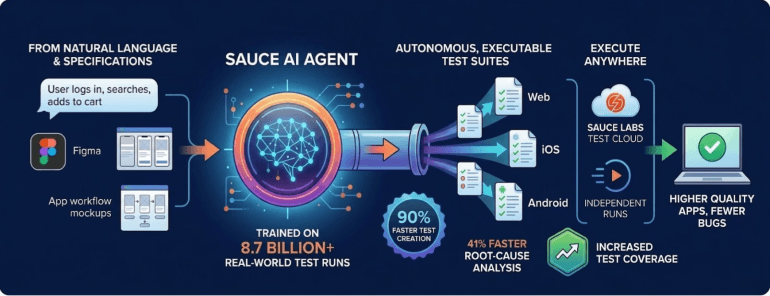
Sauce Labs Makes AI Agent for Creating and Running Tests Available
Sauce Labs today made generally available an artificial intelligence (AI) agent that translates a natural language intent into a set of executable test suites that can run anywhere. Company CEO Dr. Prince Kohli said the Sauce AI for Test Authoring agent closes a gap that has emerged between the rate at which code is being […]
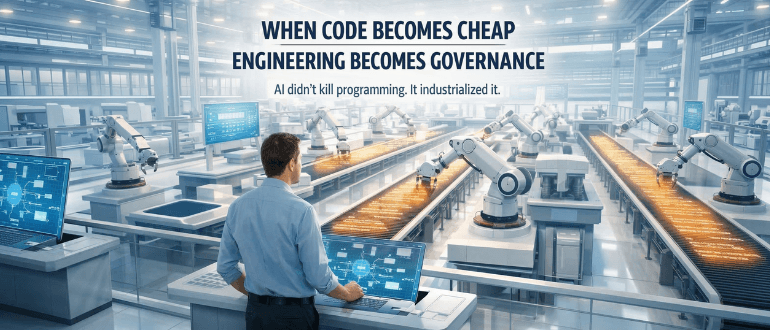
When Code Becomes Cheap, Engineering Becomes Governance
AI agents can now generate in minutes what once took teams weeks, but the real shift is not faster coding. It is the collapse of code scarcity. As software production becomes industrialized, the job of engineers is moving from writing lines to governing systems, managing risk and deciding what should exist in the first place.
Survey: AI Coding Exacerbates Existing DevOps Workflow Issues
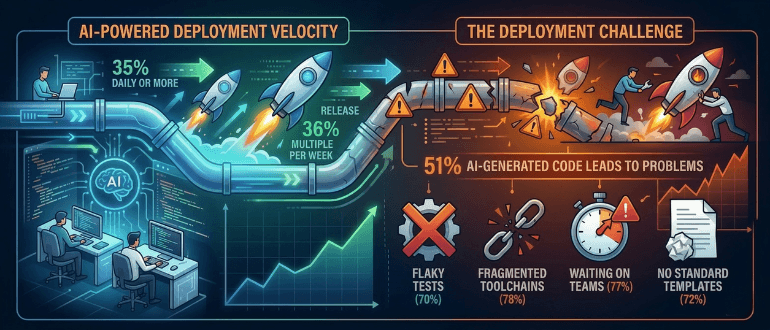
A global survey of 700 software engineering practices published this week finds that thanks to increased reliance on artificial intelligence (AI) coding tools, well over a third (35%) are either achieving daily or more frequent product deployments, with 36% deploying software multiple times per week. However, more than half (51%) also noted AI-generated code leads […]

The Risk Profile of AI-Driven Development
Analysis arguing that AI-driven code generation accelerates dependency decisions and expands supply-chain risk, requiring shift-left governance, prompt-level controls, automated SBOM/AIBOM visibility, threat-modeling as engineering, and autonomous security to match autonomous development.
Sorry, Charlie, StarKist Wants AI With Good Taste
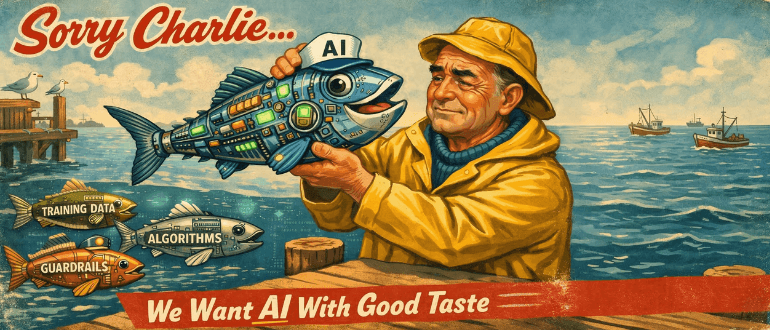
A surprising AI experiment showed that feeding a model sloppy code didn’t just produce bad programming, it produced bad behavior. The result points to something philosophers and DevOps engineers have long understood: Character, culture and incentives shape systems far more than rules alone.
JetBrains Launches Air and Junie CLI to Blend Traditional IDE with AI Agents
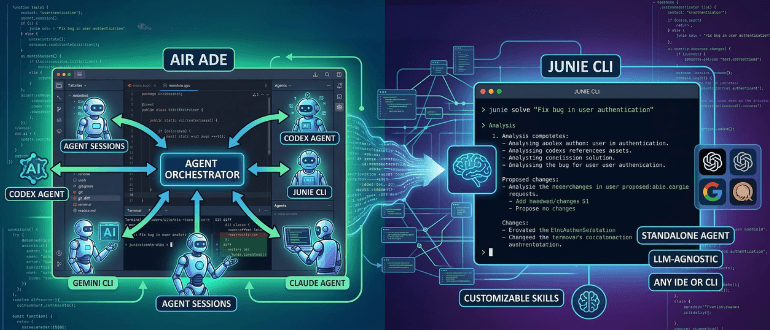
JetBrains has launched a new “agentic” tooling stack that pairs a multi‑agent development environment, Air, with a standalone, LLM‑agnostic coding agent, Junie CLI. If you know JetBrains, you probably know it for Kotlin, the statically typed Java Virtual Machine (JVM) language used mostly for Android development, or for its well-known integrated development environments (IDEs), such […]

The Observability Bill is Coming Due – and AI Wrote Most of It
Observability has always had a data quality problem. AI coding agents just made it catastrophically worse. Shimmy sits down with the co-founders of Sawmills to dig into why unmanaged telemetry is the unglamorous DevOps crisis that is quietly killing budgets — and what an agentic telemetry management platform actually does about it.

Gemini Code Assist Gets Agent Auto-Approve, Inline Diffs, and Custom Commands to Speed Up the Core Coding Loop
Google’s latest Gemini Code Assist updates focus on workflow, not hype: Agent Mode with Auto Approve, inline diffs, a Context Drawer, custom commands, Finish Changes, and Outlines streamline how developers review, trust, and integrate AI-generated code in VS Code and IntelliJ.
Microsoft Azure Skills Plugin Gives AI Coding Agents a Playbook for Cloud Deployment
Microsoft’s new Azure Skills Plugin closes the gap between AI-written code and production deployments by packaging expert Azure knowledge as executable skills, backed by MCP servers for real infrastructure actions and AI workflows—bringing guardrails, consistency, and speed to DevOps and platform teams.

Anthropic Code Review Dispatches Agent Teams to Catch the Bugs That Skim Reads Miss
Anthropic Code Review dispatches agent teams to find bugs in PRs. Multi-agent analysis, severity ranking, and inline fixes for Teams and Enterprise.
Report: Lower Performing Software Engineering Teams Benefit More from AI
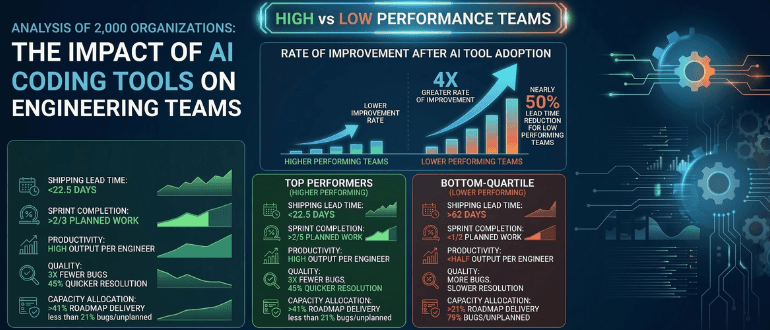
An analysis of 2,000 organizations worldwide finds that historically lower performing software engineering teams are seeing nearly a 50% improvement in lead time to delivery, a four times greater rate of improvement over higher performing teams that have adopted AI coding tools. Conducted by Plandek, a provider of a developer productivity intelligence platform, the report […]

GitHub Copilot Coding Agent for Jira Connects Planning to Pull Requests Without Leaving Your Workflow
GitHub Copilot, the coding agent, now integrates with Jira. Assign issues to Copilot and get draft PRs — no context switching between planning and code.

Can QA Reignite its Purpose in the Agentic Code Generation Era?
AI-generated code is accelerating development but it exposes a deeper issue. Why deterministic infrastructure is becoming the foundation of agentic QA.
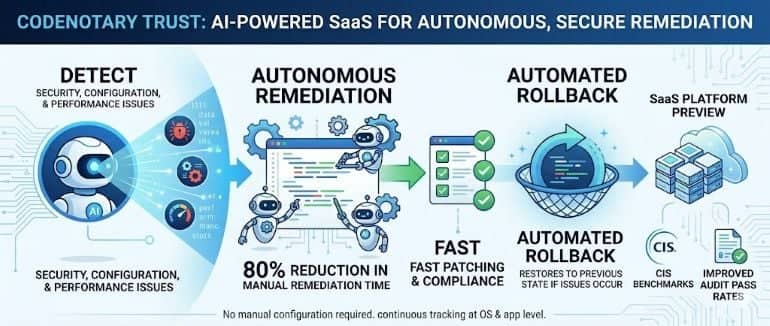
Codenotary Previews AI Platform to Autonomously Detect and Remediate IT Issues
Codenotary is previewing a software-as–a-service (SaaS) platform that enables artificial intelligence (AI) agents it has developed to autonomously detect, prioritize, and fix security, configuration, and performance issues. Company CEO Moshe Bar said the Codenotary Trust platform also enables continuous vulnerability tracking at both the Linux operating system and application level. Once an issue is detected, […]
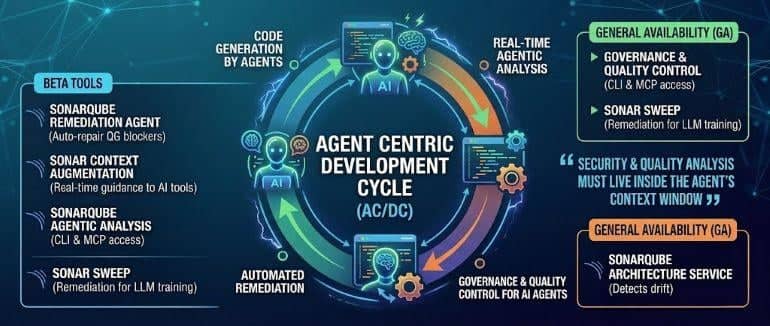
Sonar Unfurls Framework for Managing DevOps Workflows in the Age of AI
Sonar this week launched an Agent Centric Development Cycle (AC/DC) framework that promises to modernize continuous integration (CI) in the age of artificial intelligence (AI) coding. Announced at an online Sonar Summit, the AC/DC framework incorporates multiple tools and platforms the company has developed to better secure software supply chains, including now in beta Sonar […]