

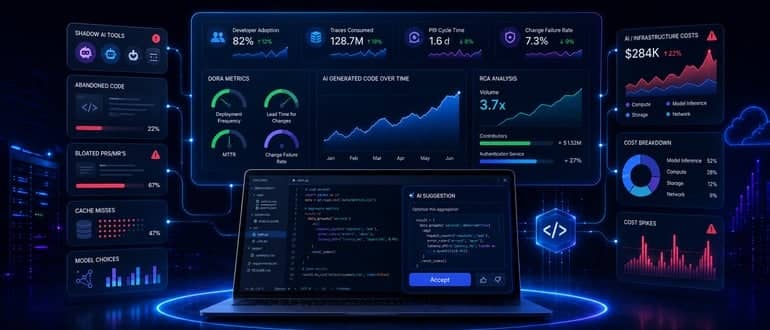
Harness Adds Pair of Tools to Track ROI in AI Coding
Harness today added two tools to track and analyze the impact code generated by artificial intelligence (AI) coding tools is having on application development. An AI Development Lifecycle (DLC) tool installs agent software on a developer’s machine to track adoption, sessions, and the code created across every coding agent, while a Cloud & AI Cost […]
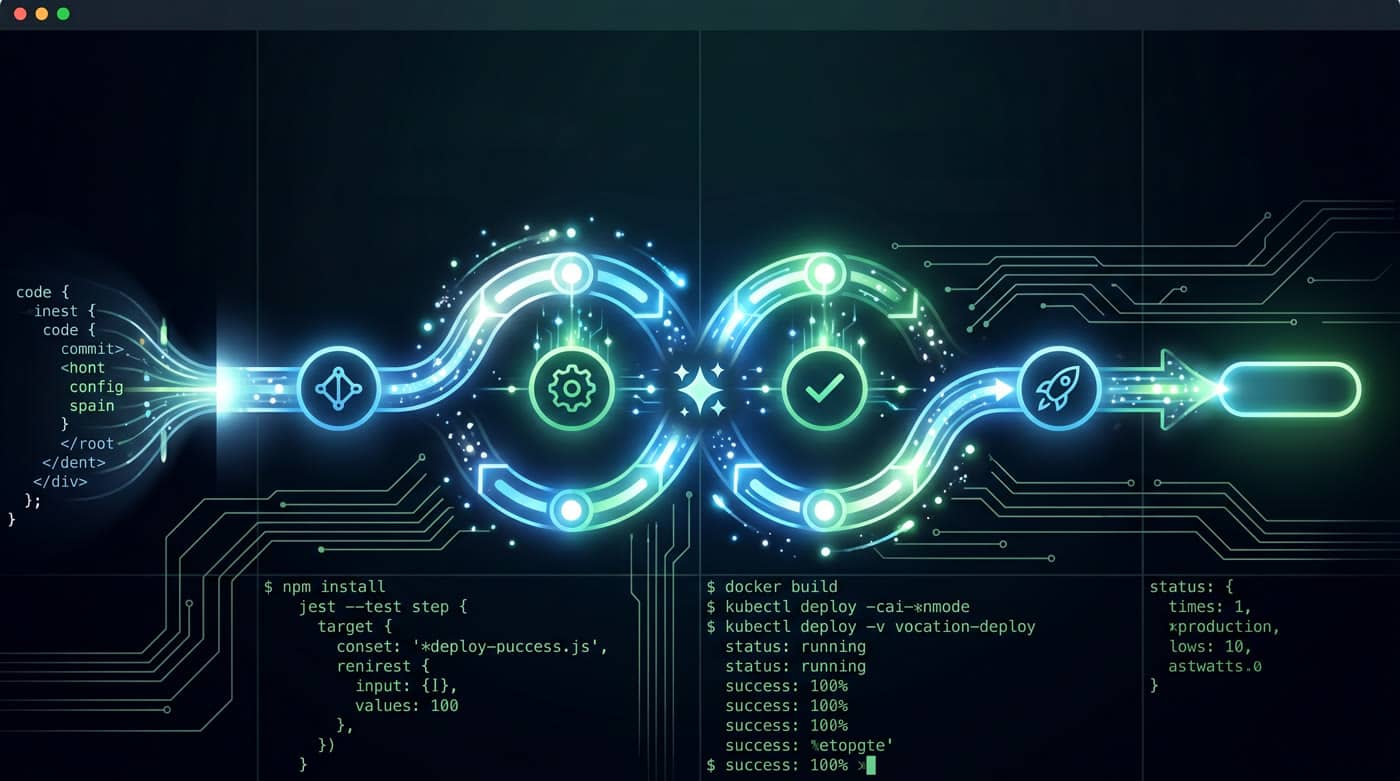
Why Agent Skills Are the Next Evolution of Software Development
The emergence of agent skills — modular, reusable blocks of natural language instructions and metadata — is transforming the developer’s role.
The Future of Salesforce DevOps: Preparing for the AI Era
By establishing a robust DevOps foundation now, organizations can leverage these emerging predictive capabilities to transform reactive pipelines into proactive, self-correcting release architectures.
The End of Alert Fatigue: How AI-Powered Observability is Transforming SRE Teams in 2026
Alert fatigue among Site Reliability Engineering (SRE) teams has reached a breaking point, with responders drowning in thousands of weekly notifications where only 3% genuinely warrant attention. This massive volume of noise—driven by fragmented monitoring tools and rigid, threshold-based alerting—stifles innovation, spikes on-call burnout, and compromises system reliability. Fortunately, AI-powered observability and AIOps platforms are transforming incident management. By unifying telemetry across metrics, logs, and traces, intelligent systems can correlate signals, execute automated root cause analysis, and trigger self-healing remediation. This shift reduces alert volumes by up to 95% and slashes mean time to resolution (MTTR) by 40–58%, allowing engineers to pivot from reactive firefighting to proactive reliability engineering.

5 Ways Agentic AI is Redefining DevOps Architecture for Self-Healing CI/CD Systems
The era of the flaky test as a simple annoyance is over. As enterprises shift from deterministic applications to agentic AI, flakiness has evolved into a structural bottleneck for traditional CI/CD pipelines reliant on rigid, binary assertions. Because AI agents produce “Y-like” rather than exact results, DevOps architecture must fundamentally change. This article explores the transition from simple pipeline automation to true autonomy—detailing how multi-agent networks utilize predictive failure detection, self-healing test repair, autonomous incident remediation, and adaptive security scanning to create pipelines that actively problem-solve and adapt to code changes in real time.

Co-Developing an AI Native Observability Platform
Modern distributed hybrid enterprise environments are moving away from siloed monitoring toward AIOps platforms like Selector AI, which combine multi-domain data ingestion, domain-specific network language models, and co-development to enable autonomous, agentic network operations.
Designing an AI-Powered DevSecOps Guardrail Pipeline Using GitHub Actions
By embedding AI-powered guardrails directly into CI/CD pipelines, organizations can detect vulnerabilities earlier, enforce security policies automatically and accelerate secure software delivery.

Modernizing DevOps Security With Intelligent KYC Enforcement Layers
This is where smart KYC enforcement layers fit in — not a compliance box, but an engineering control that is directly part of DevOps processes.
Eight Ways AI Will Reshape DevOps in 2026 and Beyond
In 2026 and beyond, AI will not just change how software is developed, but change the very fundamentals of how people work.
Low-Code/No-Code in Microsoft 365: How Power Platform is Redefining Enterprise DevOps
Low-code and no-code platforms like Microsoft Power Platform are reshaping enterprise DevOps. When combined with cloud architecture, DevOps discipline, and AI-driven assistance, they enable organizations to deliver solutions faster without sacrificing control.

The Evolving Role of Observability in DevOps
DevOps practices have fundamentally changed how software is delivered, operated, and improved. At their heart, DevOps methodologies seek to unify development and operations, enabling teams to ship changes more quickly while maintaining system reliability. The discipline has grown beyond simple CI/CD automation to encompass culture, observability, and intelligent workflows. As organizations scale, they face new […]
How to Create an AI Acceptable Use Policy
When teams know which tools are acceptable and which data are off-limits, AI becomes a disciplined advantage rather than a quiet source of risk.
Microsoft Open-Sources RAMPART and Clarity to Bring Agent Safety Into the Dev Workflow
Microsoft open-sources RAMPART and Clarity to help dev teams embed AI agent safety testing directly into CI pipelines and design workflows.
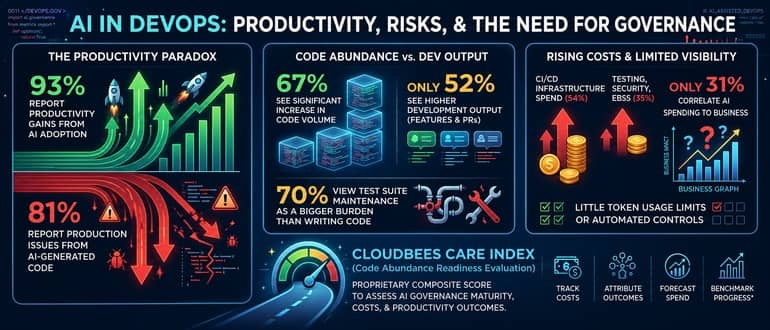
CloudBees Survey Surfaces Increase in Production Issues Attributable to AI
A survey of 213 IT leaders, conducted by CloudBees, finds that while 93% report they are seeing productivity gains that are driven by increased adoption of artificial intelligence (AI) tools, a full 81% also report they have seen an increase in production issues attributable to AI-generated code. Shared this week at an Agentic DevOps World […]
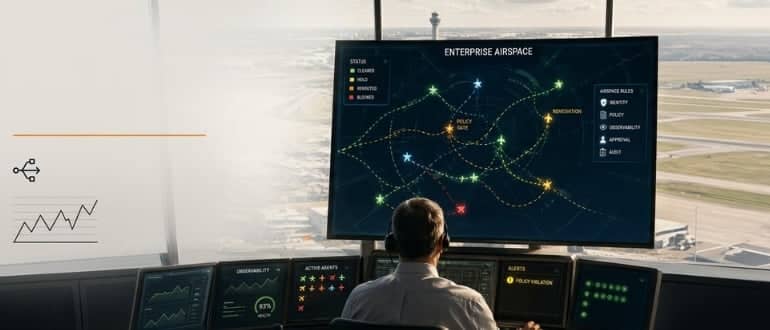
The Automation Layer Wants to Own Enterprise AI
Organizations want AI systems capable of prioritizing alerts, routing workflows, coordinating across applications, initiating remediation steps, summarizing operational data and adapting dynamically based on changing context. The system is no longer following a rigid set of instructions. It is participating in operational decision-making. That changes the operational risk profile dramatically. When deterministic automation fails, the blast radius is usually constrained. Probabilistic systems introduce a completely different level of complexity because behavior can evolve dynamically during runtime.
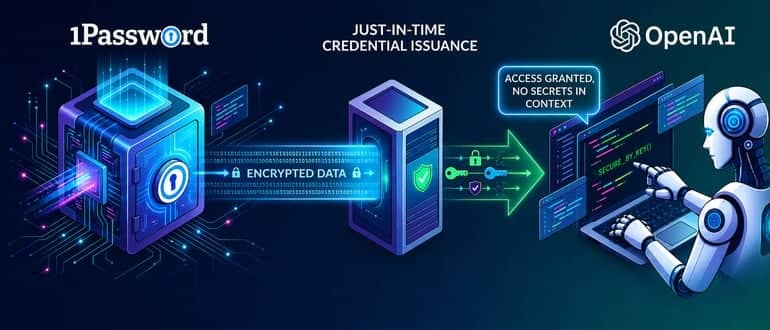
1Password Allies With OpenAI to Secure Codex AI Coding Tool
DevSecOps teams can now manage coding agents as a tenant rather than another vault where secrets might be stored, ensuring credentials are never exposed to an AI agent or LLM as plain text. The MCP server does not read or return secret values through the MCP channel, allowing Codex to create environments and invoke applications while the values themselves never leave the 1Password vault.
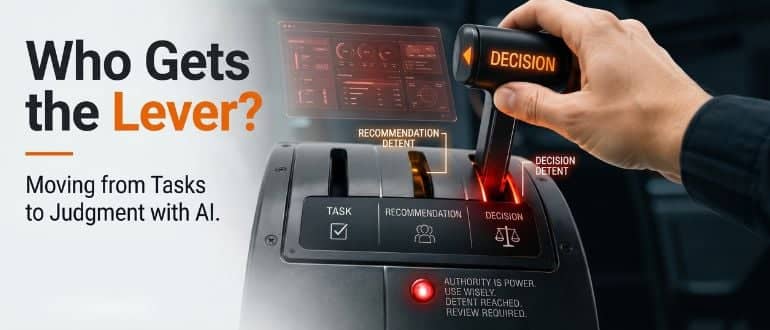
We Spent 15 Years Automating Infrastructure. Now We’re Automating Decisions
As DevOps shifts from deterministic infrastructure automation to AI-driven probabilistic judgment, organizations face a profound transition from automating tasks to automating operational reasoning. Discover why this requires a fundamental evolution in platform engineering, trust, and governance.

When Millions Arrive in a Minute: Why Reactive Autoscaling Fails and the Predictive Fix
For high-heat events where demand arrives faster than readiness can be achieved, predictive scaling is a structural advantage.
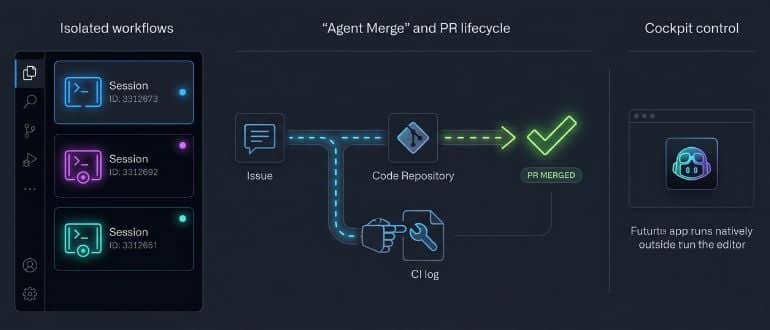
GitHub Copilot Gets Its Own App — and It’s More Than a Coding Assistant
GitHub has launched a standalone Copilot desktop app in technical preview, moving beyond the IDE to introduce a dedicated cockpit for agentic development. The app enables developers to manage parallel, isolated agent sessions directly from GitHub issues, while introducing “Agent Merge”—a feature that autonomously fixes CI failures and handles code reviews to streamline the entire PR lifecycle.
Ten Great DevOps Job Opportunities
DevOps.com is now providing a weekly DevOps jobs report through which opportunities for DevOps professionals will be highlighted as part of an effort to better serve our audience. Our goal in these challenging economic times is to make it just that much easier for DevOps professionals to advance their careers. Of course, the pool of […]
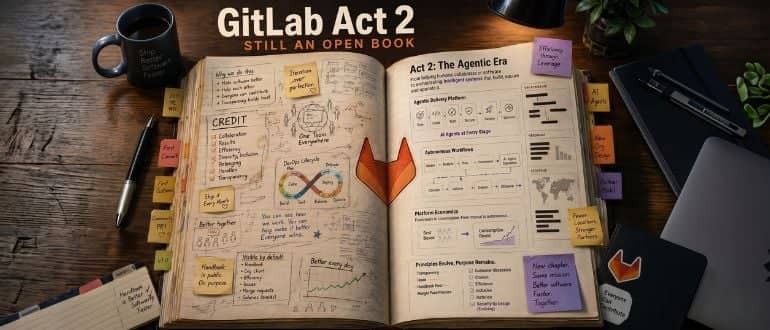
GitLab Act 2: Still an Open Book
An analysis of GitLab’s “Act 2” transition under CEO Bill Staples, examining whether the company can successfully pivot to an AI-native, agentic software delivery model while dismantling the radically transparent, remote-first culture that originally defined its brand and operational success.
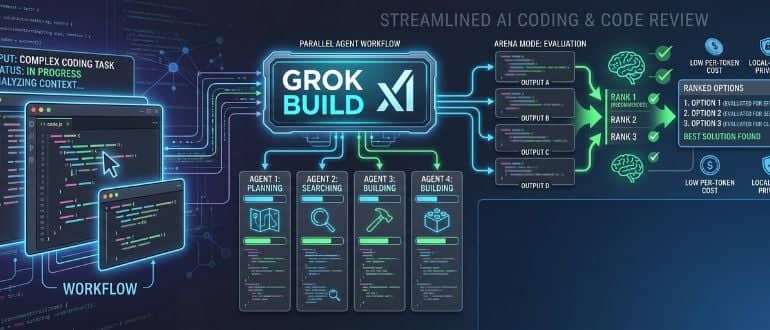
xAI Enters the Coding Agent Race With Grok Build
Elon Musk’s xAI has entered the developer workspace with Grok Build, a local-first coding agent featuring an automated “Arena Mode” that runs and ranks parallel AI outputs to rival Anthropic and OpenAI

Observability-Driven Continuous Testing in Cloud-Native DevOps
Observability transforms continuous testing from quality gates into reliability signals. Cloud-native teams ship faster because they know their systems better — traces reveal bottlenecks, synthetics catch regressions and security telemetry prevents breaches.