

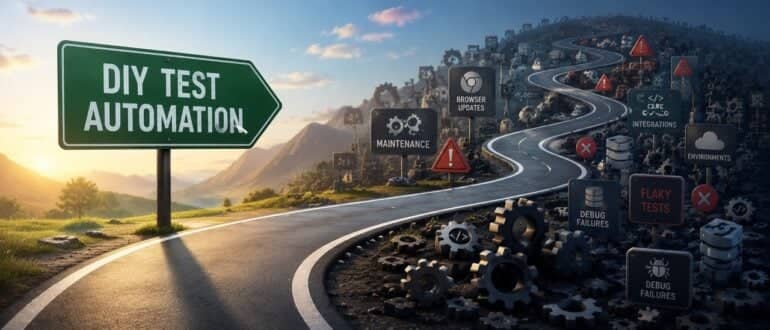
Why DIY Test Automation Succeeds Its Way Into a Problem
Ask any engineering team if they can build their own test automation framework, and the answer is almost always “yes.” With modern AI tools involved, that answer arrives faster and with more confidence than ever before. In 30 days, a capable team can spin up scripts, automate flows, generate test cases, and show a demo […]

Regression Testing Tools in the Age of AI-Assisted Development: What Has Changed
For most of the past decade, the conversation around regression testing tools was fairly stable. The tools got faster, the integrations got smoother, and the underlying approach stayed largely the same: write tests, run them in CI, fix failures. The fundamental model did not change much because the problem did not change much. AI-assisted development […]
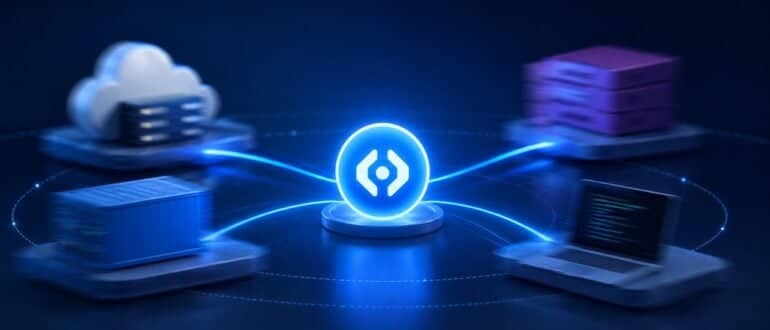
Overcoming IP Churn in Ephemeral DevOps Environments Using Userspace Overlays
Modern DevOps practices have completely transformed how we handle compute and orchestration. Tools like Kubernetes enable engineering teams to spin up ephemeral containers in seconds and scale workloads dynamically to meet global demand. Yet the underlying network infrastructure has remained stubbornly rigid. Traditional cloud networking relies heavily on static IP addresses, rigid firewall rules, and […]
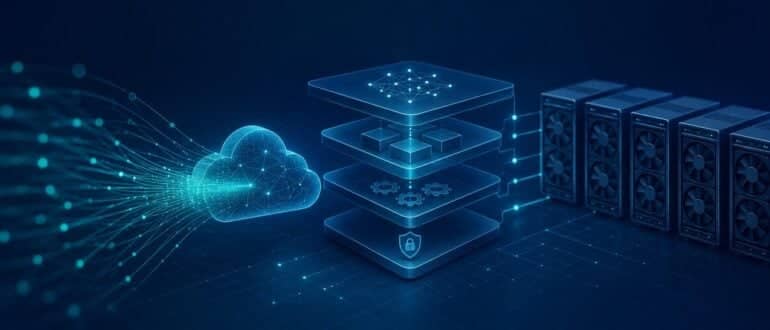
Why Enterprise AI Infrastructure Is Becoming a DevOps Problem
Most enterprise AI projects start with retrieval. You connect Jira, Confluence, SharePoint, and Slack. Maybe a few internal databases nobody has touched in five years. You tune embeddings, optimize chunking, wire up a vector database, and convince yourself you’ve built an AI-powered knowledge system. Then the model server crashes. And suddenly, you discover the uncomfortable […]

Why Logs, Metrics and Traces Still Don’t Give You Real Observability
If your team can answer the question “Did the system do the right thing?” and not just “Did the system stay up?”, you’re getting close to real observability.

Why Your AI Agent is a Black Box and How to fix it With OpenTelemetry
You built the agent. It works in testing. Then it hits production and starts giving wrong answers, timing out or burning through your token budget, and you have no idea why. This is when developers discover that print statements and log files weren’t designed for this. LLM applications fail in ways that traditional tooling can’t see. A hallucination doesn’t throw […]
Agentic SRE: The Next Frontier of Reliability
Agentic SRE is the evolution of site reliability engineering where AI agents help observe systems, reason over telemetry and take bounded operational actions under human-defined guardrails.
Why AI Won’t Solve the Hardest Part of Integrations
AI is making it easier for SaaS companies to build integrations. Give a coding agent decent API docs, some context about the systems involved, and a clear prompt, and it can get surprisingly far. It can write the logic faster than most teams could a year or two ago, saving time, reducing repetitive work, and […]

More Signal, Less Clarity: The Observability Paradox No One Wants to Talk About
Record observability spending is driving up MTTR. Discover why tool sprawl and excessive dashboard data cause cognitive overload for on-call engineers, and how to fix it.
Why Agent Skills Are the Next Evolution of Software Development
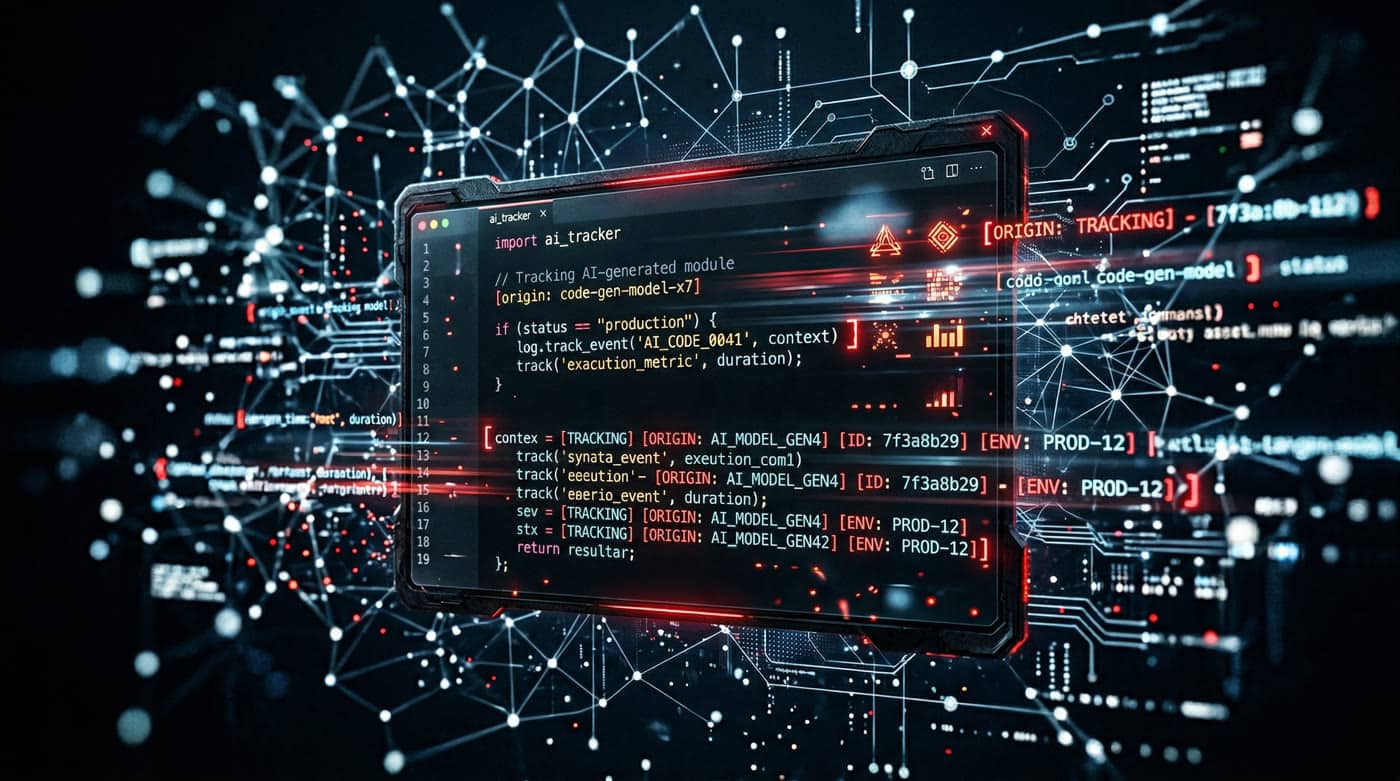
The emergence of agent skills — modular, reusable blocks of natural language instructions and metadata — is transforming the developer’s role.

The Future of Salesforce DevOps: Preparing for the AI Era
By establishing a robust DevOps foundation now, organizations can leverage these emerging predictive capabilities to transform reactive pipelines into proactive, self-correcting release architectures.
The End of Alert Fatigue: How AI-Powered Observability is Transforming SRE Teams in 2026
Alert fatigue among Site Reliability Engineering (SRE) teams has reached a breaking point, with responders drowning in thousands of weekly notifications where only 3% genuinely warrant attention. This massive volume of noise—driven by fragmented monitoring tools and rigid, threshold-based alerting—stifles innovation, spikes on-call burnout, and compromises system reliability. Fortunately, AI-powered observability and AIOps platforms are transforming incident management. By unifying telemetry across metrics, logs, and traces, intelligent systems can correlate signals, execute automated root cause analysis, and trigger self-healing remediation. This shift reduces alert volumes by up to 95% and slashes mean time to resolution (MTTR) by 40–58%, allowing engineers to pivot from reactive firefighting to proactive reliability engineering.

5 Ways Agentic AI is Redefining DevOps Architecture for Self-Healing CI/CD Systems
The era of the flaky test as a simple annoyance is over. As enterprises shift from deterministic applications to agentic AI, flakiness has evolved into a structural bottleneck for traditional CI/CD pipelines reliant on rigid, binary assertions. Because AI agents produce “Y-like” rather than exact results, DevOps architecture must fundamentally change. This article explores the transition from simple pipeline automation to true autonomy—detailing how multi-agent networks utilize predictive failure detection, self-healing test repair, autonomous incident remediation, and adaptive security scanning to create pipelines that actively problem-solve and adapt to code changes in real time.
On-Call: The Silent Force Shaping Engineering Culture
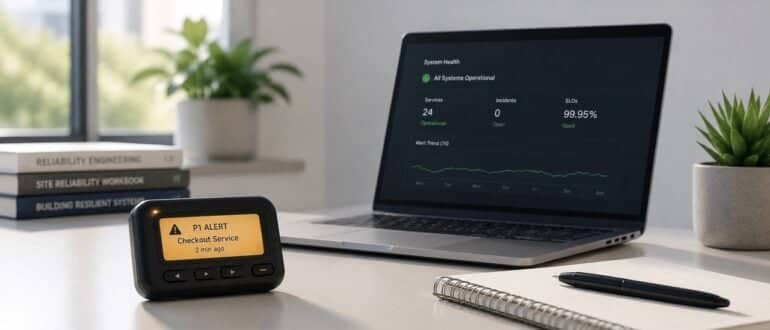
There is a silent force shaping engineering culture inside every technology organization. It affects productivity, team morale, psychological safety, and long-term retention. And yet, it is rarely discussed in executive meetings or reflected in meaningful KPIs. That force is on-call. On-call is one of the most direct touchpoints engineers have with the reality of the […]
Why DORA Metrics Look Different When AI Is Part of Your Development Workflow
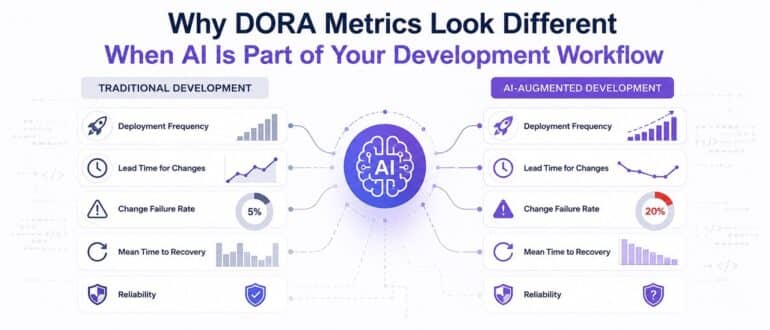
DORA metrics have been a reliable compass for engineering teams for over a decade. Deployment frequency, lead time for changes, change failure rate, mean time to recovery, and reliability give teams a shared language for talking about delivery performance. The research behind them is solid, the benchmarks are well-established, and most engineering leaders know what […]
Co-Developing an AI Native Observability Platform
Modern distributed hybrid enterprise environments are moving away from siloed monitoring toward AIOps platforms like Selector AI, which combine multi-domain data ingestion, domain-specific network language models, and co-development to enable autonomous, agentic network operations.
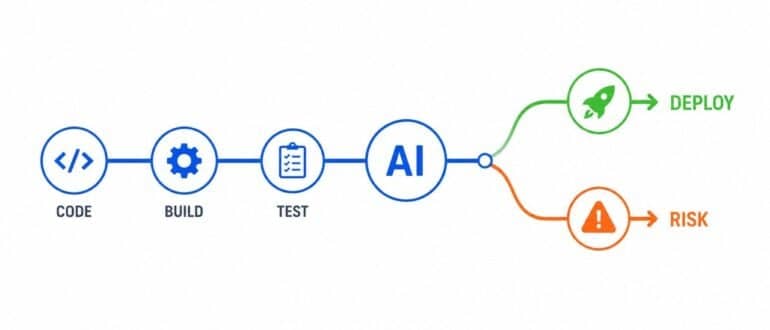
AI Agents in CI/CD Pipelines: Speed vs Control in Modern DevOps
The moment you push your code, deployment fires off on its own. The pipeline kicks in, the tests sail through, and within a few minutes your app is live in production. There is no manual sign-off and no one scanning through the final changes. Everything is running on the decisions of an AI agent plugged […]

Designing an AI-Powered DevSecOps Guardrail Pipeline Using GitHub Actions
By embedding AI-powered guardrails directly into CI/CD pipelines, organizations can detect vulnerabilities earlier, enforce security policies automatically and accelerate secure software delivery.

Modernizing DevOps Security With Intelligent KYC Enforcement Layers
This is where smart KYC enforcement layers fit in — not a compliance box, but an engineering control that is directly part of DevOps processes.
Eight Ways AI Will Reshape DevOps in 2026 and Beyond
In 2026 and beyond, AI will not just change how software is developed, but change the very fundamentals of how people work.

Low-Code/No-Code in Microsoft 365: How Power Platform is Redefining Enterprise DevOps
Low-code and no-code platforms like Microsoft Power Platform are reshaping enterprise DevOps. When combined with cloud architecture, DevOps discipline, and AI-driven assistance, they enable organizations to deliver solutions faster without sacrificing control.
CI/CD Supply Chain Security: Hardening Artifacts, Dependencies, and Delivery Pipelines
Modern CI/CD pipelines have become one of the most attractive attack surfaces in enterprise environments. As organizations push for faster releases, broader automation, and greater reuse of third-party components, the software supply chain has quietly expanded beyond the direct control of any single team. Source code is only one small piece of what ultimately runs in […]

The Evolving Role of Observability in DevOps
DevOps practices have fundamentally changed how software is delivered, operated, and improved. At their heart, DevOps methodologies seek to unify development and operations, enabling teams to ship changes more quickly while maintaining system reliability. The discipline has grown beyond simple CI/CD automation to encompass culture, observability, and intelligent workflows. As organizations scale, they face new […]