



How to Create an AI Acceptable Use Policy
When teams know which tools are acceptable and which data are off-limits, AI becomes a disciplined advantage rather than a quiet source of risk.

The “Day 2” AI Problem: Why Standard API Gateways Fail at GenAI Scale
Injecting GenAI into applications is deceptively easy. Need a new chatbot backed by an LLM? Grab an OpenAI API key and you can throw together an MVP in an afternoon. This is the pattern teams have used to push AI features into apps for the last few years. The problem, as with previous tech hype […]

When Millions Arrive in a Minute: Why Reactive Autoscaling Fails and the Predictive Fix
For high-heat events where demand arrives faster than readiness can be achieved, predictive scaling is a structural advantage.
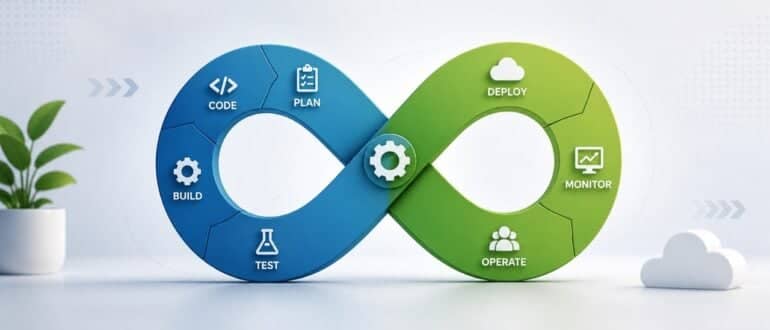
Why DevOps Is Critical for Modern Business Resilience
Today’s business world operates in a state of constant change. What the customer wants to buy changes quickly, new competitors appear overnight, and cyber threats are changing faster than ever. In this world, the concept of “resilience,” the ability to adapt, to overcome, and to continue to create value for the enterprise despite the changes, […]

Observability-Driven Continuous Testing in Cloud-Native DevOps
Observability transforms continuous testing from quality gates into reliability signals. Cloud-native teams ship faster because they know their systems better — traces reveal bottlenecks, synthetics catch regressions and security telemetry prevents breaches.

AI in Production Has a Governance Problem — ISO/IEC 42001 is Starting to Solve It
Moving fast without losing control is the core promise of DevOps. Extending this discipline to AI is the next logical step, supported by existing frameworks.

Migration Observability: Measure Meaning, Not Movement
Traditional operational observability focuses on latency, errors, throughput and saturation. Migration observability needs a different category: Semantic drift.

Capturing Real API Behavior for Regression Testing: Architecture and Implementation
Move beyond scripted predictions. Learn how intelligent regression testing captures real API behavior and detects failures before production
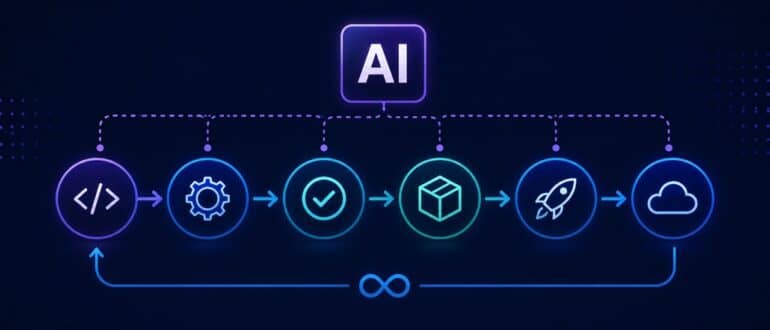
Your CI/CD Pipeline Has Non-Human Identities You Forgot About
A deployment starts failing late on a Friday evening. The initial assumption is that something changed in the application release. Teams start checking container images, Terraform plans and recent commits. Nothing looks wrong. A few hours later, someone discovers the actual issue: a deployment token tied to an old automation workflow expired months ago. The […]
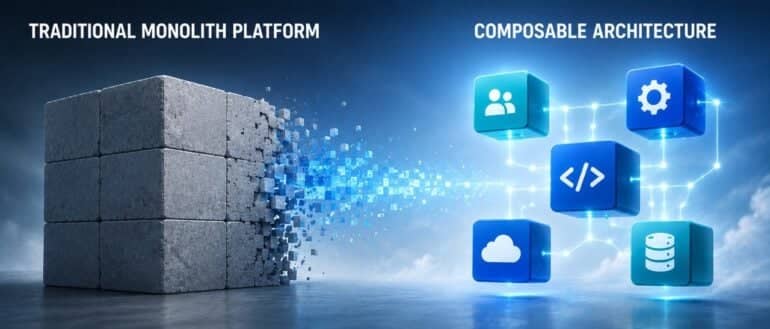
The Rise of Composable Architectures to Replace Traditional Platforms
Traditional monolithic platforms have served their purpose. As technologies like artificial intelligence and quantum computing usher in a new digital age, flexible and modular architectures will take their place. Developers and cloud professionals should familiarize themselves with composable architecture’s principles, benefits and implementation best practices to remain competitive in an evolving technological landscape. Composable Architectures […]
The Five Biggest Mistakes Organizations Make When Implementing SRE
From cargo-culting Google’s playbook to rushing AI-powered observability into production before the fundamentals are in place, here’s where SRE transformations quietly go wrong, and how to course-correct.

Continuous Security in DevSecOps: Moving Beyond One-Time Testing
Waiting for a single annual pentest to secure your application is like locking your front door only once a year and hoping for the best. In an era where 133 new vulnerabilities are reported every single day, relying on periodic snapshots leaves your organization exposed to evolving threats for months at a time. This approach is no longer just […]

Why Senior Engineers Still Do Manual Work in Highly Automated Environments
Automation has been part of enterprise IT for many years, and in many environments, it has grown into an extensive network of interdependent workflows that keep routine operations running smoothly. Scripts provision accounts, automated workflows manage cloud resources, orchestration tools coordinate ITSM processes, and AI-driven tools help employees across the organization complete tasks more efficiently. […]

How Open Source Dependency and Repo Attacks Compromise DevOps Pipelines and How to Stay Safe
Modern applications rely on open source components for up to 90% of their code, creating a vast attack surface dominated by inhemalicious supply chain injections. High-profile incidents like Log4j and the sabotage of colors.js highlight that traditional scanning often fails to detect sophisticated “protestware” or dependency confusion, necessitating 19 practical controls focused on strict intake governance, dependency pinning, and behavioral monitoring to secure the development lifecycle.

Open Source Contribution is About More Than Just Altruism
Passive consumption of open source software creates hidden costs, including $670,000 annually in internal workarounds; however, organizations that shift to upstream contribution report up to 5x returns through improved talent retention and faster development cycles.

When Should a DevOps Agent Act Without Human Approval?
Deploying AI agents in DevOps requires a granular approach to autonomy based on reversibility, blast radius, signal quality, and time sensitivity to build organizational trust.

NetDevOps Isn’t Stalled, it’s Stuck on the Wrong Problem
While technical tools like Python and Ansible are mature, 44% of professionals identify cultural and organizational hurdles as the primary barriers to NetDevOps adoption and successful automation.
AI-Generated Apps Without DevOps: A Security Disaster Waiting to Happen
A small internal tool was built over a weekend. An engineer used an AI coding assistant to generate most of the backend. A simple interface was added, a few API calls were wired together and within hours the app was live. The app worked. The app felt fast. The app looked like progress. No one […]
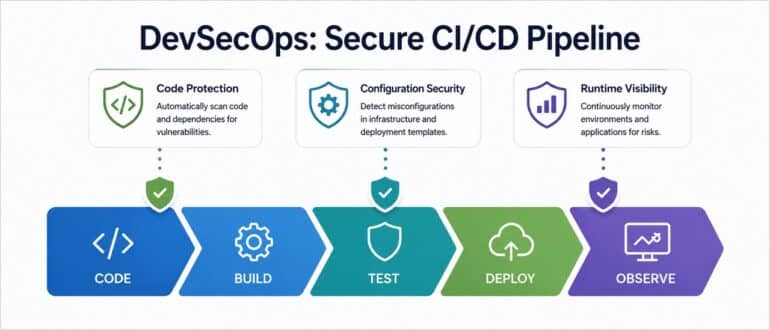
Beyond the Build: Integrating Security into CI/CD Pipelines
In today’s fast-paced software development landscape, Continuous Integration and Continuous Deployment (CI/CD) pipelines are essential for delivering applications efficiently. However, the speed and automation they offer can inadvertently introduce security vulnerabilities if not properly managed. Integrating security into CI/CD pipelines, often referred to as DevSecOps, is no longer optional; it’s a necessity. The Importance of […]

Bridging the IT Divide Without Breaking What Already Works
Modernizing SQL Server infrastructure means balancing stability, automation and uptime across legacy and modern IT environments.

The Great Decoupling: Scaling the Outer Loop for the Agentic Era
The “Inner Loop” of software development—the iterative cycle of writing, building, and debugging code—has just broken the sound barrier. With the emergence of agentic coding tools like Claude Code and GitHub Copilot Workspace, the developer experience has undergone a fundamental shift. Developers are no longer merely tab-completing snippets; they are orchestrating agents that generate entire […]

Reimagining AI-Assisted Coding for Team Scale in Enterprises
AI coding tools have advanced rapidly, but most are still designed around the individual developer. Their effectiveness depends heavily on a user’s ability to write understandable prompts, preserve architectural coherence across sessions, and identify areas that require additional work. This model works for some engineers, but it is far less dependable for a large organization’s […]

The Trust Problem With AI Agents in Production Pipelines
AI agents boost DevOps pipelines, but confident failures create risk. Here’s how to design for calibrated trust and human oversight.