

Patrick Debois, the godfather of DevOps and co-author of The DevOps Handbook who now serves as the product DevRel lead at Tessl, is advising DevOps teams to brace for a wave of agentic artificial intelligence (AI) engineering where more tasks are executed in parallel.
Speaking at an AI DevCon event hosted by Tessl, Debois told conference attendees the future of DevOps will revolve around multiple AI agents that are performing tasks concurrently. The challenge is that those AI agents may undo each other’s work as multiple merges of code are made in the absence of some ability to orchestrate their activities, he added.
That orchestration capability is critical because in its absence both token consumption and IT infrastructure usage by AI agents will skyrocket, noted Debois.
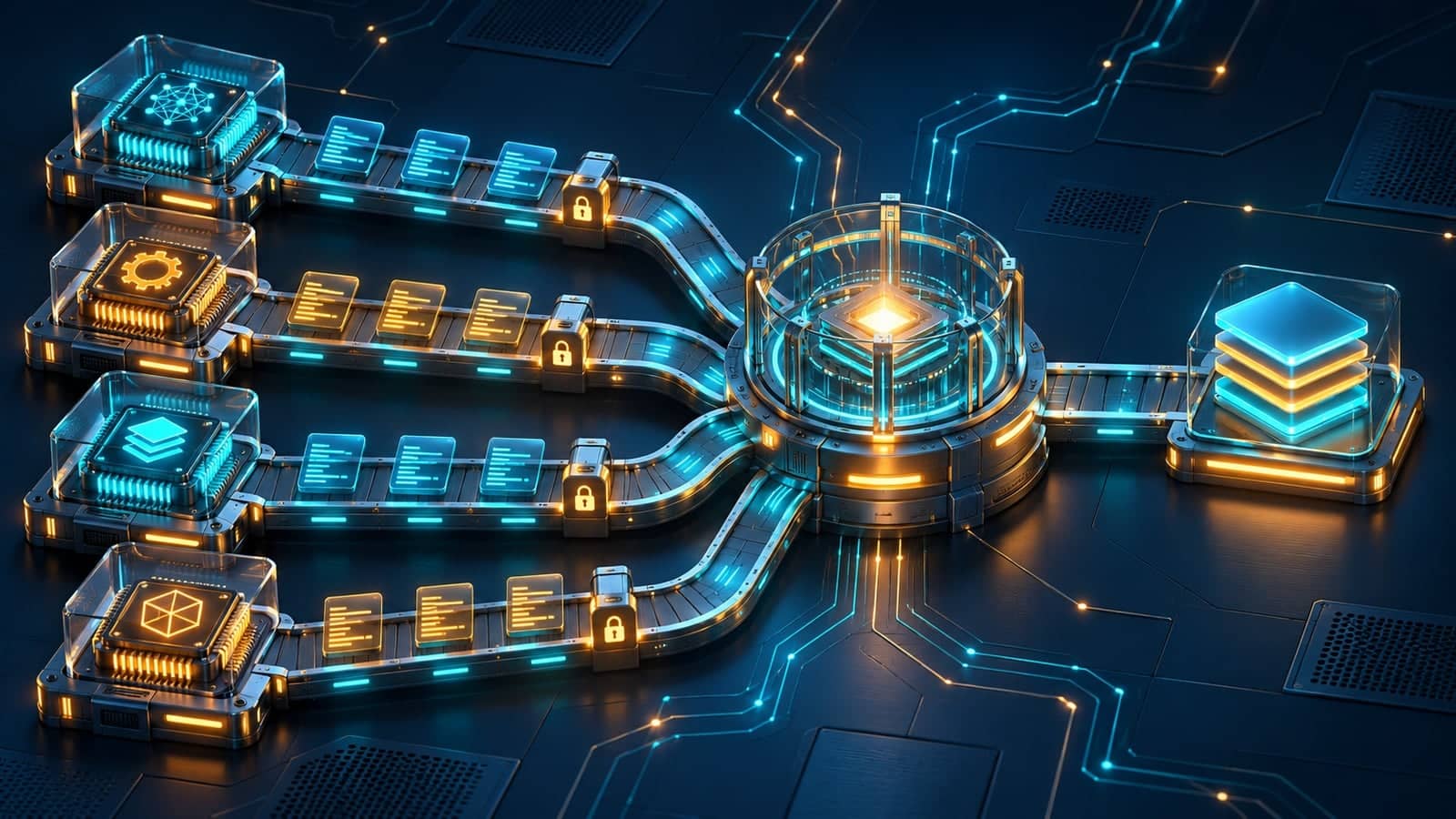
The only way to manage DevOps workflows at scale in the AI era will be to rely on a software factory platform that enables an AI agent to claim a ticket using a concurrency locking mechanism that prevents AI agents from, in essence, stepping on each other, said Debois. Once an AI agent claims that ticket, it will then be up to the AI agent to determine how best to break requests into multiple tasks that can be executed in parallel by multiple sub-agents, he added.
Additionally, those AI agents will also engage in speculative “trains of mergers of pull requests” to more efficiently complete those tasks, noted Debois.
As a consequence, DevOps teams need to start redesigning existing serial-based workflows for a new reality in which tasks are executed in parallel, he added. At the moment, too many DevOps teams are simply slapping AI agents on existing workflows in ways that only lead to more tension being added without fully realizing the potential benefits, said Debois. DevOps teams instead need to start designing now for what is rapidly becoming the new normal, noted Debois.
It’s not clear how far down the path of agentic engineering DevOps teams are. Most of them have adopted AI coding tools, but few have re-engineered their existing workflows to enable tasks to be executed in parallel. As that goal is achieved, it then becomes possible to enable end users to “vibecode” the development of new applications with the same rigor that software engineers require, noted Debois.
DevOps teams will also need to allow for the “personal agents” of software engineers to be incorporated into those workflows, he added.
Finally, DevOps teams will need to find ways to record the output of these workflows without having to store every ticket generated, he added. The goal should be to provide a simple means for humans to review risks and any exceptions that might have been introduced to a workflow, said Debois.
Hopefully, the promise of agentic AI will be realized sooner rather than later, but as software engineering continues to evolve, it’s apparent that there is still much work to be done before the promise of AI lives up to its potential.

Frequently Asked Questions
1. Why do parallel AI agents create challenges for DevOps teams?
2. How can software factory platforms coordinate AI agents?

Mike Vizard is a veteran IT journalist with more than 25 years of experience covering the technology industry, having previously served as Editor-in-Chief of both CRN and InfoWorld and as editorial director for Ziff-Davis Enterprise, where he oversaw titles including eWEEK, CIO Insight and Baseline. Over his career he has also edited or contributed to a wide range of enterprise technology publications, including IT Business Edge, Channel Insider, ComputerWorld, TMCNet and Digital Review, and he later led editorial for CTOEdge.com. His reporting and analysis span software development, cloud computing, cybersecurity, IT channel strategy and, more recently, artificial intelligence and DevOps practices. A recognized voice in enterprise IT journalism, Vizard is known for tracking emerging technology trends as they move from early adoption into mainstream enterprise use. He now serves as Chief Content Officer for Techstrong Group, where he oversees editorial strategy across the full network — DevOps.com, Security Boulevard, Cloud Native Now, Digital CxO, Techstrong.ai, TechStrong.IT, Techstrong Semi and PlatformEngineering.com — in addition to writing and hosting content for Techstrong TV and the Techstrong Gang podcast.