

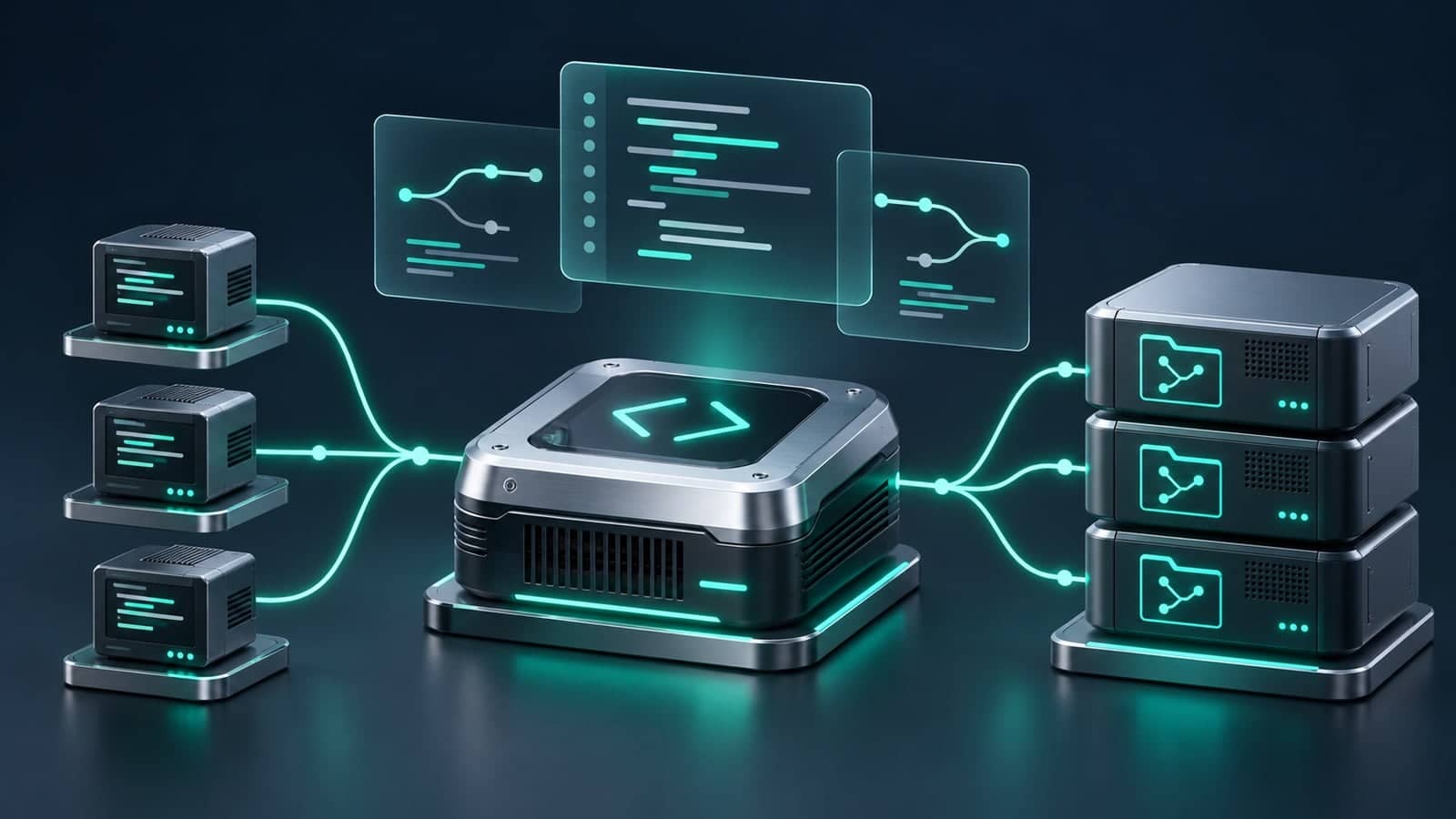
OpenAI has announced plans to acquire developer tools startup Pierre Computer, a deal that will expand the capabilities of its Codex AI coding platform and position the company as a more direct competitor to Microsoft’s GitHub.
The acquisition will bring Pierre’s Code Storage technology into Codex, enabling OpenAI to offer more of the infrastructure needed to manage software created by AI agents. Financial terms were not disclosed.
Clearly, AI coding tools are in great demand these days. They’re dramatically improving developers’ capabilities for building software. While AI agents can generate large amounts of code, managing that output creates challenges for the systems used to store and deploy software.
For OpenAI, the acquisition is part of a competitive strategy to make Codex a comprehensive development platform rather than simply a tool for writing code.
Competing Against GitHub
The Pierre acquisition puts OpenAI in a more competitive position against GitHub, which Microsoft owns. GitHub has long been a central platform for software development, but the growth of autonomous coding agents is creating demand for infrastructure designed to handle much higher volumes of automated activity.
The competitive implications are complicated because Microsoft owns nearly a quarter of OpenAI, even as the two companies compete against each other in parts of the AI market.
Pierre Computer has developed a suite of tools built around Git, the widely used version control system that tracks changes to software projects. Its Code Storage product provides distributed storage designed to handle workloads generated by AI agents. The platform supports repositories as large as 32TB and at least 30 concurrent writes, according to Pierre. It also offers software development kits for Python, Go and TypeScript, along with integration capabilities for GitHub, GitLab and Bitbucket.
These features allow software applications to manage repositories directly, without requiring developers to manually handle every operation.
Pierre’s technology is already part of Codex. Its Trees library helps developers navigate project files, while Diffs enables them to examine software changes. Another tool, Highlights, provides syntax highlighting as code is generated or edited.
OpenAI plans to incorporate Code Storage into Codex after the acquisition closes. Existing customers will retain access to the storage service, and Pierre’s open-source projects will remain available.
The purchase follows OpenAI’s November 2 announcement of Pando, an internally developed Git backend designed to handle the demands of agent-based software development.
OpenAI said its earlier development infrastructure struggled as Codex enabled engineers to execute more coding tasks simultaneously. The resulting growth in repository activity caused slowdowns and failed operations, with reliability sometimes dropping below 90%. Pando addresses these problems by allowing changes to separate software branches to proceed independently, reducing delays caused by competing operations.
According to OpenAI, Pando has reduced median code push times by nearly 80%. The system now handles almost one petabyte of Git data daily, a robust workload that highlights the scale of the company’s internal software development.
Developed in just 10 weeks with assistance from Codex, Pando began handling production workloads in April 2026. OpenAI is evaluating opportunities to make the technology available to customers.
Competition for GitHub is emerging from several directions. Cursor introduced its GitHub competitor Origin in August, while former GitHub CEO Thomas Dohmke announced a competing offering in October.

Frequently Asked Questions
1. What is Pierre Computer?
2. Why is OpenAI acquiring Pierre Computer?
3. What happens to existing Pierre customers and open-source projects?

James Maguire is an award-winning technology journalist who has reported on emerging enterprise technology for more than 15 years. He began as editor of Datamation in 2006 before rising to become Editor-in-Chief of eWEEK, a technology publication founded in 1984, where he led a team of writers and analysts covering enterprise IT for 16 years, including a decade in senior editorial leadership. His coverage spans cloud computing, artificial intelligence, data analytics, cybersecurity and digital transformation, and he regularly interviews technology executives, analysts and vendors to track industry shifts. Maguire has won two ASBPE/AZBEE Awards of Excellence for feature writing on cloud computing and AI, and shared a 2013 PRSA Award for Excellence in Technology Journalism; Analytics Week has also named him one of its Top 200 Thought Leaders in Big Data. He holds a Master's degree in Interactive Communications with a focus on the internet. Beyond technology reporting, he is the author of two narrative nonfiction books, "Impresario: The Life and Times of Ed Sullivan" and "American Bee." Maguire now contributes technology journalism, editorial strategy, and produced/hosted video coverage across Techstrong Group properties.