


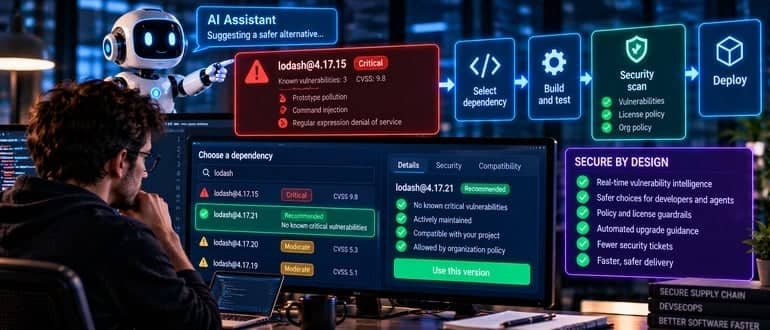
Security Teams Are Fixing Vulnerabilities Faster Than Ever. So Why Is Software Getting Riskier?
AI is speeding up dependency decisions, making point-of-selection security essential for reducing vulnerable components, downstream tickets and avoidable rework.

GitHub Slams the Brakes on Private Vulnerability Reports
Drowning in AI-generated bug reports? GitHub has a radical answer: Stop accounts from reporting them. GitHub’s new limits on bug reports aren’t a solution to the AI bug-report flood. Anything but! They’re an admission that the traditional security-disclosure workflow, with human maintainers in the loop, simply doesn’t scale. The scarce resource is no longer discovering […]

DevOps Dozen 2026 Nominations Are Open: Recognizing the People and Technology Moving DevOps Forward
When we launched the DevOps Dozen in 2015, we wanted to recognize the people, projects and companies helping this community move forward. We saw the work happening across DevOps every day at DevOps.com. The awards gave our readers a chance to tell us who deserved recognition. Eleven years later, there is a lot more ground […]

AWS Benchmark Aims to Reduce Number of False Positives Found by AI Vulnerability Scanners
Amazon Web Services (AWS) has developed a benchmark that can be used to test whether a model can distinguish real vulnerabilities from code that looks risky but is actually safe. The Deception Benchmark was created following an evaluation of the capabilities of 12 models from five different providers. In all, the benchmark includes 14,822 samples […]

Survey: Lack of Confidence in Software Supply Chain Security Runs High
A survey of 400 platform and security engineers in the U.S and United Kingdom (UK), finds nearly three quarters (73%) are either only moderately confident (58%) or not confident (15%) in the ability of their existing tools for managing software artifacts to prevent attacks against their organization’s software supply chain. Conducted by Cloudsmith, a provider […]

GitHub’s Security Autofix Agent Now Remembers What It Fixed
GitHub’s agentic autofix now uses Copilot Memory to reuse repository-specific security fix patterns, helping Copilot apply lessons from past vulnerabilities across future alerts, reviews and coding workflows.

Leaked GitLab Email Tokens Can Reach Code, Secrets and CI/CD Pipelines
Security researchers have uncovered a GitLab behavior that could let attackers use a leaked project email address to push code, trigger CI/CD jobs and reach other repositories accessible to the address owner. Aikido Security researcher Joe Leon detailed the attack path this week in a blog post after reporting it to GitLab earlier this year. […]

Blitzy Makes Sandbox for Reverse Engineering Code Available at No Cost
Blitzy has made available a sandbox where DevOps teams can reverse-engineer up to one million lines of code, generate up to 25,000 lines of tested end-to-end code, and identify security vulnerabilities across a codebase at no cost. Dan Ochs, director of AI solutions consulting for Blitzy, said the provider’s Proactive Insights platform uses multiple artificial […]
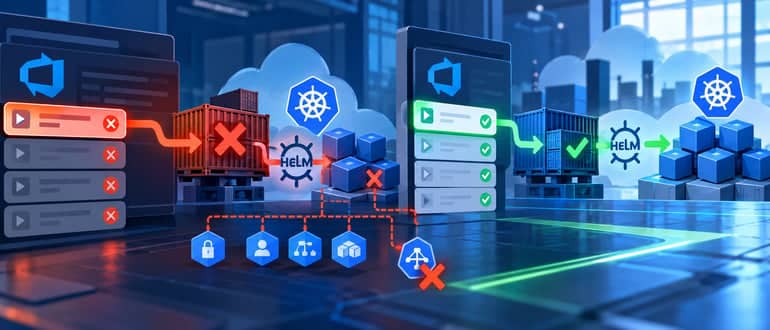
Why Old Azure DevOps Releases Survive a Pipeline Cutover
Old Azure DevOps Classic releases can retain retired deployment tasks, Helm names, image paths and variables long after a pipeline cutover, leaving stale redeploy paths active.
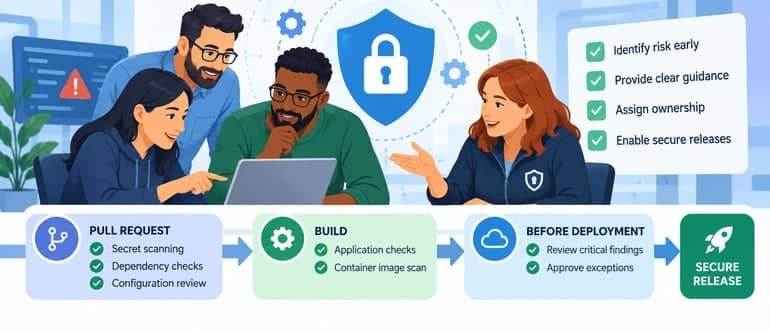
DevSecOps Teams as Partners in Secure Software Delivery
DevSecOps teams can reduce last-minute release delays by shifting security decisions earlier, improving guardrails, clarifying ownership and making findings actionable.

Why Software Supply Chain Security Is Moving to the Gate
March 2026: malicious versions of axios get published directly to npm. May 2026: attackers forge valid provenance for 42 TanStack packages on npm, with 84 malicious versions shipped before detection. August 2026: a worm uses one maintainer’s stolen credentials to self-propagate through keyv and its dependent packages. Builds pull in thousands of open source packages […]

GitHub Gives Enterprises a Full Count of Who Holds the Keys
GitHub Enterprise Cloud now lets organizations export a full inventory of credentials, helping security teams identify stale, overprivileged and forgotten access across users, apps and automation.

Cycode Extends DevSecOps Reach to Software Packages Developers Download
Cycode is adding workstation-level protection to stop developers and AI coding agents from downloading malicious or insufficiently vetted software packages.

Your AI Coding Assistant Has the Keys to the Repo. Z.ai Just Showed Why That Matters
ZCode’s default-on indexing feature reportedly uploaded entire developer workspaces to cloud storage, highlighting why AI coding assistants should be treated as privileged software and closely monitored.
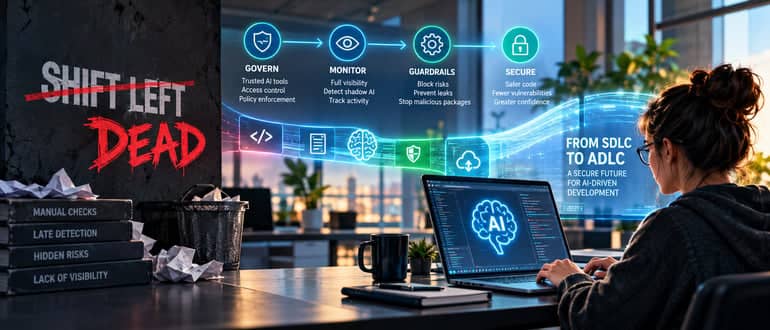
Why Shift Left is Dead
AI-driven development is exposing risks before code is written, forcing security teams to move beyond shift-left and govern agents, prompts, tools and data across the entire development lifecycle.

Codex Sandbox Escapes Show Why Agent Guardrails Can’t Live Inside the Agent
Two patched OpenAI Codex vulnerabilities, Heapjack and Overpatch, exposed how coding agents can escape sandboxes and reach developer systems without approval prompts.
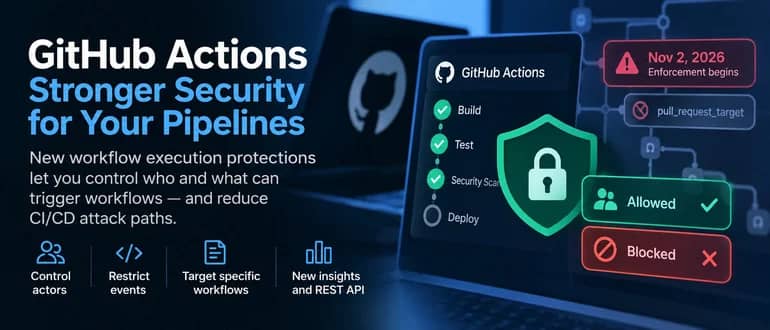
GitHub Separates Who Writes Code From Who Runs Your CI
GitHub’s new workflow execution protections let teams control who and what can trigger Actions workflows, reducing CI/CD attack paths and tightening pipeline security.

Why Your CI/CD Pipeline Is Your Most Unprotected Attack Surface
CI/CD pipelines often hold privileged credentials, execute third-party code and connect directly to production, making pipeline security one of the most overlooked risks in modern DevOps.

StackHawk Delivers Wingman to Fix Vulnerabilities as Developers Write Code
StackHawk this week launched Wingman, an artificial intelligence (AI) tool that makes it possible for application developers to automatically fix vulnerability issues as code is being written. Wingman is designed to install into Claude Code, Cursor, GitHub Copilot, Codex, and Antigravity. It scans the live application, interprets findings, and fixes vulnerabilities in a way that […]
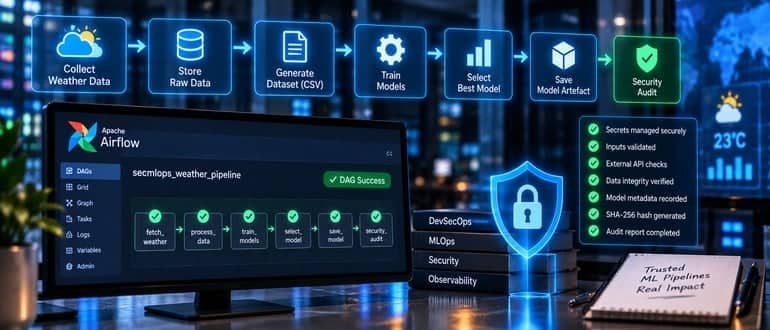
Why MLOps Pipelines Need Security Audits
A practical SecMLOps experiment shows how Apache Airflow ML pipelines can adopt DevSecOps controls for secrets, validation, artifact integrity and auditable security evidence.

More JFrog Artifactory Bugs Are Under Attack, and All Three Have Patches
Attackers are actively exploiting three JFrog Artifactory flaws, exposing how slow patching can turn artifact repositories into software supply chain attack paths.

GitLab’s Critical Patch Closes a Path Traversal Flaw Attackers Are Already Probing
GitLab patches two critical flaws, including a CVSS 10.0 unauthenticated file-read vulnerability, putting self-managed instances under urgent pressure to upgrade.
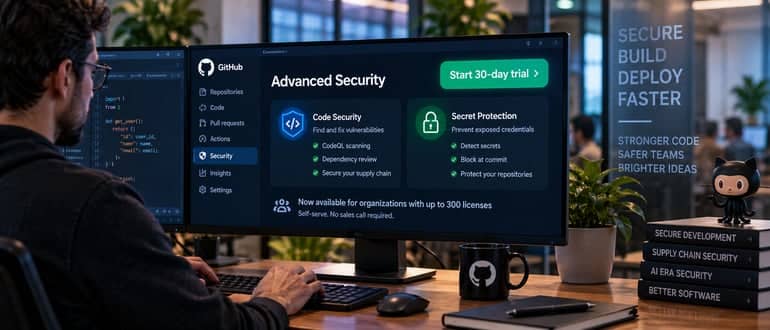
GitHub Widens the Door on Advanced Security Trials
GitHub raised its self-serve Advanced Security trial cap from 100 to 300 licenses, letting more mid-size Enterprise Cloud orgs test for free.