

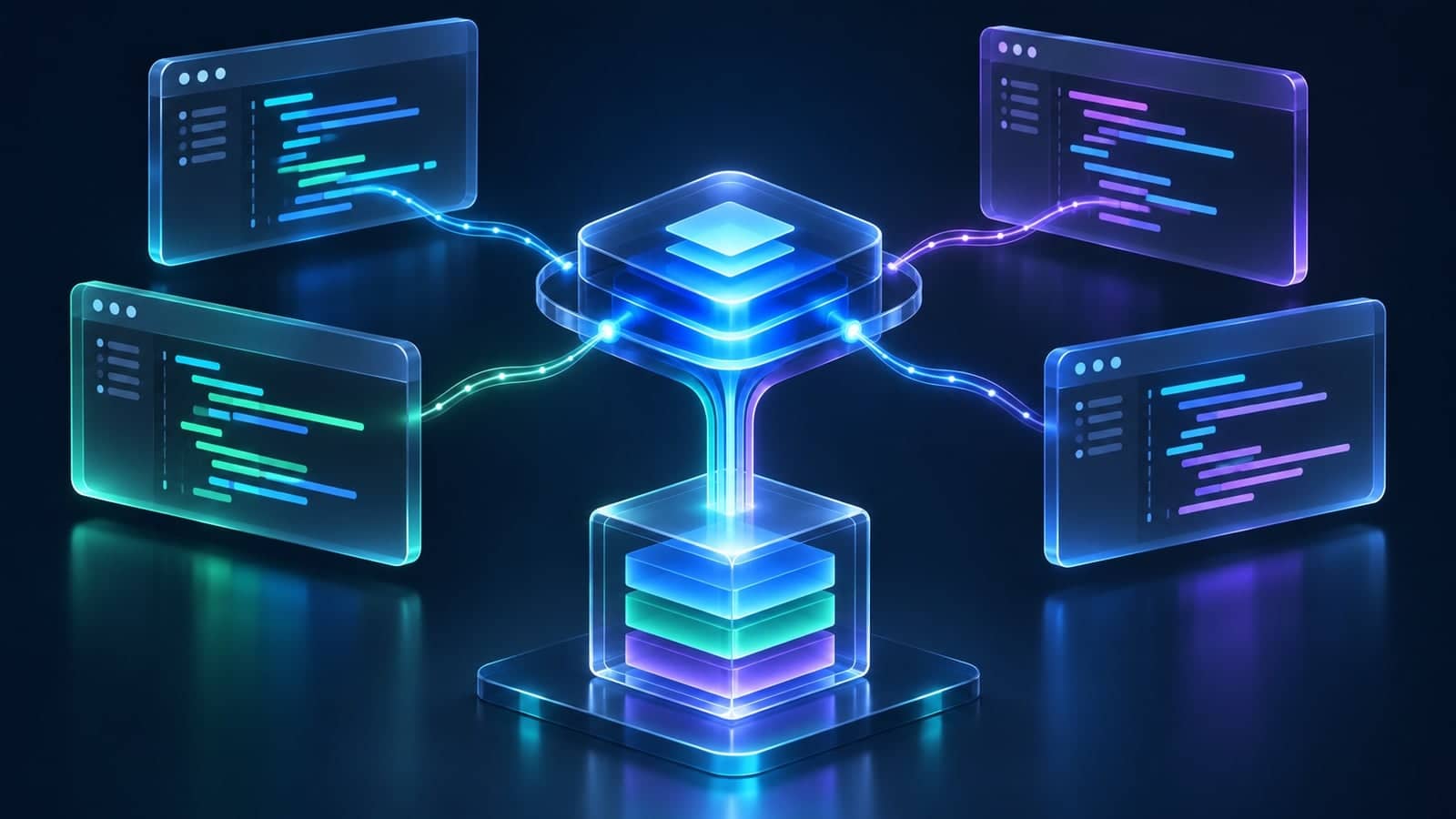
Meta has acquired AI coding startup Conductor, a deal that extends the social media giant’s developer tools portfolio as it competes with OpenAI and other leading AI vendors. Conductor’s platform enables software developers to manage multiple AI coding agents working on different tasks within a single project.
While individual AI coding assistants can generate and modify software, deploying several agents requires a system that organizes their work across separate development environments. The Conductor purchase gives Meta a toolset created to handle this emerging challenge of coordinating multiple agents to build complex applications.
Coordinating multiple coding agents appears poised to be a major trend in application development. But at this point, the effectiveness of this approach depends on how reliably the agents work together and how their output is reviewed.
Financial terms of the acquisition were not disclosed.
A Very New Startup
Founded in 2024 by CEO Charlie Holtz and CTO Jackson de Campos, Conductor launched its core platform in July 2025. The startup raised $22 million in Series A funding in March from investors Spark and Matrix.
Conductor’s platform supports AI coding agents from several providers, including Anthropic’s Claude Code, OpenAI’s Codex, Cursor and OpenCode. Developers can assign separate tasks to these agents and run them simultaneously, rather than relying on a single assistant to complete a project sequentially.
The platform can operate locally on a Mac, through an iPhone or in the cloud, giving developers flexibility in how they manage software projects.
Meta has invested heavily in AI models and infrastructure, and is now expanding the software tools that enable developers to use those models. The company launched its own coding agent, Muse Code, in August. Its Muse agent offering has surpassed 10 million users, according to the company.
The addition of Conductor could help Meta build a more comprehensive coding platform, combining its existing AI technology with tools that manage complex development workflows.
Conductor co-founder Charlie Holtz announced the acquisition in a social media post, saying that the startup’s team would work with Meta chief AI officer Alexandr Wang and Nat Friedman, head of product at Meta Superintelligence Labs. The startup also indicated that it plans to introduce a new interface by early 2027, though it provided no product specs.
For existing Conductor customers, the acquisition is a near-term change. Conductor Cloud will close on November 20, after which the company will begin deleting customer cloud data. Conductor’s local application will continue operating and receiving model updates and critical bug fixes until early 2027, when the company plans to discontinue support.
Meta faces tough competition in the AI coding market. But the company has clearly decided to compete aggressively. Meta acquired AI agent platform Moltbook earlier this year and recently introduced Muse Spark Open, a multimodal model with 816 billion total parameters, including 42 billion active parameters.
The model also offers a one-million-token context window, designed to support coding and other complex tasks that require processing substantial amounts of information.
OpenAI has also acquired Pierre Computer, which develops tools for managing AI-generated code. Additionally, OpenAI announced plans in June to acquire Ona, a provider of cloud-based coding environments and agent management technology.

Frequently Asked Questions
1. What is Conductor?
2. Which AI coding tools does Conductor support?
3. Why did Meta acquire Conductor?

James Maguire is an award-winning technology journalist who has reported on emerging enterprise technology for more than 15 years. He began as editor of Datamation in 2006 before rising to become Editor-in-Chief of eWEEK, a technology publication founded in 1984, where he led a team of writers and analysts covering enterprise IT for 16 years, including a decade in senior editorial leadership. His coverage spans cloud computing, artificial intelligence, data analytics, cybersecurity and digital transformation, and he regularly interviews technology executives, analysts and vendors to track industry shifts. Maguire has won two ASBPE/AZBEE Awards of Excellence for feature writing on cloud computing and AI, and shared a 2013 PRSA Award for Excellence in Technology Journalism; Analytics Week has also named him one of its Top 200 Thought Leaders in Big Data. He holds a Master's degree in Interactive Communications with a focus on the internet. Beyond technology reporting, he is the author of two narrative nonfiction books, "Impresario: The Life and Times of Ed Sullivan" and "American Bee." Maguire now contributes technology journalism, editorial strategy, and produced/hosted video coverage across Techstrong Group properties.