

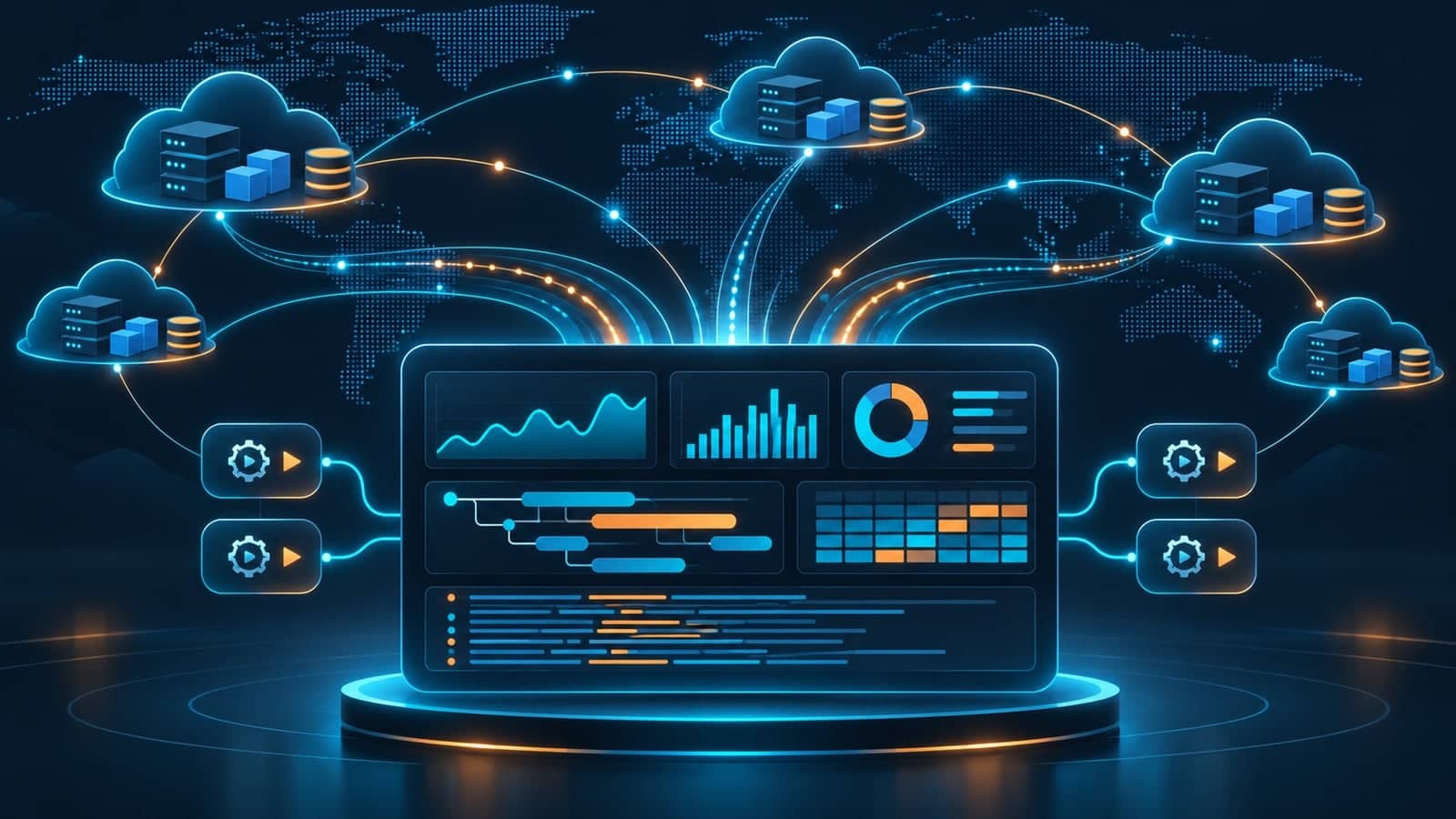
Sumo Logic today expanded its AWS Observability Solution for Amazon Web Services (AWS), adding a Quick Launch deployment option through AWS Marketplace and extending observability coverage that includes serverless workloads.
Additionally, Sumo Logic has added support for AWS regions in Zurich, Melbourne and New Zealand, bringing the total number of supported regions to 20.
DevOps teams can now deploy Sumo Logic’s AWS Observability Solution (AWSO) on demand through AWS Marketplace Quick Launch using credits issued through an AWS enterprise licensing agreement. The platform also provides telemetry for the AWS Lambda serverless computing service.
Ben Cody, senior vice president of product management for Sumo Logic, said the biggest challenge when it comes to observability is not necessarily standing up a platform but encouraging application developers to use it. Developers often simply don’t think to consult an observability platform to help optimize their code, both before and after it is deployed across multiple regions around the world, he added.
That latter capability is critical because many organizations are now required to ensure that observability data never leaves a specific geography, noted Cody.
Without that capability, developers may make assumptions about the cloud computing environments where their code ultimately runs that don’t necessarily hold true. The issue will only become more problematic as DevOps teams deploy more AI agents, increasing the need for observability. AI agents, as a class of workloads, are highly unpredictable. The only way to verify whether they have completed a task as instructed is to observe their behavior, said Cody. As a consequence, observability is moving from something every IT team should have to an actual requirement as the cost of deploying AI agents at scale steadily rises, he added.
Longer term, Sumo Logic will develop a set of AI agents with enough memory to track those types of interactions, noted Cody.
In the meantime, investments in observability platforms continue to rise. A recent Futurum Group survey found that nearly two-thirds (64%) of organizations plan to increase observability spending over the next 12 months. Whether those investments will be enough to keep pace with the rate at which AI agents are being deployed remains to be seen. The one thing that is certain is that there will be much more pressure to unify the collection of telemetry data, making it easier for DevOps, IT and cybersecurity teams to collaborate.
On the plus side, however, observability platforms themselves will become much more accessible in the agentic AI era. Rather than requiring a DevOps engineer with specialized skills to decipher the insights being surfaced, the average IT administrator can now use natural-language inputs to summarize those insights and generate dashboards as needed. The overall goal, as always, is to enable IT teams to resolve issues proactively, long before performance degrades or, worse yet, an actual outage occurs.


Mike Vizard is a veteran IT journalist with more than 25 years of experience covering the technology industry, having previously served as Editor-in-Chief of both CRN and InfoWorld and as editorial director for Ziff-Davis Enterprise, where he oversaw titles including eWEEK, CIO Insight and Baseline. Over his career he has also edited or contributed to a wide range of enterprise technology publications, including IT Business Edge, Channel Insider, ComputerWorld, TMCNet and Digital Review, and he later led editorial for CTOEdge.com. His reporting and analysis span software development, cloud computing, cybersecurity, IT channel strategy and, more recently, artificial intelligence and DevOps practices. A recognized voice in enterprise IT journalism, Vizard is known for tracking emerging technology trends as they move from early adoption into mainstream enterprise use. He now serves as Chief Content Officer for Techstrong Group, where he oversees editorial strategy across the full network — DevOps.com, Security Boulevard, Cloud Native Now, Digital CxO, Techstrong.ai, TechStrong.IT, Techstrong Semi and PlatformEngineering.com — in addition to writing and hosting content for Techstrong TV and the Techstrong Gang podcast.