

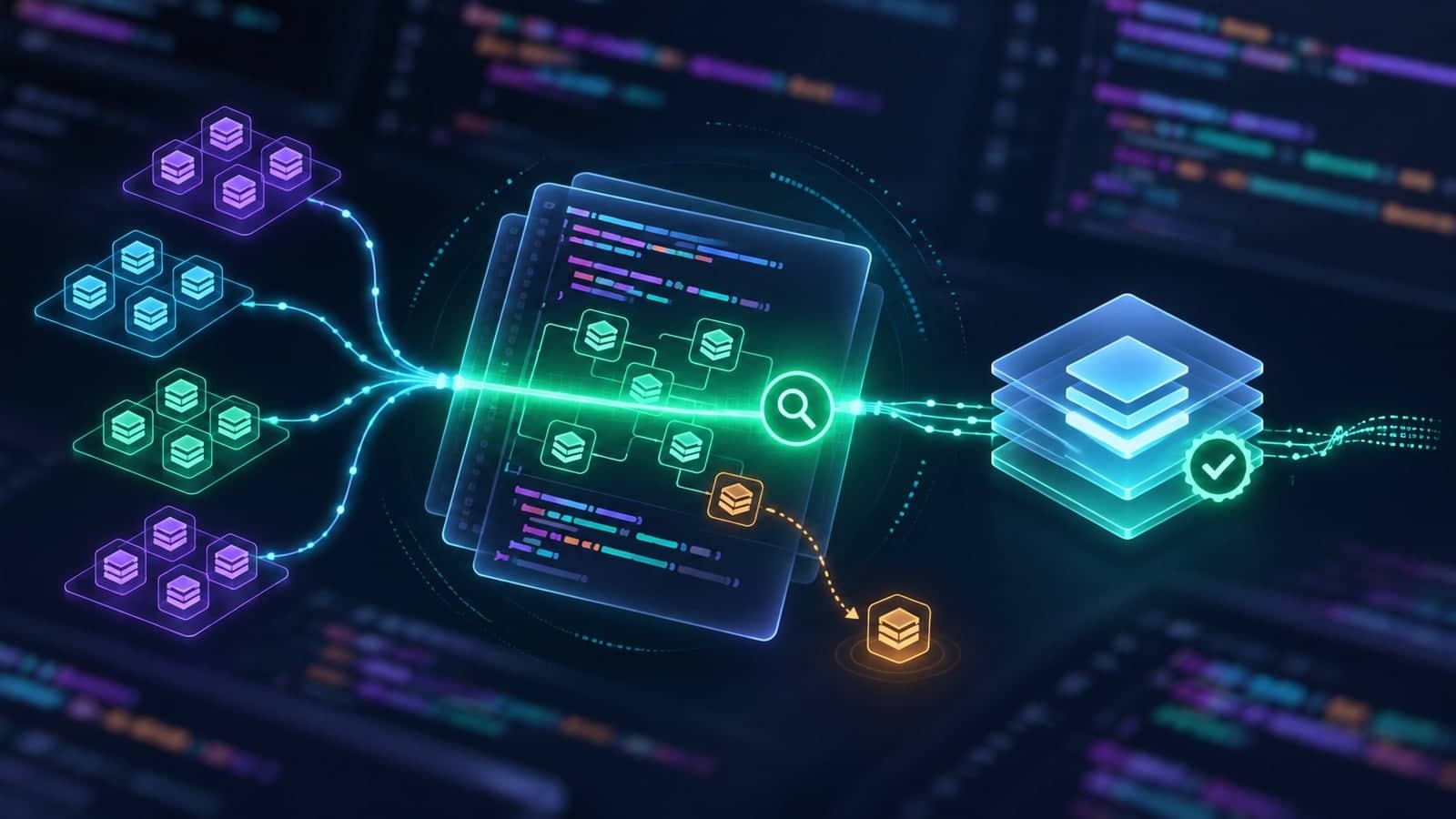
Chainguard has long been a leading software supply chain security company, and now it’s making it easier and cheaper to access its secure open-source software offerings.
Back in 2022, Chainguard co-founder Kim Lewandowski said, “Chainguard’s mission is to make the software supply chain secure by default, because we think the only way you can get developers to adopt more secure practices and more secure tooling is to make sure you’re not getting in their way — make it super easy for them.” On Nov. 17, 2026, Chainguard is keeping that promise by introducing self-service plans that let developers sign up for hardened containers, screened software libraries, and secured AI development tools with a free Starter plan and a $500-a-month Team subscription that customers can purchase by credit card.
What the New Plans Include
The new Starter plan is free, as in free beer, and supports up to five users. Customers can select five images from Chainguard’s catalog. This catalog now has more than 3,000 images. You can pull up to 100 GB of images per month. Chainguard says each image includes a Software Bill of Materials (SBOM) and Supply-chain Levels for Software Artifacts (SLSA) Level 3 provenance documenting its build.
With Starter, you get screened dependencies for JavaScript, Python, Java, Go, and .NET, capped at 50,000 Git pulls per month. Those dependencies have a fixed seven-day version cooldown, which delays access to newly released versions to give screening processes time to identify problems. That’s a risk-reduction measure, not a guarantee that every compromised release will be detected. Chainguard’s good, but when it comes to security, no one’s perfect. Still, Chainguard’s packages come as close as you can get.
Some of you may be saying, “Wait, doesn’t Chainguard already offer free images?” Yes, yes, they do. It already offered public images at selected tags, and the company recently introduced Catalog Starter. This enabled developers to choose five free images, including all supported versions. What’s new is that the free-to-start model images are available across more products and add a credit-card upgrade path.
Chainguard’s longstanding public-image offering was also narrower. Its documentation describes public free containers as available under latest and latest-dev, rather than the full set of version-specific tags. Those public images can be pulled directly from its registry, and free Starter images are also distributed through Docker Hub.
The bundle extends into AI-assisted development. With Starter, you get access to more than 1,000 hardened agent skills, 500 vCPU-hours a month of Chainguard Checks CI runners, and another 500 vCPU-hours of Workspaces agent sandboxes. According to the company, checks include default-deny outbound networking and host-side credential proxying; Workspaces supplies configurable egress policies and registry connectivity.
Additionally, customers receive a million monthly tokens for Guardener. This AI-native agent helps you replace your existing open-source artifacts with hardened Chainguard components.
The paid Team plan raises the limits and adds operational controls:
| Feature | Starter | Team |
| Monthly price | Free | $500 |
| Users | Up to five | Unlimited |
| Container access | Up to five selected images | Up to five selected images, plus Base, App, and AI images at latest |
| Image downloads | 100 GB/month | 1 TB/month |
| Dependency pulls | 50,000/month | One million/month |
| Checks compute | 500 vCPU-hours/month | 1,000 vCPU-hours/month |
| Workspaces compute | 500 vCPU-hours/month | 1,000 vCPU-hours/month |
| Support | Community | Ticketed |
Team also adds access to a catalog of 1,000 hardened Actions, managed policies controlling what can be pulled or blocked, and five million monthly Guardener tokens. It also provides backported vulnerability fixes for five remediated versions and zero-day patches on disclosure day among the paid features. Customers can cancel the monthly subscription at any time.
Before these new plans were offered, you had to go through Chainguard’s enterprise hoops. Or, as Chainguard put it in their announcement, “For most of Chainguard’s history, getting access to secure alternatives meant talking to us first. None of them want a call with us when they have a Dockerfile and a deadline.”
For those who are already Chainguard Enterprise customers, you won’t see any changes. It still requires a sales conversation and offers uncapped usage, custom requirements, and governance capabilities, including Single Sign-On (SSO), System for Cross-domain Identity Management (SCIM) 2.0, and logs. The $500 Team plan is therefore an additional purchasing route, not a replacement for an enterprise contract.
The commercial shift is toward letting developers establish usage before their employers make a broader purchasing decision. Chainguard summed up its argument this way: “A hardened image behind a sales cycle only protects the companies that made it through the sales cycle.” The new plans lower that barrier and build on free images and self-service provisioning the company already offered.

Frequently Asked Questions
1. Did Chainguard already offer free container images?
2. What is the seven-day version cooldown?
3. How does Team differ from Starter?

Steven J. Vaughan-Nichols — widely known by his byline "sjvn" — has covered technology and the business of technology since the early days of personal computing, publishing more than 9,000–10,000 articles over his career. He has been Senior Contributing Editor at ZDNET (Ziff Davis) since 2021, following prior stints as a Contributing Editor for ZDNet under CBS Interactive and Red Ventures, and he has been a columnist at Computerworld since 2010. His decades-long history with the Ziff Davis publishing family also includes editorial roles overseeing Linux-Watch, DesktopLinux, and Linux and open-source coverage across eWEEK.com. He has also written for InformationWeek, InfoWorld, PC Magazine, PC World, The Register, The New Stack, and mainstream outlets including The Washington Post, CBS News, and The New York Times. His expertise centers on Linux and open-source software, operating systems, cloud computing, networking, and enterprise security; he is credited with writing the first popular news story about the Web and the first Linux benchmarks. He holds an M.A. in history from West Virginia University and a B.A. in English and history from Glenville State College. He is a regular contributor to DevOps.com, Security Boulevard, Techstrong.IT, and Cloud Native Now.