Alan Shimel is founder, CEO and editor-in-chief of Techstrong Group, a Futurum company, and a member of Futurum's executive leadership team. A technology entrepreneur, media executive and industry commentator, Shimel has spent more than three decades building businesses, communities and media platforms serving enterprise technology professionals, including co-founding StillSecure, a network security company, and the DevOps Institute, a DevOps certification and training body. At Techstrong, he leads a portfolio of media brands including DevOps.com, Security Boulevard, Cloud Native Now, Techstrong AI, Techstrong IT, Digital CxO, Platform Engineering, Techstrong Semi and Techstrong TV, along with a growing portfolio of events, educational programs and digital communities. With more than 25 years of experience in cybersecurity, Shimel is a familiar voice in the space and was an early advocate of the DevOps movement, helping bring DevOps practices into mainstream enterprise technology. His work today spans cybersecurity, DevOps, cloud-native technologies, artificial intelligence, semiconductors and digital transformation, and he hosts popular programs including Techstrong Gang, Shimmy Says and Still Cyber, After All These Years. He holds a Bachelor of Arts in Government and Politics from St. John's University and a Juris Doctor from New York Law School.
When we launched the DevOps Dozen in 2015, we wanted to recognize the people, projects and companies helping this community move forward. We saw the work happening across DevOps every day at ...
Ming Wu joins Alan Shimel to explain governed agent loops, shared context and traceability across AI-assisted development, with people remaining accountable for the results ...
Federico Larsen joins Alan Shimel to examine agent-accessible delivery workflows, API and MCP interfaces, and the testing and security checks needed for headless DevOps ...
The next DevOps challenge is not generating more software. It is proving, quickly and repeatedly, that a growing volume of machine-generated change is fit to ship ...
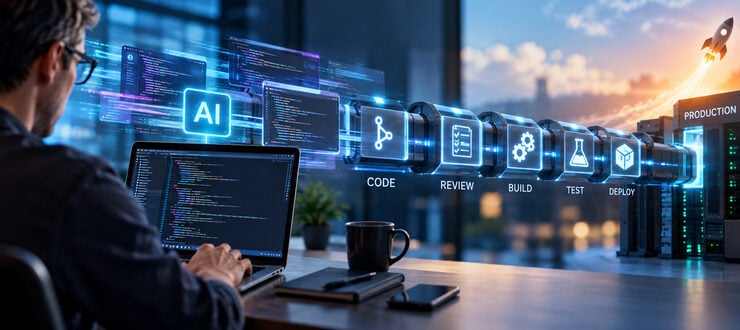
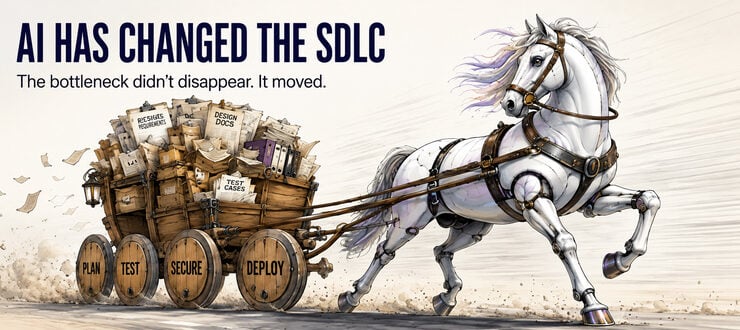
Anthropic’s AI-native SDLC playbook argues that faster coding is shifting the bottleneck to planning, testing, governance, deployment and operations ...
Leslie Pascual of ActiveState joins Alan Shimel to explain why trusted open source catalogs — not after-the-fact scanners — are becoming table stakes as AI agents pull components at machine speed ...
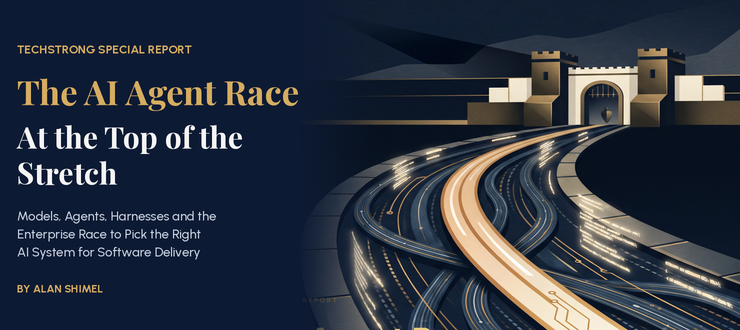
Claude Code, OpenAI Codex, GitHub Copilot, Cursor and a growing field of challengers are competing to define the future of software development. A new Techstrong special report examines who is ahead, how ...
Honeycomb's Liz Fong-Jones joins Alan Shimel to explain why observability engineering has become the real bottleneck in AI-assisted development — and how agent-assisted workflows are reshaping the loop ...
CloudBees CEO Moritz Plassnig joins Alan Shimel to explain why agentic coding is exposing every unfinished piece of the DevOps transformation — and why AI-scale delivery needs AI-scale governance ...