



HackerOne Report Surfaces Massive Increase in Vulnerability Backlogs
HackerOne research shows vulnerability remediation is getting faster, but AI-driven discovery is expanding exposure debt even more quickly, putting DevSecOps teams under growing pressure.

DevOps Has Always Been Hard to Define. Does a Standard Help?
The new DevOps Standard deserves a serious reading. Its lasting value will depend on whether it helps organizations apply shared principles as people and agents take on different responsibilities.
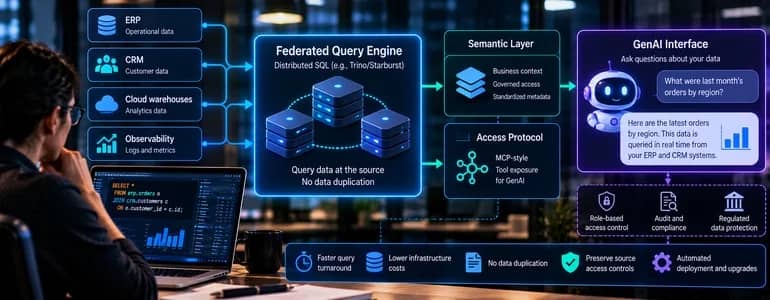
Federated Query at Petabyte Scale: A Deployment Pattern for a Governed AI-Agent Data Layer
A federated query architecture can reduce data duplication and latency while creating a governed, auditable data layer that enterprise AI agents can safely access.
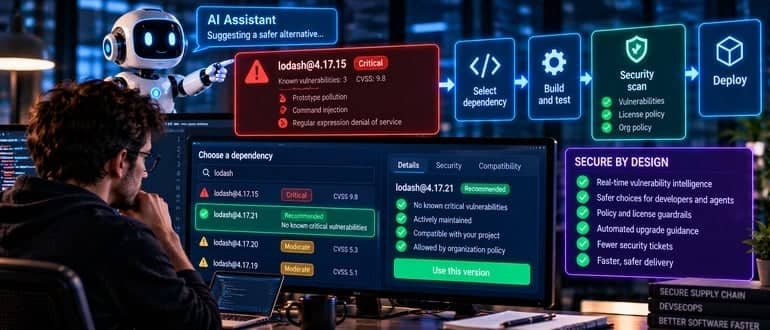
Security Teams Are Fixing Vulnerabilities Faster Than Ever. So Why Is Software Getting Riskier?
AI is speeding up dependency decisions, making point-of-selection security essential for reducing vulnerable components, downstream tickets and avoidable rework.
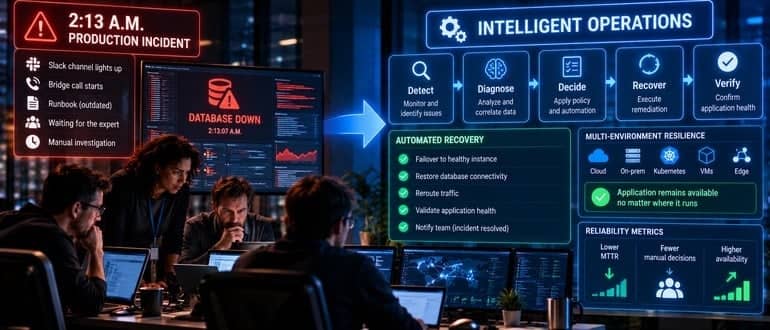
Availability Should Follow the Workload, Not the Infrastructure
Platform engineering has automated deployment but not recovery. The next maturity curve is intelligent operations that automate routine production decisions and resilience.
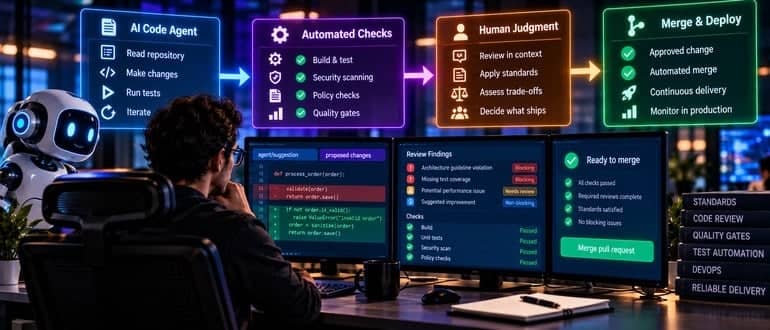
Taste, Discernment, and Judgment Have Become Must-Have Engineering Skills
AI coding agents make code generation cheap, shifting engineering value toward standards, deterministic quality gates, contextual review and human judgment about what should ship.
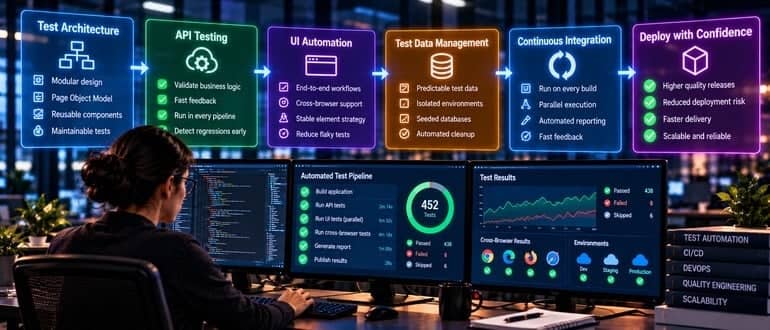
QA Automation Frameworks for Enterprise Applications
Modern enterprise applications demand testing strategies that can keep pace with continuous delivery, distributed architectures, and increasingly complex deployment pipelines. Traditional manual testing approaches often become a bottleneck as engineering teams scale their applications and release software more frequently. This article explores the essential building blocks of an enterprise-grade QA automation framework, focusing on maintainability, […]
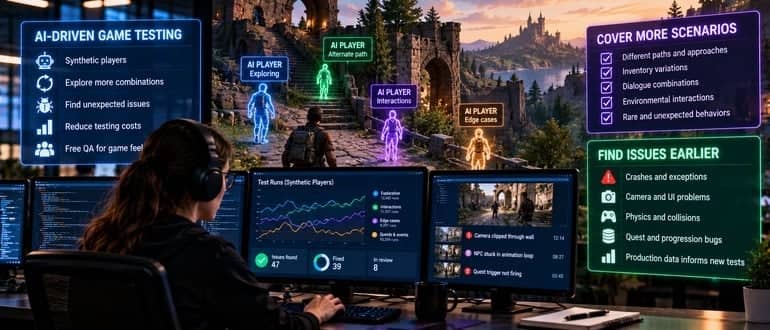
AI Is Breaking Developers’ Traditional Game Testing Playbook
Game testing has always been an unpredictability problem for developers. Players move in the wrong direction, trigger events out of order, or combine mechanics no designer anticipated. Even so, developers could usually define the rules governing the world and check whether the game followed them. AI is making that harder. NPCs now react to changing […]

GitHub Slams the Brakes on Private Vulnerability Reports
Drowning in AI-generated bug reports? GitHub has a radical answer: Stop accounts from reporting them. GitHub’s new limits on bug reports aren’t a solution to the AI bug-report flood. Anything but! They’re an admission that the traditional security-disclosure workflow, with human maintainers in the loop, simply doesn’t scale. The scarce resource is no longer discovering […]

Ten Great DevOps Job Opportunities
DevOps.com is now providing a weekly DevOps jobs report through which opportunities for DevOps professionals will be highlighted as part of an effort to better serve our audience. Our goal in these challenging economic times is to make it just that much easier for DevOps professionals to advance their careers. Of course, the pool of […]
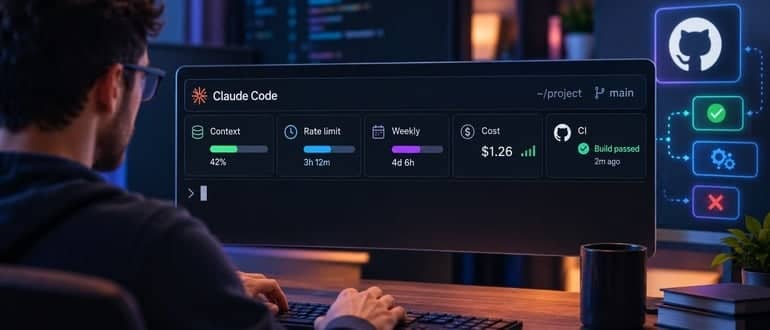
Open Source Mod Brings Rate Limits, Costs and CI Status Into View for Claude Code Users
Claude Statuspane gives developers real-time visibility into Claude Code context use, rate limits, costs and CI status, highlighting a growing need for agent observability.

How to Move AI SRE Agents From Demo to Production
An AI agent that works on an engineer’s laptop can feel like a breakthrough. It can read logs, query observability tools, inspect cloud resources and connect a failed deployment to a bad configuration change in minutes. For a single investigation, under close human supervision, that is real progress. It is also the easy part. The […]

Base44 Unveils AI Platform to Transform Application Development
Base44 this week unfurled a cloud-based platform that leverages artificial intelligence (AI) to foster greater collaboration between software engineers, application designers and product management teams. Yoav Orlev, chief product officer for Base44, said at the core of the Base Code platform is a harness the company developed that enables multiple AI models to be used […]
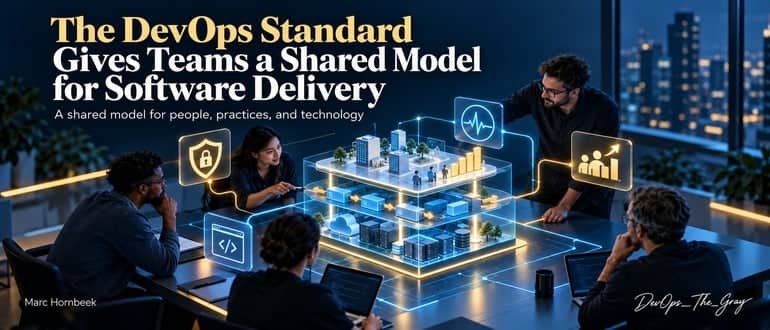
The DevOps Standard Gives Teams a Shared Model for Software Delivery
A release can pass every pipeline check and still leave an organization uncertain about whether to proceed. Security evidence may exist in another system, the recovery plan may be incomplete, and nobody may own the final decision. The difficulty lies in how the delivery system connects its capabilities and responsibilities. The new DEVOPS INSTITUTE Official […]

From Software Supply Chains to AI Vulnerabilities: Why Neither Solves Enterprise Linux Security
For nearly a decade, cybersecurity has been dominated by one overarching concern: securing the software supply chain. Organizations invested heavily in Software Bills of Materials (SBOMs), artifact signing, provenance frameworks, reproducible builds, and vulnerability scanners capable of identifying compromised dependencies before software reached production. The software supply chain became the industry’s focal point, accelerated by […]

IBM Moves Its Bob Coding Agent Inside the Firewall
Plenty of enterprises want AI coding agents. Fewer are willing to send their source code to someone else’s cloud to get them. That tension has slowed adoption at banks, insurers, government agencies and other organizations that build software under strict rules about where code and data can live. IBM is betting a self-hosted option will […]

AWS AI Agent Surfaces Recommendations to Optimize Cloud Computing Environments
Amazon Web Services (AWS) today made available a preview of an artificial intelligence (AI) agent that surfaces recommendations to optimize cost, security, performance and resilience based on the business objectives an organization defines. Jill Fariss, vice president of AWS Support, said the AWS Well-Architected Agent generates code that can be implemented via a command line […]

DevOps Dozen 2026 Nominations Are Open: Recognizing the People and Technology Moving DevOps Forward
When we launched the DevOps Dozen in 2015, we wanted to recognize the people, projects and companies helping this community move forward. We saw the work happening across DevOps every day at DevOps.com. The awards gave our readers a chance to tell us who deserved recognition. Eleven years later, there is a lot more ground […]
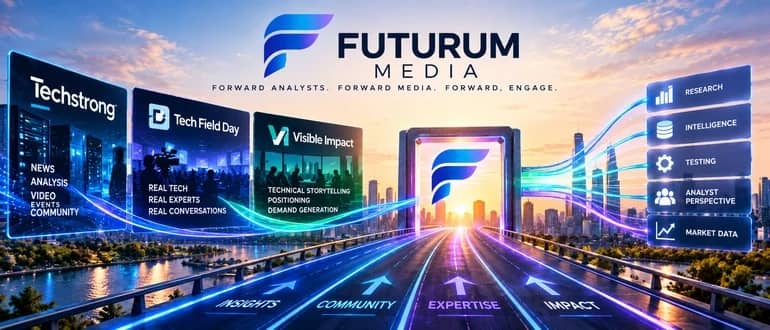
Introducing Futurum Media: Why Futurum, Why Now?
Techstrong, Tech Field Day and Visible Impact come together, backed by the research, intelligence and expertise of The Futurum Group.

Survey Surfaces Sharp Increase in Amount of Code Written by AI
A global survey of 705 developers and IT leaders finds 42% of respondents reporting that artificial intelligence (AI) now writes at least half their code, with only 21% of developers now spending more than half their week writing new code from scratch. Conducted by BairesDev, a provider of software development services, the survey also finds […]

A Semicolon in a Branch Name Was All It Took to Steal an AI Agent’s GitHub Token
AI coding agents don’t just suggest code anymore. Tools like OpenAI’s Codex spin up a real container, clone a real repository, and authenticate with a real GitHub credential to get the job done — which means every agent your team wires up is also a new privileged identity, holding real access, running with comparatively little […]
Perforce Applies Machine Learning to Generate Synthetic Data for App Testing
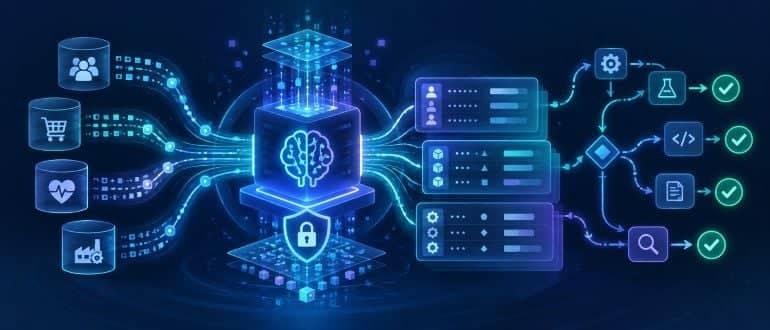
Perforce Software has added a tool that leverages artificial intelligence (AI) to make it simpler for application development teams to generate synthetic data for application testing purposes. Mayank Ahluwalia, a senior product manager for Perforce Delphix, said Delphix Synthetic Data makes use of machine learning algorithms to generate synthetic data for specific use cases. It […]

AWS Benchmark Aims to Reduce Number of False Positives Found by AI Vulnerability Scanners
Amazon Web Services (AWS) has developed a benchmark that can be used to test whether a model can distinguish real vulnerabilities from code that looks risky but is actually safe. The Deception Benchmark was created following an evaluation of the capabilities of 12 models from five different providers. In all, the benchmark includes 14,822 samples […]