

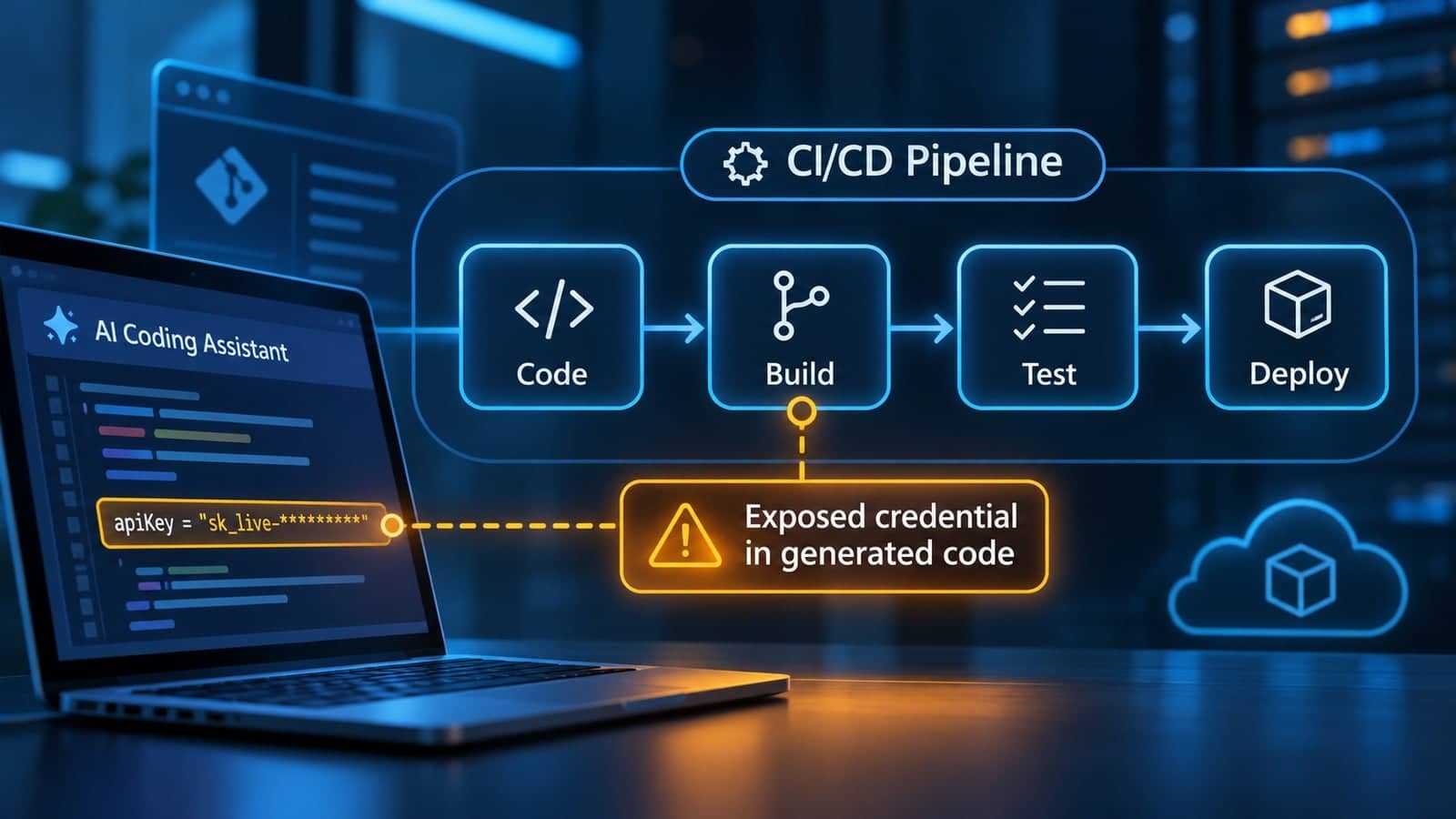
Artificial intelligence (AI)-powered coding assistants help software development teams work faster by generating code, configuring systems and automating repetitive tasks. However, this convenience introduces security risks.
AI-generated code may contain hardcoded credentials or insecure authentication methods, potentially exposing sensitive information across development environments. As organizations rely on these tools, understanding how AI-assisted development contributes to continuous integration and continuous deployment (CI/CD) secrets sprawl becomes essential for protecting credentials and strengthening pipeline security.
How AI-Generated Code Contributes to Secrets Sprawl
Secrets sprawl occurs when sensitive credentials, like passwords and authentication tokens, become scattered across development environments without proper oversight. AI coding assistants can worsen this problem by generating code with hardcoded credentials or placeholder secrets that developers accidentally leave unchanged. These practices increase the risk of exposing sensitive information throughout the software development life cycle.
The challenge becomes more significant as organizations rely on automated systems. According to the Non-Human Identity Management Group, nonhuman identities can outnumber human identities by 25 to 50 times, creating additional credential management challenges. AI-generated CI/CD configurations and infrastructure-as-code templates can further complicate oversight by introducing new authentication requirements and potential exposure points. Without consistent security controls, development teams may struggle to track where credentials reside and who can access them.
Where AI Coding Creates Secrets Exposure Risks in CI/CD Pipelines
AI-generated code can expose sensitive credentials at multiple stages of the CI/CD pipeline, from source repositories and build configurations to testing environments and deployment workflows. Even routine debugging tasks carry risks. For example, AI-generated scripts may accidentally print authentication tokens or environment variables containing secrets, which leaves sensitive information in build logs and artifacts.
These concerns extend beyond accidental credential exposure. According to a 2025 survey by Legit Security and Gatepoint Research, 73% of respondents identified new vulnerabilities as a top concern with AI-assisted software development, while 56% cited limited visibility or control over AI-generated code. Third-party integrations can further expand the attack surface, especially when AI-generated workflows rely on excessive permissions or long-lived credentials. A single compromised secret could then provide attackers with access to multiple interconnected systems.
How Development Teams Can Prevent Secrets Sprawl in AI Workflows
Preventing secrets sprawl in AI-assisted development requires security measures that address credential exposure throughout the software development life cycle. Teams can reduce these risks by combining automated detection, centralized secrets management and proactive security controls.
Integrate Automated Secrets Scanning Into CI/CD
Teams should integrate automated secrets scanning into local development environments, pull requests, source repositories and CI/CD workflows. These tools can detect exposed credentials in AI-generated code and deployment scripts before they reach production.
For stronger protection, organizations can configure security checks to block commits or builds containing verified secrets. Teams should also promptly revoke compromised credentials and replace them with new ones to prevent unauthorized access.
Centralize Secrets Management and Restrict Access
Centralized secrets management platforms help development teams securely store, access and monitor credentials without embedding them directly into AI-generated code or configuration files. Organizations can further reduce exposure by using short-lived authorizations and least-privilege access controls. These measures limit credential lifetimes and ensure automated workloads receive only the permissions they need.
Additionally, implementing zero-trust principles strengthens security through continuous access verification and network segmentation. Isolating workloads and restricting connections between systems helps companies contain potential breaches and prevent unauthorized lateral movement.
Establish Security Controls for AI-Generated Code
Development teams should review AI-generated code and CI/CD configurations for hardcoded credentials, excessive permissions and insecure authentication methods. Waiting until pull requests or CI pipeline execution to detect these issues can lead to costly rework and allow insecure coding patterns to spread.
Instead, organizations can use approved Model Context Protocol (MCP) servers to provide AI coding assistants with security policies and approved secrets management practices during code generation. Integrating these safeguards into existing development workflows helps teams maintain consistent security standards and minimize disruptions to development speed.
Making Secrets Management Part of AI-Assisted Development
AI coding can amplify existing secrets management weaknesses as faster code generation increases the risk of credential exposure across development workflows. By combining automated scanning, centralized secrets management, access restrictions and security reviews, organizations can control CI/CD secrets sprawl while maintaining the productivity benefits of AI-assisted development.


Zac Amos is the Features Editor at ReHack Magazine, where he covers cybersecurity and artificial intelligence. He is also a contributor at publications like VentureBeat, Security Boulevard, and DZone.