Tag: Enterprise AI
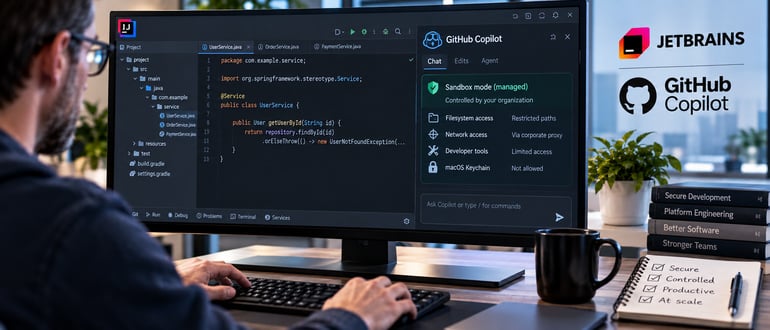
GitHub Puts Guardrails on Copilot’s Sandbox Inside JetBrains IDEs
 Tom Smith | | AI agents, AI coding agents, AI Governance, Copilot sandbox, Developer Security, developer tools, Enterprise AI, filesystem controls, GitHub Copilot, GitHub Copilot JetBrains, IDE security, JetBrains, managed policies, MCP governance, network controls, OpenTelemetry, platform engineering, sandbox security, software development
JetBrains IDEs are where a lot of enterprise backend work happens — Java, Kotlin, Spring, big monorepos with a lot to break. So when an AI coding agent starts running shell commands ...
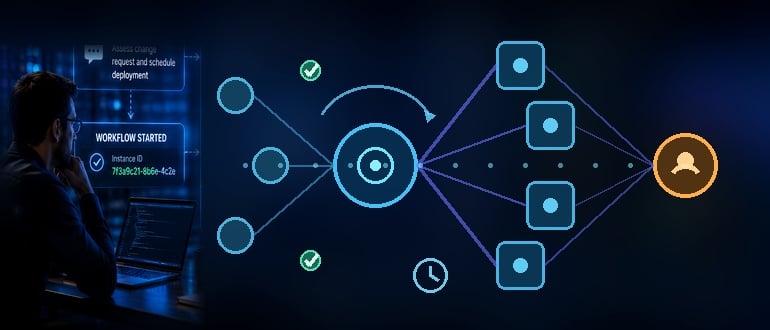
The Missing Runtime for Long-Running AI Agents
 Anuj Kapoor | | agent governance, agent orchestration, agent runtime, AI agents, AI observability, AI resiliency, Azure AI Foundry, Azure Durable Functions, devops, distributed systems, durable AI agents, durable workflows, Enterprise AI, human-in-the-loop, long-running AI agents, multi-agent systems, platform engineering, stateful AI, workflow orchestration
Enterprise AI agents need more than stronger models. They need durable execution environments that can coordinate multi-step workflows, survive failures, pause for human review and resume reliably after disconnects or delays. AI ...
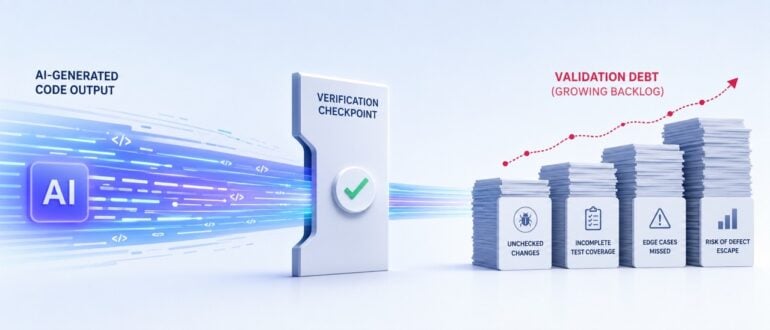
Validation Debt That Your Dashboards Are Not Showing
 Saqib Jan | | AI coding assistants, devops, Enterprise AI, software quality, software testing, validation debt
The gap between how fast AI writes code and how reliably teams verify it is quietly becoming a balance-sheet risk. Enterprise leaders are learning to measure it before it forces repayment. Every ...

OpenAI’s Codex Context Cut Puts Enterprise AI Coding Workflows on Notice
OpenAI quietly trimmed the default input context window for GPT-5.6 inside its Codex CLI, dropping it from 372,000 tokens to 272,000 tokens. That's a 27% cut, and developers noticed fast. The change ...

AI-Generated Code Is Cheap But the Context Infrastructure Behind It Is Not
Saqib Jan | | AI coding, context engineering, Enterprise AI, RAG, retrieval-augmented generation, vector databasesThe cost curve for generating code with AI has moved in one direction, and it has moved fast. What used to require a senior engineer's full attention for an afternoon can now ...
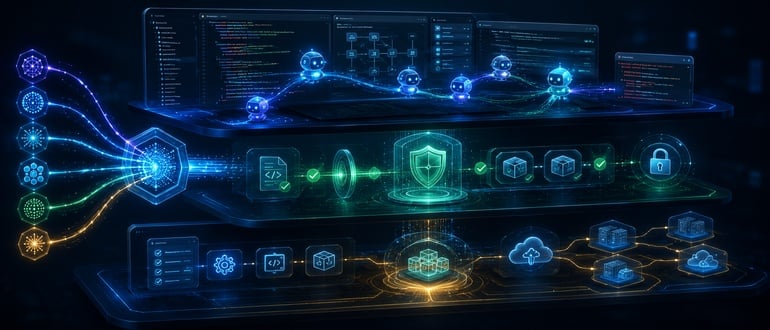
Anaconda Acquires Kilo Code to Unify AI Development from First Prompt to Production
 Jon Swartz | | acquisition, Agentic Workflows, AI agents, AI models, Anaconda, Enterprise AI, gitlab, JetBrains, Kilo Code, Metaflow, Outerbounds, VS Code
Anaconda Inc. has acquired Kilo Code, an open-source, model-agnostic platform that embeds artificial intelligence (AI) agents directly into developer workflows. The acquisition integrates Kilo’s rapid-growth community of over three million developers into ...
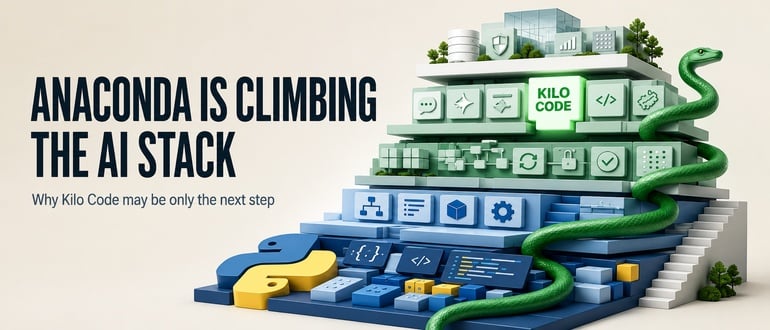
Anaconda Doesn’t Want to Be Just the Python Company Anymore
The question is no longer whether Anaconda wants to be more than the Python company. It is how much of the AI development stack DeSanto ultimately intends to own ...
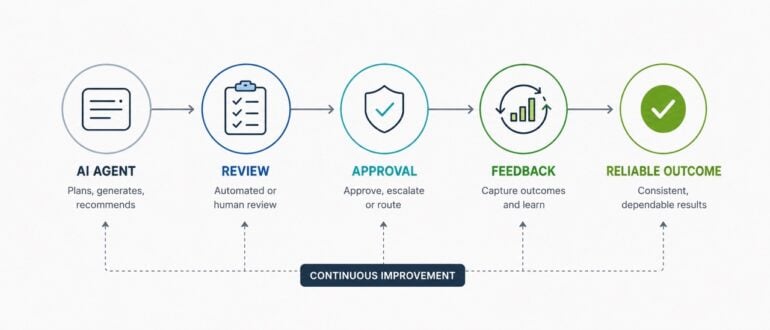
Reliability Comes From the System, Not the Agent
 Andrew Filev | | AI agent reliability, AI agents, AI Governance, Enterprise AI, Operational Excellence, workflow design
One of the most common questions executives ask right now sounds straightforward: is the agent reliable enough yet? It feels like the right place to start, but the framing quietly points people ...

Anthropic Adds Enterprise Gateway to Simplify Claude Code Access on AWS and Google Cloud
Tom Smith | | AI coding tools, AI Governance, cost control, Enterprise AI, Google Workspace, identity management, OTLP, policy enforcement, self-hosted gateway, single sign-on, spend caps, spend management, SSO, telemetry, usage trackingAnthropic's new Claude apps gateway brings SSO, central policy, and spend caps to Claude Code on Amazon Bedrock and Google Cloud ...

The Death of the Four Golden Signals: Designing Telemetry for Non-Deterministic Infrastructure
 Jyostna Seelam | | AI architecture, AI compliance, AI Governance, AI guardrails, AI infrastructure, AI monitoring, AI observability, AI operations, AI operations strategy., AI performance metrics, AI platform monitoring, AI reliability, AI resilience, AI safety, AI SLIs, AI SLOs, AI system reliability, AI telemetry, AI trust, Enterprise AI, generative AI monitoring, guardrail intervention rate, hallucination detection, LLM monitoring, LLM observability, modern SRE, non-deterministic systems, Observability Engineering, OpenTelemetry, platform engineering, production AI, RAG observability, RAG systems, semantic drift, site reliability engineering, SRE, time to first token, token throughput, TTFT, vector database monitoring
In complex software systems, our traditional definition of operational health has always been comfortably binary. For over a decade, site reliability engineering (SRE) teams have relied on the industry-standard ‘Four Golden Signals’ ...

Why Enterprise AI Infrastructure Is Becoming a DevOps Problem

Most enterprise AI projects start with retrieval. You connect Jira, Confluence, SharePoint, and Slack. Maybe a few internal databases nobody has touched in five years. You tune embeddings, optimize chunking, wire up ...

The Automation Layer Wants to Own Enterprise AI
 Alan Shimel | | AI agents, Automation Layer, Enterprise AI, Infrastructure Governance, Operational Trust, platform engineering, Probabilistic Systems, runtime security
Organizations want AI systems capable of prioritizing alerts, routing workflows, coordinating across applications, initiating remediation steps, summarizing operational data and adapting dynamically based on changing context. The system is no longer following ...