Contributed Content
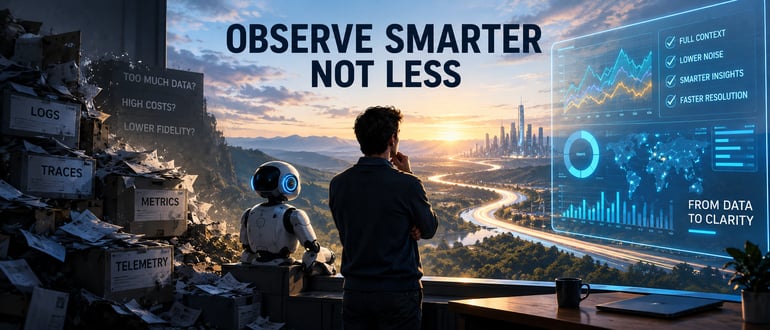
Observability’s Gaslighting Problem: “Send Less Data” Isn’t a Strategy
 Noam Levy | | agentic development, AI agents, AI-assisted development, cardinality, data retention, developer observability, devops, incident response, logs, metrics, observability, observability costs, observability strategy, Runtime Visibility, software reliability, SRE, telemetry, Telemetry Optimization, telemetry sampling, traces
A familiar pattern is emerging in observability conversations. As telemetry volumes grow and costs rise, the default recommendation is often to collect less data: Sample more, retain less, index selectively, filter earlier, ...
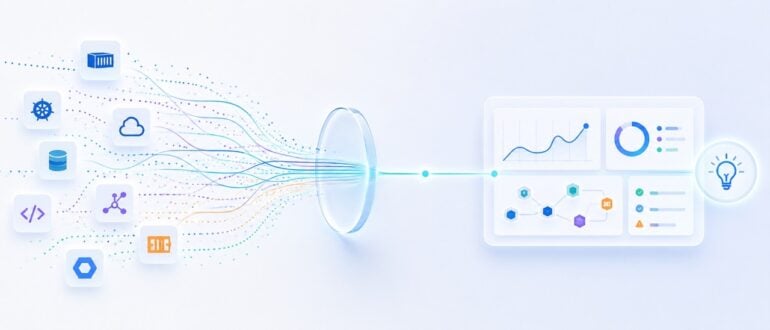
Observability 2.0: Why DevOps Teams Are Moving From Monitoring to Intelligent System Understanding

For a long time, monitoring just meant staring at dashboards and waiting for something to flash red. Engineers tracked things like CPU usage, memory, response times, error rates, and uptime. If a ...

GitOps in 2026: Why Pull Requests Are Taking Over Cloud Operations
For years, cloud infrastructure changes were mostly a mystery. An engineer would log into a dashboard, tweak a setting, run a few scripts, and that was it. Nobody worried until something broke ...
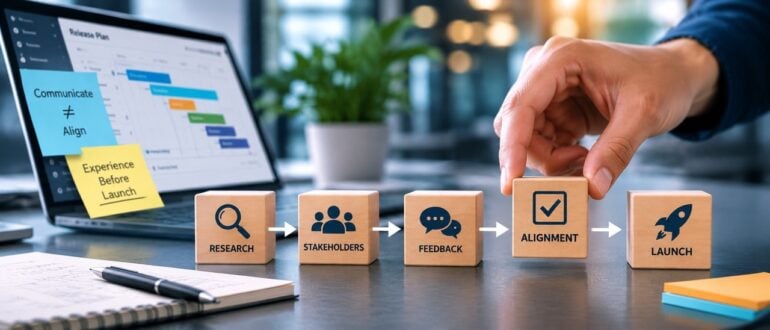
Informing Stakeholders Isn’t the Same as Aligning Them
 Vladimir Pronin | | change management, continuous delivery, devops, feature flags, progressive delivery, Stakeholder Alignment
The first sign of trouble was a screenshot. We'd just switched on the A/B test via our feature management platform. Within the hour, a senior stakeholder landed in the variant feature flag, ...
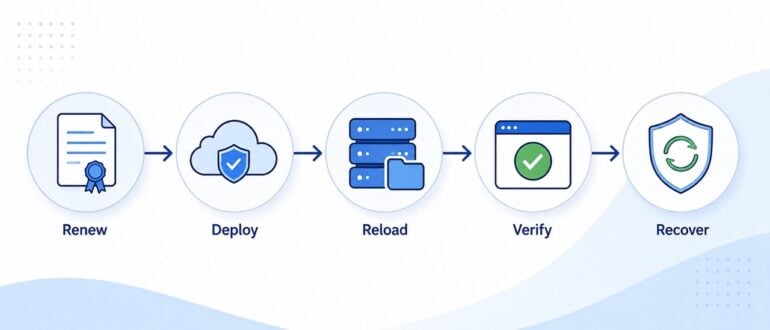
Certificate Renewal Is a Deployment Workflow, Not a Cron Job
 Franz Alliod | | automation, certificate management, Certificate Renewal, devops, kubernetes, security
Certificate renewal is often treated as a scheduled task: run an ACME client, obtain a new certificate, and move on. In practice, that view is too narrow for production systems. A certificate ...
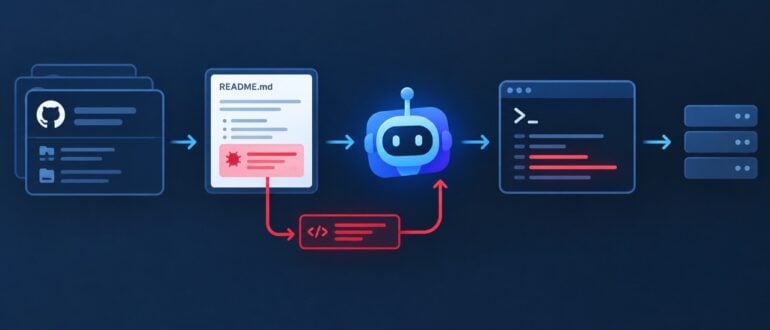
When AI Coding Agents Become Malware Delivery Systems
 Samuel Ogbonna | | AI coding agents, AI security, devsecops, github, prompt injection, Software Supply Chain
AI coding agents are becoming part of everyday development work. Developers use them to find libraries, configure projects, troubleshoot installation problems, and set up new tools. An agent can search GitHub, read ...
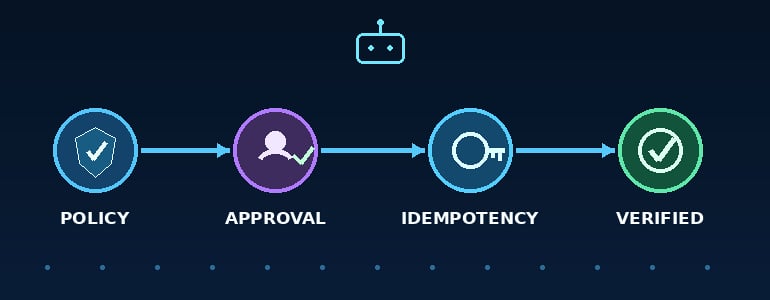
How to Build a Durable Change-Control Gate for AI Agents
 Daniel Martin | | agentic AI, AI agents, AI automation, AI Governance, AI safety, approval workflows, change control, devops, durable workflows, human-in-the-loop, idempotency, LangGraph, NIST AI RMF, policy enforcement, production deployment, release controls, tool-using agents, workflow governance
AI agents that trigger real-world changes need more than confidence scores. A durable change-control gate should recheck policy, require approval for consequential actions, enforce idempotency and verify the result before retrying ...
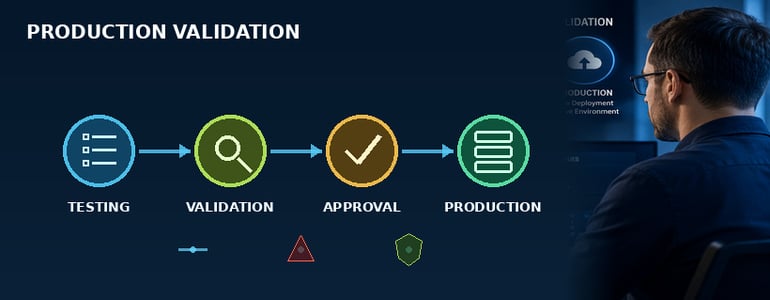
Production Validation: The Missing Layer in Enterprise Releases
 Kawaljeet Singh Chadha | | auditability, business validation, business-critical systems, change management, data quality, deployment controls, DevOps governance, enterprise devops, Enterprise software, exception-handling, operational approval, production assurance, production readiness, production validation, reconciliation, regulated environments, release governance, release management, release readiness, software testing
Production validation adds a critical business-control layer between testing and deployment, combining data checks, exception review, approvals, reconciliation and operational readiness before a release reaches production ...
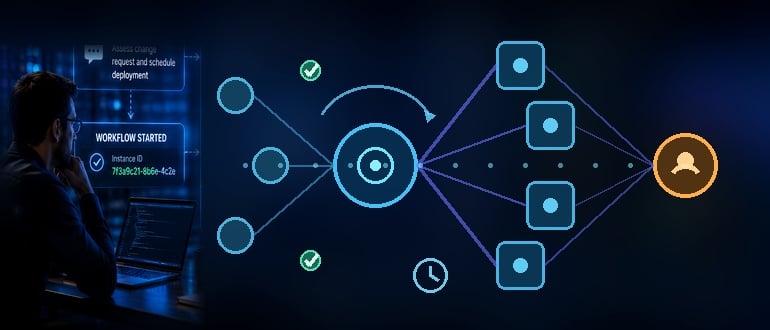
The Missing Runtime for Long-Running AI Agents
 Anuj Kapoor | | agent governance, agent orchestration, agent runtime, AI agents, AI observability, AI resiliency, Azure AI Foundry, Azure Durable Functions, devops, distributed systems, durable AI agents, durable workflows, Enterprise AI, human-in-the-loop, long-running AI agents, multi-agent systems, platform engineering, stateful AI, workflow orchestration
Enterprise AI agents need more than stronger models. They need durable execution environments that can coordinate multi-step workflows, survive failures, pause for human review and resume reliably after disconnects or delays. AI ...
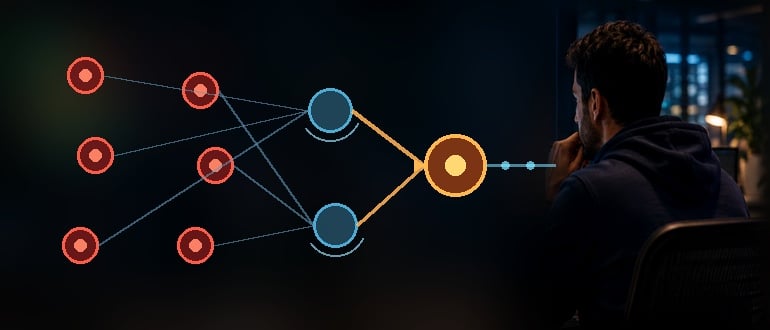
Automated Diagnosis Isn’t Automated Understanding: What Postmortems Teach Us About Building Trustworthy Incident AI
 Jyostna Seelam | | AI incident response, AI observability, AI reliability, AIOps, alert correlation, automated incident response, causal reasoning, dependency graphs, devops, Engineering leadership, human-in-the-loop, incident diagnosis, incident management, LLM operations, non-deterministic systems, on-call engineering, postmortems, RAG systems, root cause analysis, SRE
AI incident tools can reduce alert noise, but real root-cause diagnosis requires causal reasoning, live dependency context, uncertainty handling and strong postmortem data ...
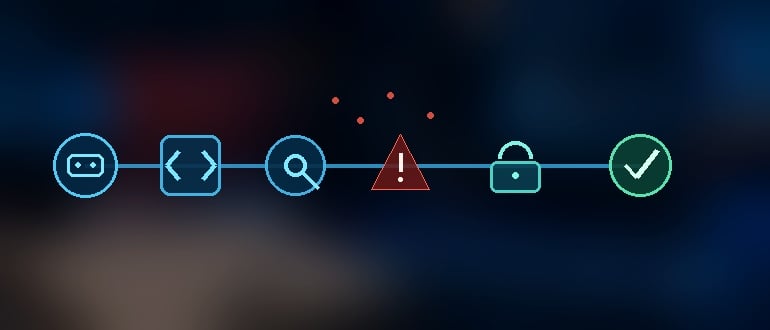
AI Can Generate Your Infrastructure. Can Your CI/CD Pipeline Trust It?
 Oreoluwa Omoike | | AI code vulnerabilities, AI coding assistants, AI-generated code, AI-generated infrastructure, Checkov, CI/CD security, Conftest, devsecops, IaC security, infrastructure as code, infrastructure security, Kubernetes security, OPA, platform engineering, policy as code, provenance tracking, secret scanning, secure CI/CD, Terraform security, tfsec, Trivy, TruffleHog
AI-generated infrastructure code is exposing a growing security gap, pushing platform teams to add stronger automated gates, provenance tracking and human review before Terraform, Kubernetes and CI/CD changes reach production ...
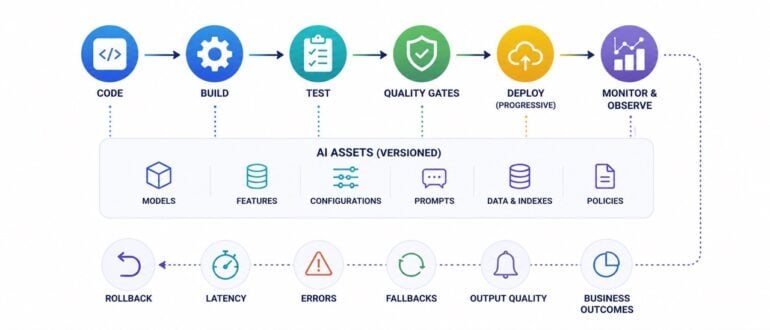
CI/CD for AI-Enabled Applications: Why Traditional Deployment Pipelines Need to Evolve
 Prem Kumar Gadhanki | | artificial intelligence, CI/CD, continuous delivery, devops, MLOps, software delivery
Traditional CI/CD pipelines are optimized around a familiar assumption: source code changes, automated tests validate the change, a build artifact is produced, and the application is promoted through environments. AI-enabled applications complicate ...